
IEA Warns Iran Conflict Could Trigger Global Energy Crisis Worse Than 1970s Shocks
Key Takeaways
- IEA warns Iran conflict could trigger energy crisis worse than 1970s shocks.
- Strait of Hormuz disruption risk could disrupt global energy supplies.
- Birol warned leaders underestimated the crisis early.
Historic Energy Warning
The International Energy Agency (IEA) has issued a stark warning that the ongoing conflict involving Iran is triggering a global energy crisis on a scale comparable to the combined impact of the 1970s oil shocks and the 2022 Russian invasion of Ukraine.
“Print Edition Read pdf version Home {{tree}} {{link”
IEA Executive Director Fatih Birol characterized this as a "triple crisis" that could push the global economy on a downward trajectory by choking "the vital arteries" such as fertilizers, sulphur, helium, and petrochemicals.
Speaking at the National Press Club of Australia in Canberra, Birol emphasized that world leaders initially failed to properly grasp the scale of the threat posed to global energy markets by attacks on Iran and the closure of the Strait of Hormuz.
The IEA chief warned that this crisis is already more severe than historical disruptions, with the agency responding by releasing 400 million barrels of oil reserves - the largest in history - to tackle the energy shocks.
Birol acknowledged this is not a long-term solution, stating "If needed, we can put more oil in the markets, both crude oil and products, if it is needed. Our stock release will help to comfort the markets, but this is not the solution."
Strategic Waterway Crisis
At the heart of this energy crisis lies the Strait of Hormuz, the narrow waterway through which roughly 20 percent of global oil supplies pass, making it one of the world's most critical energy shipping routes.
The IEA has identified this vital artery as being not just crucial for oil shipments but also as a key channel for petrochemicals, fertilizers, sulphur and helium - essential components for modern economies.

With the strait effectively closed due to the conflict, international markets have been thrown into turmoil, with attacks on vessels intensifying shortages and sharpening concern across global energy markets.
The strategic importance of this waterway cannot be overstated, as Birol explained that its disruption affects a crucial artery of the global economy far beyond just crude oil.
The situation has prompted urgent international diplomatic efforts, with US President Donald Trump giving Iran a 48-hour ultimatum to reopen the Strait to shipping, warning that he would destroy Iranian power plants if Tehran failed to comply.
Unprecedented Supply Losses
The quantitative impact of this energy crisis is already staggering, with current disruptions dwarfing historical energy supply shocks.
“• “Major crisis”: The IEA warned Monday the energy crisis was worse than the oil shocks in the 1970s”
According to IEA data, the ongoing conflict has resulted in the loss of approximately 11 million barrels of oil per day and 140 billion cubic meters of natural gas - significantly higher than the disruptions caused by the 1973 and 1979 oil crises.
Birol emphasized that "at this moment, this crisis is the combination of two oil crises and one gas crisis," creating an unprecedented energy shock.
The damage extends to physical infrastructure as well, with the IEA reporting that at least 40-44 energy assets across the Gulf region have suffered severe or very severe damage across nine countries.
This physical destruction means supply won't recover immediately even if the fighting were to stop, creating a prolonged crisis scenario that could last well beyond the current conflict.
Global Emergency Response
The international community has responded to this escalating crisis with both emergency measures and diplomatic pressure, though the scale of the challenge remains daunting.
The IEA has orchestrated its largest-ever release of emergency oil reserves, putting 400 million barrels into the market to ease price pressures and stabilize global energy supplies.
This unprecedented move represents the agency's most aggressive intervention in its history to combat energy shocks.
Birol indicated that additional releases could follow if needed, stating "If needed, we can put more oil in the markets, both crude oil and products, if it is needed. Our stock release will help to comfort the markets, but this is not the solution."
Beyond reserve releases, the agency is actively working with countries including Canada and Mexico to increase oil production and accelerate refinery operations globally.
Conflict-Energy Nexus
The energy crisis is deeply intertwined with the broader regional conflict that has engulfed the Middle East following a significant escalation in hostilities involving Iran and its allies.
“The International Energy Agency has warned that the conflict involving Iran is now triggering a global energy crisis on a scale comparable to two of the world’s most severe supply shocks combined — the oil crises of the 1970s and the energy disruption caused by Russia’s war in Ukraine in 2022”
Iran, one of the world's major oil producers and a key player in the Persian Gulf region, has been at the center of the conflict that has drawn in multiple regional actors.
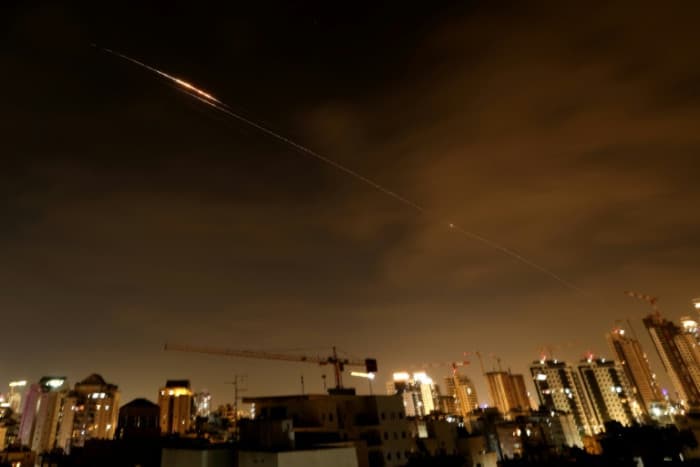
Israeli military strikes have specifically targeted Iranian energy infrastructure, including a key gas field, directly contributing to the supply disruptions that are now threatening global energy markets.
The conflict has expanded beyond Iran to include Israeli operations against Iranian-backed Hezbollah in Lebanon, where extensive violence has killed more than 1,000 people and displaced more than a million individuals.
Israeli forces have been given orders to destroy bridges used by Hezbollah to cross the Litani river, in what Lebanese President Joseph Aoun called "a dangerous escalation" seen as a prelude to a ground invasion.
Long-Term Economic Impact
Looking forward, the energy crisis is likely to have profound and lasting consequences for global economic stability and energy security, particularly affecting Asian economies that are heavily reliant on Gulf energy supplies.
The IEA has warned that rationing and Covid-style measures to conserve energy may be needed for some time, with poorer nations expected to suffer the most from the price spikes and supply shortages.
Birol noted that "Asia, he said, is at the forefront of the crisis due to its reliance on the Strait of Hormuz, the vital waterway which Iran has effectively closed."
While Australia and other countries are developing new LNG facilities that could eventually help offset some of the supply losses, Birol emphasized that "Australia alone will not be able to offset the entire lack of LNG coming from Middle East."
The crisis has exposed fundamental vulnerabilities in global energy systems and supply chains that were previously overlooked, potentially leading to long-term shifts in energy policy and infrastructure investment.
More on Iran

President Trump delays strikes on Iran power plants for five days amid conflicting reports.
41 sources compared

Trump Extends Deadline to Reopen Strait of Hormuz, Delays Strikes on Iranian Power Plants.
27 sources compared
Trump Says Talks With Iran Ongoing; Iran Denies Negotiations.
15 sources compared

Iran Threatens to Close Strait of Hormuz, Hit Power Plants After Trump's Ultimatum
41 sources compared