India16 November, 20252 min read
India Arrests Man From Indian-Controlled Kashmir Over New Delhi Suicide Car Bombing That Killed Eight
This article is an automated aggregation of coverage from news outlets. Our editorials offer in-depth analysis curated by the NewsCord team.
NIA arrested Amir Rashid Ali, a Kashmir resident, over the Delhi car bombing The car used in the attack was registered in his name
8 outlets told this the same way.
Outlets did split on Three Indians Rescued From MV Royad Mammadov Attack Depart Romania For India →
Arrest in Red Fort Attack
India’s National Investigating Agency (NIA) announced on Nov. 16 that it had arrested Amir Rashid Ali, a resident of Indian-administered Kashmir, alleging he conspired with a suicide bomber in a vehicle-borne explosive attack near New Delhi’s historic Red Fort.
“India’s National Investigating Agency (NIA) said it arrested a man from Indian‑administered Kashmir, Amir Rashid Ali, on suspicion of conspiring with a suicide bomber in a car blast near New Delhi’s Red Fort that killed 10 and injured 32.”
The NIA says the car used in the blast was registered to Ali and that he traveled to New Delhi to help purchase the vehicle.

Officials called the arrest a 'major breakthrough'.
Authorities have identified the suspected driver and suicide bomber as Umar Un Nabi, a Kashmir resident linked to Pulwama, and described the incident as a terror attack investigated alongside raids in Kashmir.
Conflicting reports on bombing
Reporting across outlets includes consistent claims that the car was registered in Ali's name and that Umar Un Nabi was the driver and alleged suicide bomber. Outlets, however, provide differing background details and report different follow-up actions. Some sources describe Nabi as a Kashmiri doctor or as an assistant professor of medicine who taught in Haryana.
Investigators have also seized another vehicle linked to Nabi and questioned scores of witnesses. Police in Kashmir have reportedly carried out raids and made multiple arrests related to suspected militant activity.

Scene and casualty reports
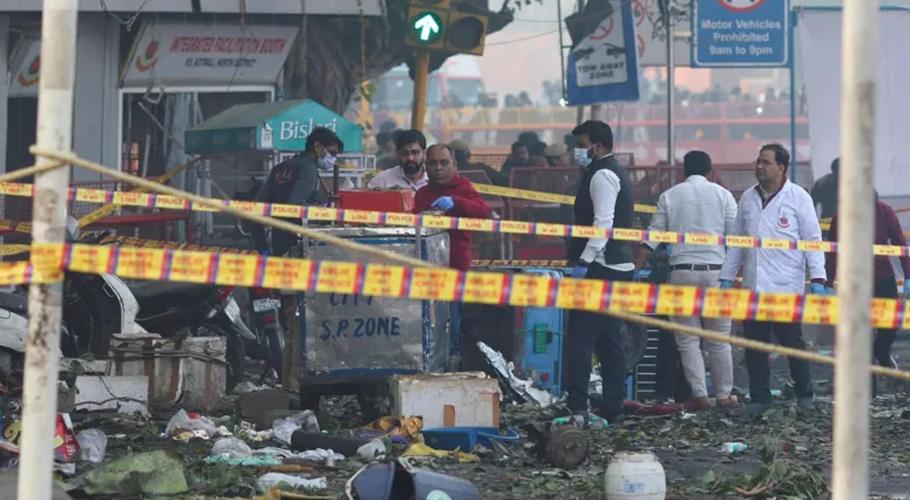
Eyewitness and emergency-response details differ in emphasis across reports. RNZ and Manx Radio describe the scene as involving a slow-moving vehicle stopped at a red light before the blast, intense flames, and multiple vehicles set alight.
“A vehicle exploded in central Delhi around 6:42pm, unleashing thick flames, charring multiple vehicles and leaving victims on the street, officials and footage showed.”
Those outlets quantify the damage as at least six vehicles and three autorickshaws catching fire. Hospital and official casualty tallies vary, with reports citing counts from local hospitals and police ranging from eight to 12 dead and roughly 20–32 injured.
Delhi blast response and probe
Officials and political leaders were reported responding to the blast while investigations continued. Prime Minister Narendra Modi offered condolences and wished the injured a speedy recovery. Agencies treated the case as a terror incident and conducted raids, arrests and witness interviews.
Some outlets placed the event in a wider pattern of regional security concerns and noted it was the first such blast in heavily guarded Delhi since 2011. Other coverage focused on investigative steps such as demolition of the suspected bomber's family home in Pulwama and seizure of bomb-making material in Kashmir.