Full Analysis Summary
Supreme Court on Air India Crash
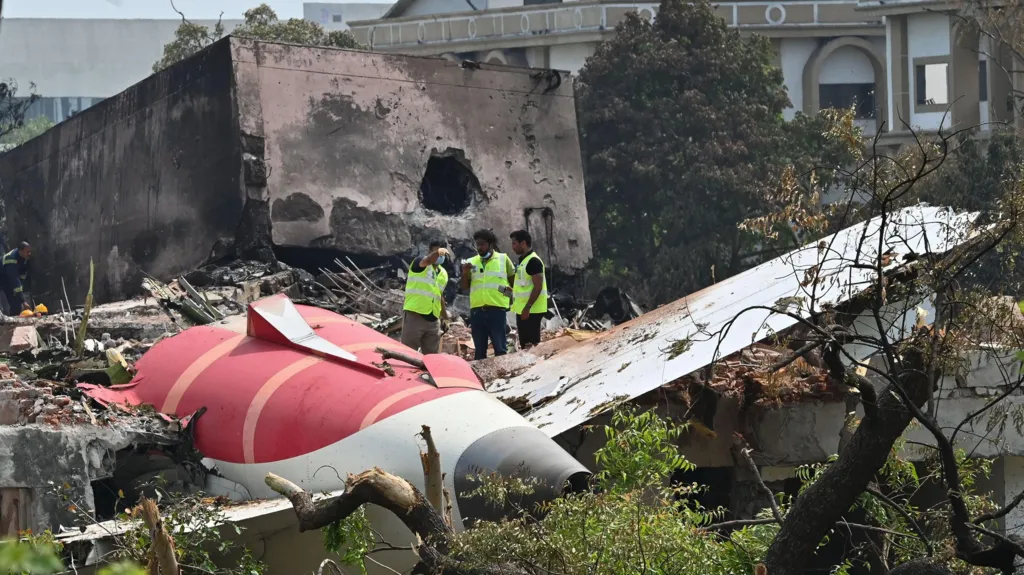
India’s Supreme Court moved to clear Captain Sumeet Sabharwal of blame for the June 12 Air India crash near Ahmedabad that killed 260 people, with only one survivor.
Two Western news outlets report a firm exoneration of the pilot, while an Asian outlet describes a more cautious judicial stance.
International Business Times UK states the Court "has ruled that Captain Sumeet Sabharwal… was not responsible for the tragedy," noting Justice Surya Kant found "no evidence to blame the pilot."
The London Evening Standard similarly reports the Court "has ruled that the pilot… was not to blame," adding that the Boeing 787 Dreamliner was bound for Gatwick and crashed shortly after takeoff with only one survivor.
In contrast, Telegraph India writes that the Court "advised… [the pilot’s father] not to bear the burden of blame" and issued notices to authorities, presenting the Court’s action as advisory and procedural rather than a final decision on causality.
Coverage Differences
Narrative/ambiguity
International Business Times UK (Western Mainstream) and London Evening Standard (Local Western) both present a definitive ruling clearing the pilot of responsibility, whereas Telegraph India (Asian) frames the Supreme Court’s action as advisory to the father and procedural (issuing notices), not a conclusive finding on the crash cause. This reflects a substantive difference in how final the Court’s stance is portrayed.
Detail/omission
London Evening Standard (Local Western) adds route and aircraft context — Gatwick-bound and Boeing 787 — and the single survivor, while Telegraph India (Asian) does not include those transport specifics in the snippet. International Business Times UK (Western Mainstream) also specifies the 787 and the solitary survivor.
Tone
International Business Times UK (Western Mainstream) stresses relief for the family via a clear ruling, while Telegraph India (Asian) emphasizes judicial caution by noting advice to the father and issuance of notices, softening any implication of final exoneration.
Investigation of Fuel Shutdown Incident
Investigative details cited across outlets converge on fuel shutdown indicators but diverge on attribution and conclusiveness.
International Business Times UK notes the AAIB found cockpit fuel control switches were moved to “cut off,” raising pilot-error questions.
However, the Court found no proof that Captain Sabharwal had intentionally or accidentally caused this, and the government rejected data-mishandling claims.
London Evening Standard echoes the “cut off” finding and adds that cockpit audio suggested confusion.
It also reports that US officials suspected the captain, though the Court saw no evidence to blame him.
Telegraph India similarly recounts the AAIB’s preliminary indication that fuel supply to both engines was cut off and caused pilot confusion.
The report underscores that the preliminary report did not reach a final conclusion.
Coverage Differences
Attribution vs. evidence
London Evening Standard (Local Western) reports that US officials suspected the captain, while both International Business Times UK (Western Mainstream) and Telegraph India (Asian) stress the Supreme Court found no proof to blame him and that the AAIB report was preliminary and inconclusive.
Procedural posture
International Business Times UK (Western Mainstream) emphasizes governmental confidence in the probe (“rejecting claims of data mishandling”), while Telegraph India (Asian) highlights the Court issuing notices for a potential court-monitored investigation, signaling openness to further scrutiny.
Evidence framing
All three acknowledge the AAIB’s ‘cut off’ fuel finding, but International Business Times UK (Western Mainstream) and London Evening Standard (Local Western) pair it with the Court’s statement of no evidence against the pilot, while Telegraph India (Asian) underscores the AAIB’s lack of a final conclusion.
Court Response to Family Concerns
Family advocacy and human context feature prominently but differently across sources.
International Business Times UK says the judge’s stance brought relief to Sabharwal’s family, while noting the father had sought an independent inquiry, arguing his son was unfairly blamed.
London Evening Standard adds human-interest specifics, stating the pilot was a veteran with 15,000 flying hours and was planning early retirement to care for his elderly father.
The same source also mentions that the court reassured the family he should not be held responsible.
Telegraph India centers on the father’s plea and the court’s advice to him not to bear the burden of blame.
It also highlights the formal step of issuing notices for a potential court-monitored probe.
Coverage Differences
Human-interest emphasis
London Evening Standard (Local Western) includes personal details like 15,000 flight hours and early retirement plans to care for the pilot’s father, which are absent from International Business Times UK (Western Mainstream) and Telegraph India (Asian).
Tone and focus
International Business Times UK (Western Mainstream) frames the outcome around relief and exoneration for the family, while Telegraph India (Asian) frames it as guidance to the father plus procedural steps, highlighting ongoing legal processes.
Source of suspicion
Telegraph India (Asian) references “some foreign speculation about pilot error” without naming sources, while London Evening Standard (Local Western) specifies that US officials suspected the captain; International Business Times UK (Western Mainstream) does not attribute suspicion to a specific foreign actor in the snippet.
Court Rulings on Crash Investigation
What happens next remains procedurally open even as the pilot’s blame is rejected by the Court in some accounts.
International Business Times UK stresses the Court ruled that he was not responsible and found no proof he caused the crash, with the government defending the probe’s integrity.
London Evening Standard echoes that the Supreme Court found no evidence to blame him.
By contrast, Telegraph India highlights that the AAIB’s preliminary report was inconclusive and that the Court issued notices to the government and DGCA on the father’s plea for a court-monitored investigation.
This underscores that the formal investigation’s conclusions are not yet final in its framing.
Coverage Differences
Certainty vs. caution
International Business Times UK (Western Mainstream) and London Evening Standard (Local Western) convey a definitive clearing of the pilot, while Telegraph India (Asian) emphasizes the preliminary nature of findings and the Court’s procedural notices, suggesting ongoing scrutiny.
Institutional positioning
International Business Times UK (Western Mainstream) reports the government’s stance defending its investigation, while Telegraph India (Asian) underscores judicial oversight through notices that could lead to a court-monitored inquiry.