USA11 December, 20252 min read
Indiana Republicans Reject Trump's Gerrymandered Redistricting Map, Rebuff White House Pressure
Indiana Senate voted 31–19 to reject the Trump-backed congressional redistricting plan Proposed map would have made two Democratic-held districts GOP-friendly, potentially creating a 9–0 Republican delegation

16 outlets told this the same way.
Outlets did split on Trump Interrupted by Protesters at San Antonio Rally for Ken Paxton →
Indiana redistricting vote
Indiana’s Republican-led state Senate on Dec. 11–12 rejected a mid-decade congressional map pushed by former President Donald Trump and national GOP leaders.
“The Indiana Senate on Thursday rejected a plan to redraw the state's congressional map to create two additional GOP-friendly seats, voting 31-19 against the proposal.”
The measure failed by a 31–19 vote after 21 Republicans joined all 10 Democrats to block the plan.
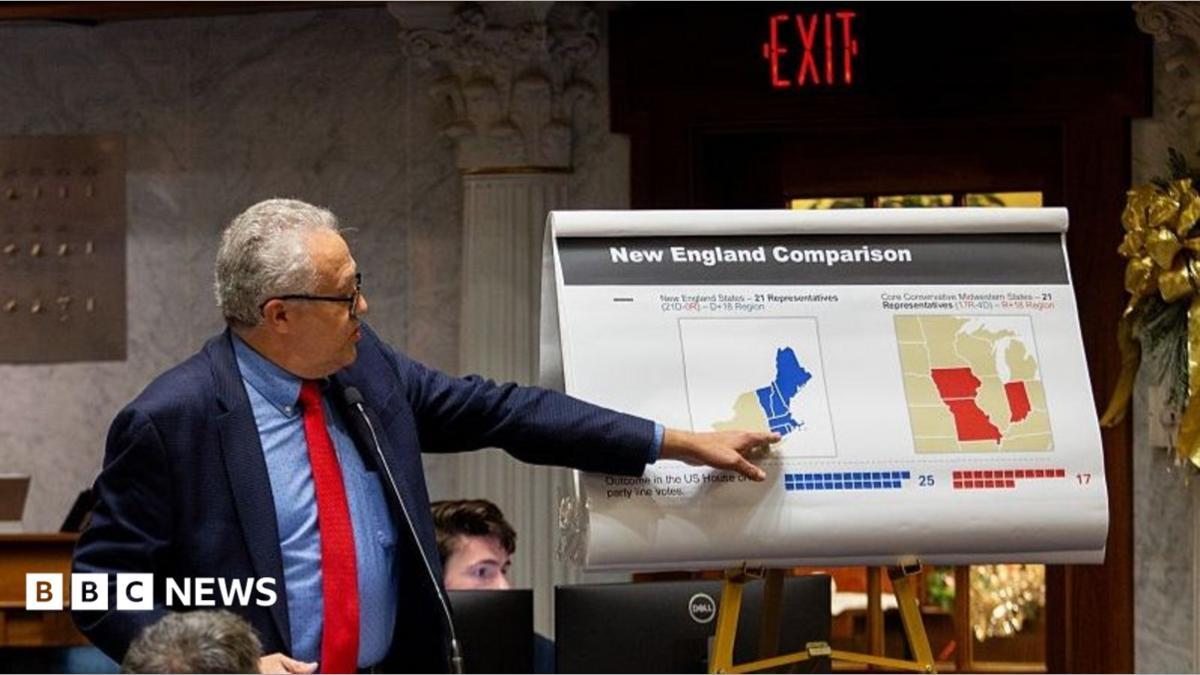
The proposed map would have created two additional GOP-friendly U.S. House seats and could have given Republicans all nine seats.
The action came after the state House had already passed the proposal and was widely framed as a rebuke to Washington.
Media outlets said the vote signaled limits to national Republican leaders’ influence over state-level redistricting decisions and that the defeat curtailed Republican hopes for additional gains in the 2026 midterms.
Pressure campaign and intimidation
The rejection followed an intense pressure campaign from national Republicans.
Former President Trump publicly lobbied for the map and warned defectors of 'MAGA' primary challenges.

Vice President J.D. Vance and House Speaker Mike Johnson also engaged in outreach, and outside conservative groups placed calls and ran ads.
The push produced harassment and violent intimidation directed at some Indiana lawmakers.
Reporting includes repeated swatting attempts, a pipe-bomb threat, and social-media attacks.
At least one senator, Greg Goode, described an 'over-the-top pressure' campaign and said he was the target of a swatting incident after being singled out by Trump.
Indiana redistricting debate
Lawmakers and leaders offered competing explanations for the vote. Senate President Pro Tem Rodric Bray said members wanted a Republican congressional majority but many didn't view a mid-cycle redraw as a sure path to it. Bray later characterized Washington as misreading the caucus and noted the caucus 'simply lacked the votes.'
“Senate President Pro Tem Rodric Bray said members wanted a Republican congressional majority but many didn’t view a mid‑cycle redraw as a sure path to it.”
Some supporters and national leaders framed the map as necessary to protect a narrow House majority. Cross-party defections underscored fractures inside the Indiana GOP over whether a mid-decade map was politically or legally prudent.
Redistricting map debate
Arguments about the map split along expected partisan lines. Backers said a mid-cycle redraw was needed to strengthen Republican representation and defend a narrow House majority. Opponents warned a mid-cycle map risked political blowback, violated expectations about redistricting timelines, and local reporting said critics feared constituent opposition that could make the strategy backfire in 2026.
Redistricting and 2026 outlook
The Indiana vote fed into a wider national redistricting battle and, according to outlets, the defeat undercuts a coordinated Republican push across multiple states to redraw maps before 2026. Some reports noted mixed outcomes elsewhere and courts issued varied rulings on redistricting efforts. Analysts and reporters called the loss a setback for Republican hopes of increasing the House majority, and France 24 calculated that the stalled map would make it harder for Republicans to reach a projected nine-seat gain in 2026 without other successes.
“The defeat curtails Republican hopes for additional gains in the 2026 midterms and affects a broader redistricting push in about a dozen states.”