Full Analysis Summary
India's Urban Air Pollution Crisis
India’s urban air crisis intensified as multiple sources reported toxic smog gripping major population centers.
One outlet asserted that all 25 of the world’s most polluted cities were in India as of November 2, 2025.
Delhi slipped into the ‘severe’ category driven by stagnant winds, fog, and high humidity that trapped pollutants near the ground.
Local hotspots such as Wazirpur (AQI 432) and RK Puram (AQI 425) exemplified the extreme readings.
The citywide AQI surged to 377 by 7 a.m., reflecting a sharp deterioration from prior days.
In parallel, a broader news roundup framed the smog within a regional context of “toxic” conditions across northern India.
However, the same report noted that Delhi had dropped out of the top 10 most polluted cities, underscoring a striking divergence in how the crisis ranking is presented.
Coverage Differences
Contradiction
news24online (Asian) claims that “all 25 of the world’s most polluted cities” are in India and highlights Delhi’s ‘severe’ AQI spike, while The Times of India (Asian) reports Delhi has “dropped out of the top 10 most polluted cities” even as northern India faces toxic smog. These statements present conflicting snapshots of ranking and severity for Delhi and India’s urban centers.
Tone
news24online (Asian) uses urgent, health-focused language about “serious health risks” and “hazardous air quality,” while The Times of India (Asian) presents the item within a broad, curated global digest, tonally positioning Delhi’s situation alongside diverse international stories rather than as a singular emergency.
Delhi Air Pollution Overview
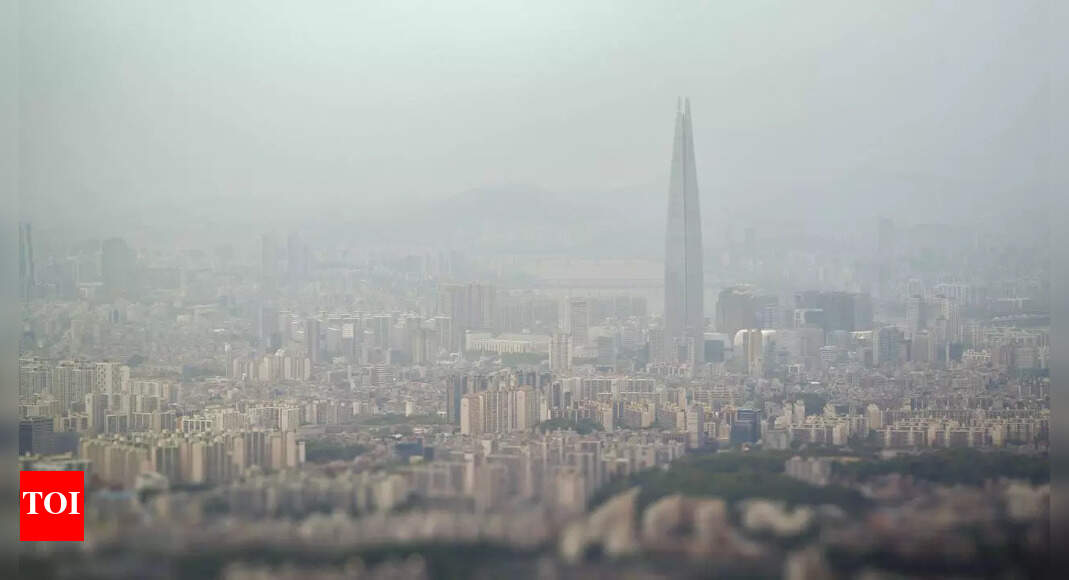
The on-the-ground portrait is stark: shallow fog, calm winds, and moisture have created a lid over Delhi, reducing dispersion and keeping particulate matter near breathing zones.
The immediate health implications are flagged as ‘serious’ due to prolonged exposure to hazardous air, with neighborhoods surpassing AQI 400—levels associated with heightened respiratory and cardiovascular risk—while the citywide reading rapidly climbed before dawn.
Alongside this granular picture, a world-desk digest contextualizes the pollution story within a mix of global developments, acknowledging toxic smog in northern India but not offering the same level of localized AQI detail or site-by-site severity.
Coverage Differences
Missed information
news24online (Asian) provides granular, location-specific AQI data and meteorological drivers; The Times of India (Asian) roundup references toxic smog but omits specific AQI readings, localized hotspots, or time-stamped citywide indices.
Narrative
news24online (Asian) frames a city-level public-health emergency with specific causes and metrics; The Times of India (Asian) frames the issue as part of a broader, multi-topic international digest, emphasizing editorial breadth and timeliness rather than in-depth AQI analytics.
India's Urban Air Pollution Rankings
Beyond Delhi, the narrative diverges on national-global rankings.
One account asserts India’s dominance across the top 25 most polluted cities worldwide, a sweeping claim that, if accurate, signifies a nationwide urban pollution emergency.
The roundup, however, simultaneously conveys that Delhi is no longer in the top 10 despite toxic northern smog, implying either shifting rankings, differing methodologies, or temporal discrepancies between datasets.
Without additional corroborating sources, the exact hierarchy remains unclear, but both depictions agree on acutely hazardous air in and around the capital.
Coverage Differences
Ambiguity/uncertainty
There is a potential methodological or temporal gap: news24online (Asian) asserts all 25 most polluted cities are in India as of a specific date, while The Times of India (Asian) notes Delhi has dropped out of the top 10. This raises questions about ranking criteria, timing, or data sources not disclosed within the provided excerpts.
Tone
news24online (Asian) emphasizes urgency and harm (“serious health risks”), whereas The Times of India (Asian) balances the pollution story within a global lineup, which can make the crisis seem comparatively less singular in focus.
Contrasting Pollution Coverage
Coverage approaches also differ between sources.
One source focuses tightly on Delhi’s numbers, meteorology, and visibility impacts, warning residents about health hazards from prolonged exposure.
The other source emphasizes editorial breadth, placing the pollution crisis alongside stories such as China’s space mission with its youngest astronaut and small mammals, a deadly explosion in Mexico, and a UK train stabbing attack.
The result is two distinct reader experiences: a city-level alarm about hazardous exposure versus a globally-scoped digest that situates India’s smog within a wider news agenda.
Coverage Differences
Unique/off-topic coverage
The Times of India (Asian) includes non-pollution global headlines in the same digest (space mission, Mexico explosion, UK stabbing), which is unique compared with news24online’s (Asian) single-topic, high-detail air-quality report.
Narrative
news24online (Asian) concentrates on localized, quantifiable indicators and immediate health risk framing, whereas The Times of India (Asian) adopts a multi-topic, international narrative emphasizing diversity of coverage rather than deep local metrics.