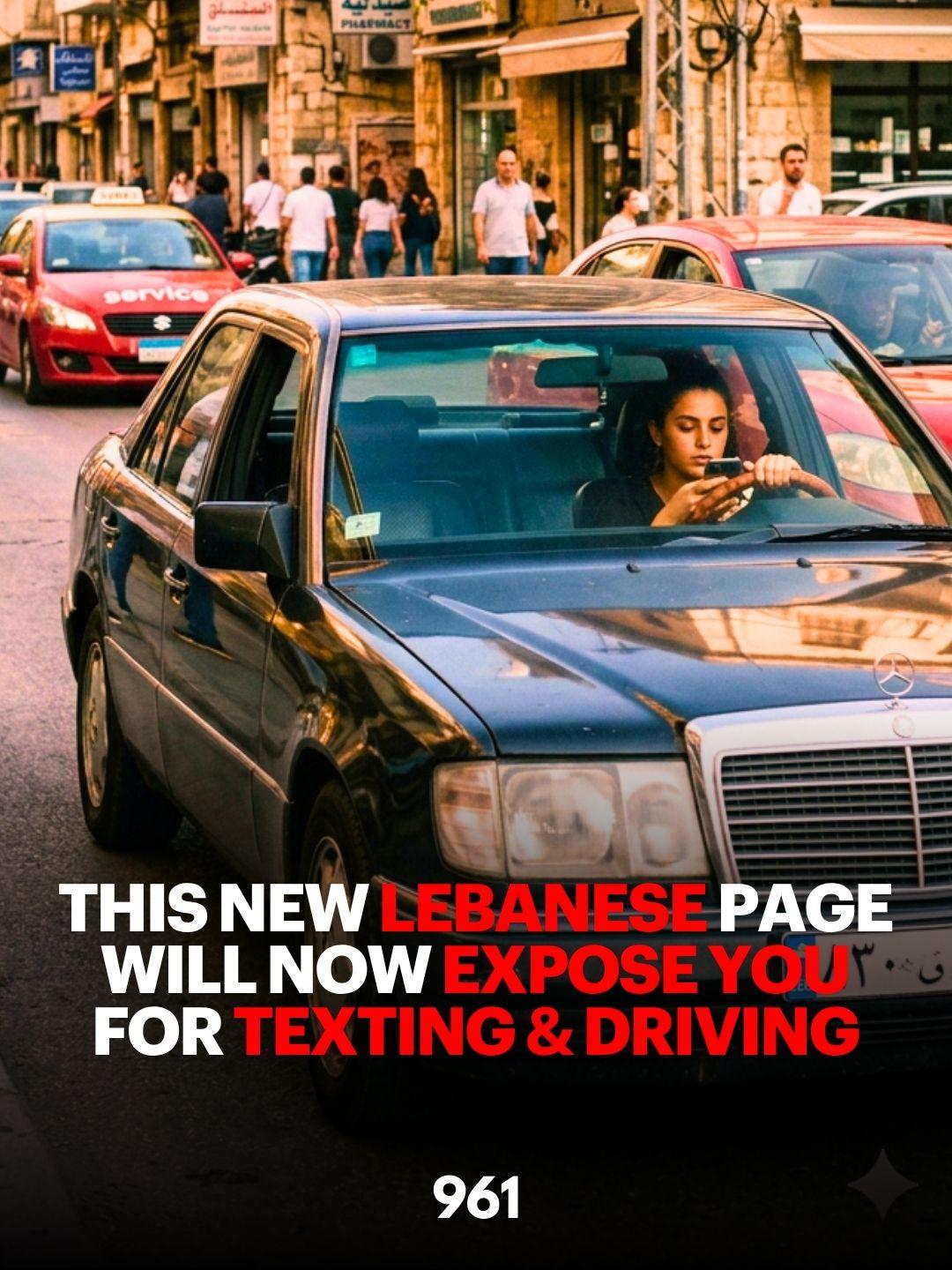
Instagram Page @shilomenidak Targets Lebanese Drivers Who Text And Drive
Key Takeaways
- A new Lebanese Instagram page exposes texting and driving.
- The account publicly shames drivers texting while driving.
- It has attracted attention online.
Texting and Driving Pushback
The account, with the Instagram handle @shilomenidak, says it is “Your DMs can survive the 10-minute drive.”
Its bio and posts are framed as a blunt call for accountability, with the page “Shilo men idak” — شيلو من ايدك — meaning “remove it from your hand.”
The961 describes the account as putting “reckless drivers on blast,” and says it is “on a mission to make people think twice before picking up their phones behind the wheel.”
The page’s approach is to publicly post photos and videos of drivers it says are violating road rules, and The961 notes that “In just two weeks, the page has already shared 10 posts.”
The content, according to The961, ranges “from trailer truck drivers to motorcyclists, and everything in between,” and the outlet adds that “So far, it doesn’t look like they’ll be running out of material anytime soon.”
While The961 frames the effort as aiming to reduce dangerous behavior, it also emphasizes the page’s intent to force accountability “in a place where it’s often missing.”
A Lebanon Security Narrative
Another thread in the Lebanon-related material comes from a program described as “Series Fulul Land - Part One.. A financing network and coup plots unravel in the north and Beqaa,” published by صـوت بيروت إنترناشونال.
The piece is dated Thursday, 13 Dhu al-Qi'dah 1447 AH - April 30, 2026, and it also references “January 5, 2026” as a “Last updated” time of “4:17 PM.”
It asserts that “Lebanon is rarely a stable case,” and describes a scenario in which “Fulul Land in the north” and “attacks planned in Lebanon, funded by Iran and led by Russia” would “cross from al-Haysa and Baalbek-Hermel and Kesrouan and Beirut hotels to stage a coup on the Syrian coast!”
The narrative says “The reality one minister turned to is that pursuing the Assad generals can only be addressed by security and military authorities through direct raids and swift arrests,” and it frames the issue as one of sovereignty and judicial authority.
It also says “sensational media leaks that surfaced with documents revealing a shadow network funded and armed for the remnants of the Assad regime and establishing an operations room in Lebanon” are “cannot be at the bottom of the concerns of the three authorities.”
The program’s account centers on a “renowned Syrian hacker known as Akkaf” and claims he “succeeded in untangling strands of a secret plan led by prominent military figures from the Assad generals on the Syrian coast.”
It describes a sequence beginning with “hacking the phone of a captain in the Assad army, Ali Suleiman,” and then says Akkaf later accessed “the phone Omar R.”
Hacker Leaks and Alleged Plots
The صـوت بيروت إنترناشونال account continues by describing how Akkaf’s access to communications is said to have expanded into a broader network.
“Thursday, 13 Dhu al-Qi'dah 1447 AH - April 30, 2026”
It says the data that emerged led him to “the phone of Syrian journalist M.R., who maintained direct ties with several Assadist leaders,” and it claims Akkaf “gained M.R.’s trust” by using “the names of Suleiman and Omar R.”
The program then describes “enticing promises” attributed to Akkaf, including “generous funding to establish a private media agency” and “commitments to secure a trip from Lebanon to Dubai and provide all the logistical supplies needed.”
It further claims Akkaf asked M.R. to “vouch for an Israeli figure known by the title Analyst,” presenting that person “as an influential Mossad officer trusted by his institution and working against Hezbollah in Lebanon and against Iranian militias.”
The narrative says R. contacted “a commander working with the head of Division 42 known as the Ghaith Forces in the Assad army named Giath Dalla,” and it adds that through “Tariq,” Akkaf reached “Ali Al-Abid, director of Giath Dalla’s office,” where he “also hacked his phone and documented several calls.”
It then claims Akkaf “recorded calls with the man accused of massacres and widespread human rights abuses,” naming “Giath Dalla,” and later says he “brought down the inventor of explosive-filled barrels, Sohail Hassan nicknamed The Tiger.”
The piece also says Hassan “hacked his phone and documented his calls,” and that the information “revealing information indicating that Hassan’s cousin Rami Makhlouf had taken up the Fulul case.”
Hospital Attack Claim
The same صـوت بيروت إنترناشونال piece shifts from the alleged communications network to a disclosed incident involving an officer and a hospital in Lebanon.
It says “Worse is what lawyer Mohammed Sablouh disclosed about an attempt to liquidate the officer in the 14th Division of the Syrian army Mohammed Abdul Rahman Suleiman, known as Ghadir al-Houri, on Lebanese soil.”
The narrative claims the attempt involved luring him “to Jabal Tarbal on December 10 last year,” then “firing at him and transporting him wounded to Our Lady of Zgharta Hospital.”
It also states that “Sablouh told Nidaa al-Watan” that “this is not the first time Assad generals have settled scores on Lebanese soil,” and it names “Ghassan al-Nassan, known as al-Turmah, was killed.”
The account adds that “his body found with gunshot wounds in Tala Abu Adl, between Adma and Safra in Kesrouan,” and it says “in a case that quickly opened a flood of questions about its nature and” before the provided text cuts off.
The piece also earlier referenced “Searches in the north by the relevant authorities” and said they were “seen by some as a street relief,” while describing the “file on the deployment of Bashar al-Assad regime officers in Lebanon” as “stuck between grim reality and show.”
It frames the overall theme as a struggle between “security and military authorities” and the handling of “sensational media leaks,” while insisting that “direct raids and swift arrests” are the approach.
Different Lebanon Frames
The Lebanon material also includes a second entry from The961 that functions as a page-level snapshot rather than a full report, and it shows how the same outlet can present Lebanon through a mix of unrelated headlines.
“A new Instagram page is putting reckless drivers on blast, and it’s already getting attention”
In that listing, The961 includes “Lebanon's Leading English News Outlet | Lebanon News | Breaking News” and then displays multiple items such as “Shipping Giant CMA CGM Just Acquired Fattal Group,” “ISF Just Arrested The Suspect Behind Rental Scam Targeting Displaced Families,” and “There’s A New Bill In Lebanon To Ban Social Media For Those Under 14.”
It also includes “You Won’t Need To Pay More Than 400,000LL For Valet In Lebanon,” “Lebanon Just Ranked 1 For Highest IQ In The Middle East,” and “Alfa Will Test 5G During The Pope’s Visit.”
The page further states “Everything You Need To Know Before 150,000+ People Flood Beirut For Pope Leo’s Mass” and “150,000+ People Are Expected To Attend The Pope’s Mass In Beirut,” while also listing “Beirut Just Introduced New Fines & This Is What It’ll Cost You.”
By contrast, the صـوت بيروت إنترناشونال segment is structured as a long-form narrative about “Fulul Land - Part One.. A financing network and coup plots unravel in the north and Beqaa,” with dates “April 30, 2026” and “January 5, 2026” and a focus on alleged coup planning and hacking.
The961’s texting-and-driving story, meanwhile, is framed around a social-media accountability tactic with the Instagram handle @shilomenidak and the slogan “Your DMs can survive the 10-minute drive.”
Taken together, the sources show Lebanon being presented through sharply different lenses: one focused on road behavior and public shaming, another on security and alleged coup plots, and a third on a broad feed of policy and event headlines.
What Comes Next
The sources provided do not lay out a single, unified “next step” for Lebanon, but they do describe forward-looking actions and ongoing processes within each thread.
In the road-safety story, The961 says the Instagram page is “on a mission to make people think twice before picking up their phones behind the wheel,” and it adds that “So far, it doesn’t look like they’ll be running out of material anytime soon,” implying continued posting and continued public exposure.
In the security narrative, the صـوت بيروت إنترناشونال text says “Akkaf’s leaks to the media surfaced, and media pressure quickly translated into security actions with no results,” and it describes “Searches in the north by the relevant authorities” as being seen “by some as a street relief.”
It also says “the file on the deployment of Bashar al-Assad regime officers in Lebanon remained stuck between grim reality and show, with no real investigative path or decisive security action,” which frames the immediate future as stalled rather than resolved.
The narrative further insists that “pursuing the Assad generals can only be addressed by security and military authorities through direct raids and swift arrests,” positioning raids and arrests as the intended mechanism going forward.
The961’s page-level listing, meanwhile, projects upcoming public events and policy changes by stating “Everything You Need To Know Before 150,000+ People Flood Beirut For Pope Leo’s Mass” and “Beirut Just Introduced New Fines & This Is What It’ll Cost You.”
Even without explicit causation between these items, the sources collectively depict Lebanon as moving into multiple concurrent tracks: continued online enforcement against texting-and-driving, unresolved security allegations, and scheduled public gatherings and regulatory measures.
More on Lebanon

Israel Carries Out Air Strikes on Lebanon After Evacuation Orders for 20 Locations
22 sources compared
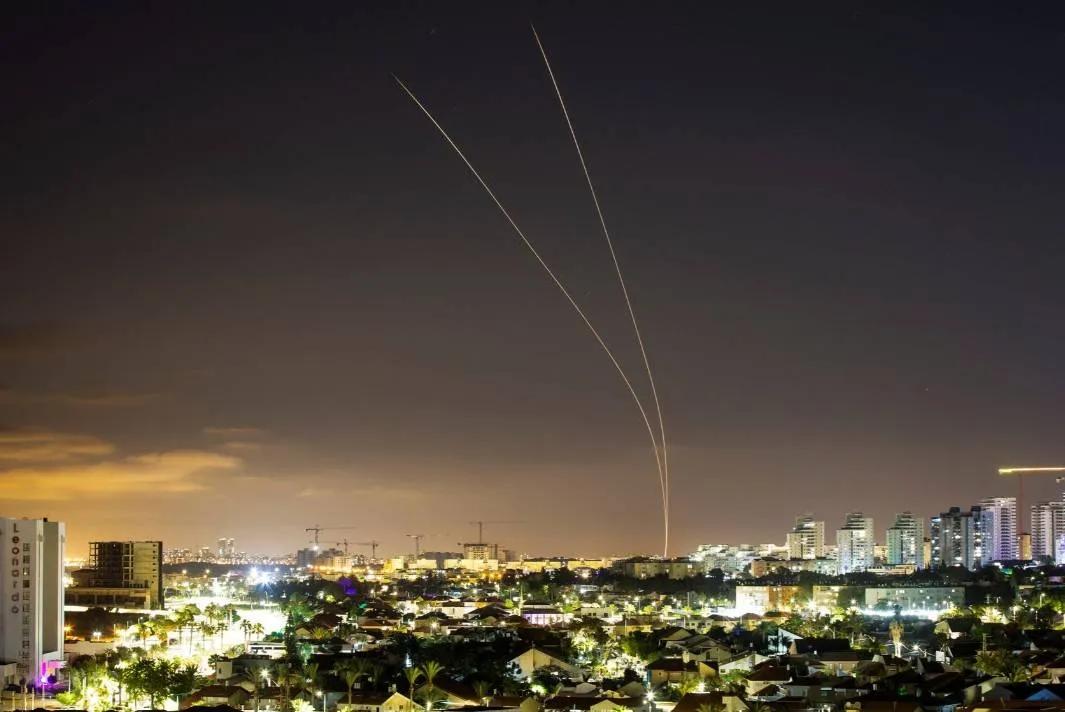
Israeli Strikes Hit Nabatieh And Jezzine As Israel Issues Evacuation Warnings For 24 Locations
10 sources compared
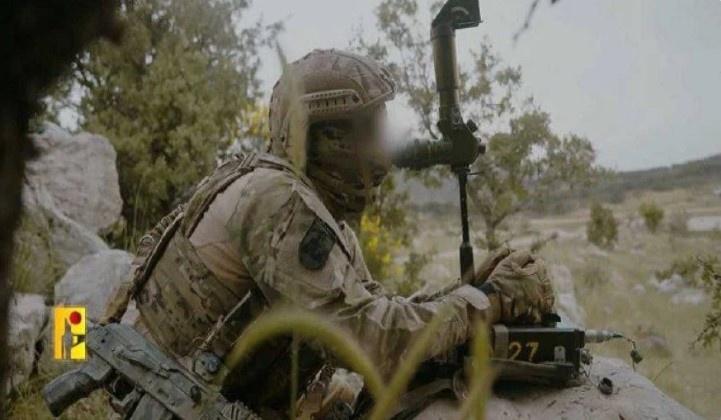
Hezbollah Drone Attack Kills One Israeli Soldier Near Nimr Al-Jamal, Wounds Six
14 sources compared

Iran’s Abbas Araqchi Says Ceasefire With U.S. Includes Lebanon, Nuclear Talks Later
28 sources compared