
Iran after the war: Regional stability, great power rivalry and the future of West Asia
Key Takeaways
- Conflict between Iran, Israel and the United States is among West Asia's most consequential crises.
- Ali Khamenei's death and Mojtaba Khamenei's emergence as supreme leader increased regional uncertainty.
- War and leadership transition intensify great-power rivalry and threaten regional stability.
Iran leadership and strikes
The ongoing conflict involving Iran, Israel and the United States, together with the sudden death of Ali Khamenei and the elevation of Mojtaba Khamenei as Iran’s new supreme leader, has introduced deep uncertainty into West Asian geopolitics.
“The ongoing conflict involving Iran, Israel and the United States represents one of the most consequential geopolitical crises in West Asia in decades”
The article reports Israel-US strikes across Iran, including strikes in Tehran.
It argues that the leadership transition—within the doctrine of Velayat-e-Faqih and after the eras of Ruhollah Khomeini and Ali Khamenei—represents a profound political shock.
It says Mojtaba Khamenei’s rise injects a dynastic element into a revolutionary system and that the new leadership may lean heavily on the Islamic Revolutionary Guard Corps (IRGC) to consolidate power, potentially pushing Iran toward a more security-centric political model.
Iran domestic and regional dynamics
Domestically, the article highlights persistent economic strain, citing sanctions, currency instability, inflation and unemployment.
It identifies repeated waves of suppressed social protest as a core challenge to regime legitimacy.
The piece emphasises the IRGC’s growing dominance in defence, infrastructure and strategic decision-making.
It explains Iran’s regional strategy relies on asymmetric power projection through allied groups and movements, notably Hezbollah in Lebanon, Shia militias in Iraq, the Syrian government and the Houthi movement in Yemen.
The article argues the war is unlikely to reduce Tehran’s reliance on these networks and may reinforce it.
Gulf security and geopolitics
The piece stresses that three long-standing dynamics—Iranian revolutionary ambition, Gulf monarchies' security concerns, and the US military presence—have been shaken, while China and Russia are asserting greater influence.
“The ongoing conflict involving Iran, Israel and the United States represents one of the most consequential geopolitical crises in West Asia in decades”
It notes fragile and varied relations between Iran and Gulf states, highlighting Saudi Arabia's rivalry, the UAE's pragmatic ties, and Qatar and Oman's mediator roles.
The article points to Iran's strategic links to Iraq and Turkey.
It lists US objectives as deterring Iran, securing Israel, and protecting shipping.
The article flags the vulnerability of US bases such as Al Udeid Air Base, Naval Support Activity Bahrain, Al Dhafra Air Base, and Camp Arifjan to missile and drone attack.
It describes possible US shifts toward smaller, dispersed facilities and expanded missile defences.
The piece identifies energy risks from disruptions through the Strait of Hormuz that could affect oil prices and importers such as India, China, and Japan.
It outlines three possible regional trajectories after the war: controlled deterrence, intensified rivalry, or a multipolar order shaped by competing great powers.
More on Iran
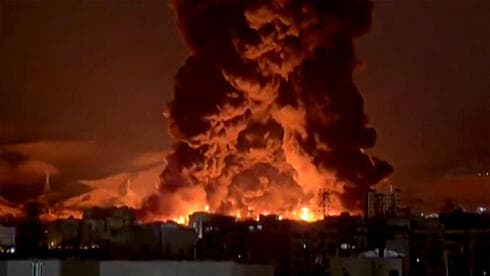
US obliterates military targets on Iran’s Kharg Island, Trump warns
13 sources compared
US Deploys About 2,500 Marines to Middle East After Iran Attacks Gulf Shipping
33 sources compared
FBI Warns of Iranian Drone Plot Based on Unverified Tip; California Says No Credible Threat
10 sources compared

White House Demands ABC Retract Report Claiming Iran Sought To Launch Drone Attacks On California
11 sources compared