Full story
Hormuz deal nears
Iran and Oman are close to agreeing on new arrangements for commercial shipping through the Strait of Hormuz, but Iran says the framework would not mean a full reopening of the waterway.
“Oman has agreed to the framework of a deal with Iran to temporarily reopen the Strait of Hormuz”
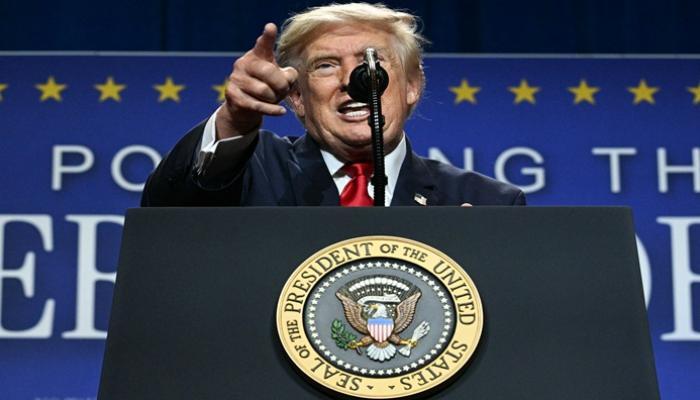
Iran’s state news agency reported Thursday that the two sides were close to agreeing on new arrangements for the Strait of Hormuz, while President Trump said in the Oval Office that "a lot of progress had been made" and suggested an announcement could be made soon.

MS NOW reported that Oman has agreed to the framework of a deal with Iran to temporarily reopen the Strait of Hormuz, with an Iranian government official saying it would establish new shipping routes by allowing commercial vessels to enter the Persian Gulf through an Iranian-controlled route and exit through a route controlled by Oman.
In the same reporting, a U.S. official told MS NOW that Washington will only support a temporary deal that reopens the strait with "no impediments and no fees," describing the Strait of Hormuz as an international waterway where no party controls the lanes or the ability to transit.
The Guardian reported that Reuters said Iranian sources rejected Trump’s claims that a deal to reopen the strait was imminent, saying important details were still to be agreed.
Fees, control, and denials
The dispute over how the strait would operate has centered on whether Iran would control inbound traffic and whether fees would be charged for passage.
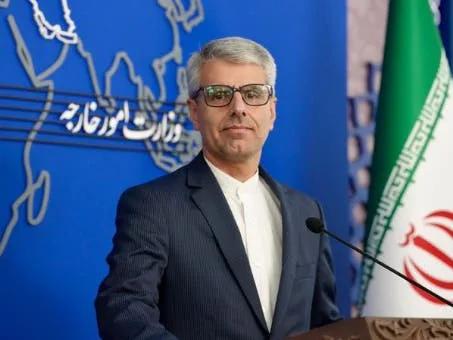
BBC reported that Iran’s foreign ministry spokesman Esmaeil Baqaei said the "geographical coordinates of the route" had been agreed with Oman, while warning that a deal with Oman would not guarantee safe navigation because security remained impacted by the US blockade of Iran's ports.
BBC also said one of the main points of disagreement between Tehran and Washington has been Iran's threat to impose a fee on vessels wishing to cross the strait, with Iran seeking fees of between 5% and 7% of the price of cargoes and Oman discussing fees of around 3%, while Washington wants no fees at all.
The Guardian added that Reuters reported Iranian sources rejected Trump’s claims of imminence, and one of those sources said, "The concession has already been made regarding some form of control over Hormuz."
In parallel, MS NOW reported that the Iranian official said the agreement does not include the collection of tolls from commercial shipping vessels seeking safe passage through the waterway, which Iran has previously sought.
Regional escalation and stakes
As the Hormuz talks advanced, the region also saw lethal attacks tied to the wider Iran conflict, including Houthi missile and drone attacks that killed Saudi-backed Yemeni government forces.
“Houthi missile attacks kill at least 58 Saudi-backed Yemeni government forces”
CBS News reported that Houthi missile attacks killed at least 58 Saudi-backed Yemeni government forces on Thursday, and it said the attacks came as Yemen was increasingly drawn into the U.S.-Israeli war with Iran.
In the same CBS reporting, Saudi officials said the Houthi attacks wounded 11 civilians in the southern Najran region, and the coalition spokesman Gen. Turki al-Maliki said the casualties in the Najran attack included seven Saudis, two Egyptians, a Yemeni and a Pakistani.
CNN reported that Saudi Arabia was bracing for "multiple coordinated attacks" by Iraqi militias working with Iran-backed Houthi rebels, citing a Saudi official who said the planning was "in the very near future" under the guidance of Iran’s Islamic Revolutionary Guard Corps (IRGC).
Against that backdrop, BBC said Iran’s Deputy Foreign Minister Kazem Gharibabadi told Irna the new route would be temporary and could stay open from two to four months, while warning that the factors making the Strait of Hormuz insecure still existed on the US side.