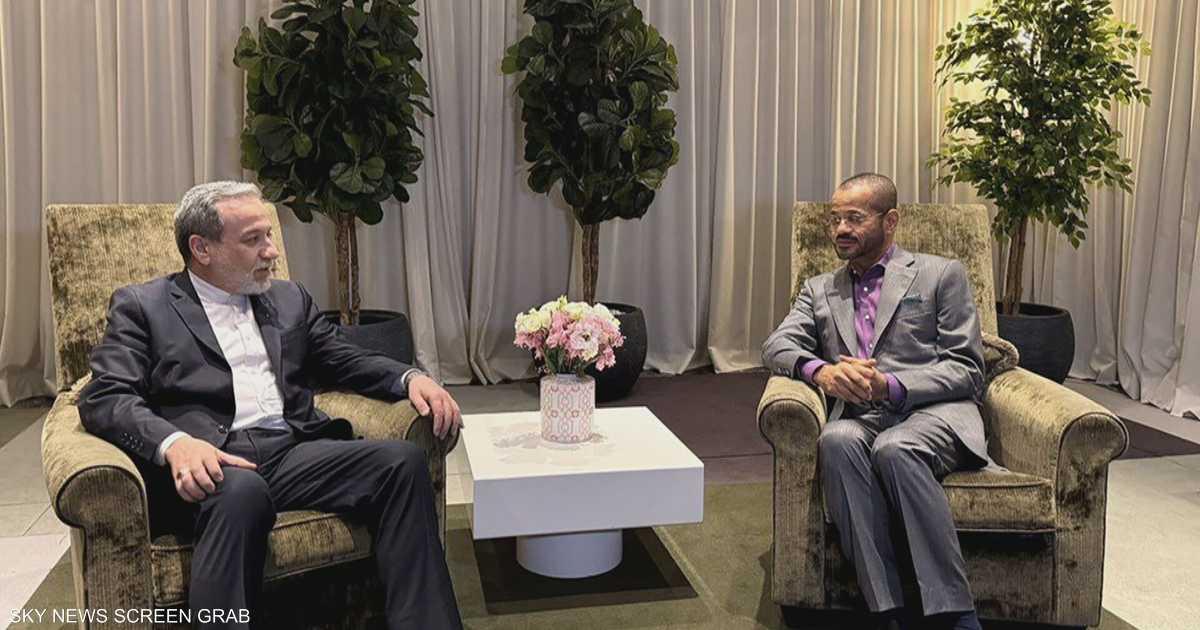
Iran and the United States Hold Third Geneva Talks Mediated by Oman on Thursday
Key Takeaways
- Oman mediates the third US-Iran talks in Geneva on Thursday.
- Iran and United States report progress on sanctions relief and nuclear issues in Geneva talks.
- Iranian and American officials describe the round as positive with ongoing discussions.
A deal in motion
Negotiations between Iran and the United States are moving through a sequence of talks that multiple outlets describe as decisive, with Geneva repeatedly serving as the setting for the next steps.
KhabarOnline frames the effort as “Iran–U.S. Nuclear Talks Enter a Decisive Third Round in Geneva,” while BBC reports that “Oman’s Foreign Minister confirms that a new round of US–Iran negotiations will be held in Geneva on Thursday.”
BBC also says Iranian Foreign Minister Abbas Araghchi favored “another round of talks with the United States in Geneva on Thursday,” describing it as the third between the two sides.
In parallel, Al Jazeera describes Washington’s messaging around possible ceasefire talks, including Trump’s claims that Iran agreed to open — and “never close” — the Strait of Hormuz, and it notes Iran’s confirmation that reopening is for the “duration” of the current pause in fighting.
Axios and Israel Hayom both describe a cash-for-uranium concept and an interim arrangement that would connect nuclear steps to frozen funds.
Axios says the U.S. and Iran are negotiating “over a three-page plan to end the war,” with one element under discussion being that “the U.S. would release $20 billion in frozen Iranian funds” in return for Iran giving up its stockpile of enriched uranium.
Israel Hayom similarly says the U.S. and Iran are expected to sign an interim arrangement in the coming days under which Iran will commit to handing over its enriched uranium and reopening the Strait of Hormuz, while the U.S. agrees to release “$20 billion in frozen funds.”
Across these accounts, the talks are presented as conditional and time-sensitive, with BBC noting that Araghchi said elements are being prepared for a potential agreement and that Iran’s uranium enrichment program is “non-negotiable.”
Strait of Hormuz and frozen funds
The Strait of Hormuz and frozen Iranian funds sit at the center of the competing narratives about what has been agreed and what remains disputed.
Al Jazeera reports that Trump posted claims on Truth Social that Iran had agreed to open — and “never close” — the Strait of Hormuz, and it says Iran confirmed reopening the strait for the “duration” of the current pause in fighting.

Al Jazeera also notes that Iran’s Foreign Minister Abbas Araghchi announced that “the passage for all commercial vessels through Strait of Hormuz is declared completely open for the remaining period of ceasefire,” while a senior Iranian military official told state media that only nonmilitary vessels would be allowed to transit the strait and only with permission from the Iranian Revolutionary Guard Corps (IRGC) Navy.
In the same Al Jazeera account, Trump wrote that the strait is “FULLY OPEN AND READY FOR FULL PASSAGE,” and it also quotes Trump’s claim that “Iran has agreed to never close the Strait of Hormuz again.”
Israel Hayom adds a separate linkage between the strait and an interim arrangement, saying the breakthrough came after the Americans closed the strait to Iranian tankers and that Iran said that if the U.S. did not lift its blockade, it would once again close the strait.
Israel Hayom also states that under the understandings, Iran would be allowed to retain civilian nuclear facilities, but only under full supervision and above ground, and that there would be no restoration of enrichment facilities.
Axios provides additional detail on the money side, saying the U.S. was ready earlier to release “$6 billion” for Iran to purchase food, medicine and other humanitarian supplies, while the Iranians demanded “$27 billion,” and that the latest number discussed is “$20 billion.”
Axios further says Trump wrote on Truth Social after the story published that “no money will change hands,” though it notes he did not refer specifically to unblocking Iranian funds.
What each side says it wants
Public statements from U.S. and Iranian officials, as reflected across outlets, emphasize different end goals and different constraints on what can be traded.
DW quotes Trump telling reporters on Thursday that “There's a very good chance we're going to make a deal” and that “They've agreed to give us back the nuclear dust.”
DW also reports that Trump claimed Iran offered not to possess nuclear weapons for more than 20 years and that he was confident that if the U.S. and Iran reach a deal, “oil goes way down, prices go way down, inflation goes way down.”
BBC, meanwhile, reports that Araghchi reiterated in an interview with CBS that Iran’s uranium enrichment program is “non-negotiable,” and it quotes him saying, “If the United States attacks us, we have the right to defend ourselves.”
BBC adds that Araghchi said Iran’s team is still working on drafting a proposal to the United States regarding its nuclear program and that in the last round U.S. representatives asked Araghchi to submit a detailed written proposal within a few days.
Al Jazeera adds that officials pushed back on claims regarding Iran’s nuclear stockpile, and it says negotiations remain at a preliminary stage, while also quoting Yezid Sayigh saying “We’re not seeing the full picture.”
Israel Hayom frames the U.S.-Iran arrangement as conditional, stating that at this stage “the US is not lifting sanctions on Iran” and that any change is conditional on Iran accepting American terms on disputed issues.
It also says Iran hopes the interim arrangement will drag on and that Trump will find it very difficult to return to fighting to secure demands on other issues.
Diverging assessments and process
While the negotiation process is described as advancing, outlets differ in how they portray the seriousness of progress and the mechanics of the next rounds.
BBC reports that Oman’s Foreign Minister Badr al-Busaidi wrote on X that he was pleased to confirm that talks between the United States and Iran are scheduled in Geneva on Thursday, with a positive intent to take an additional step toward achieving an agreement.

BBC also says Axios had earlier on Sunday evening, citing a senior U.S. official, that American negotiators were ready to hold a new round of talks with Iran on Friday in Geneva if they received a detailed Iranian proposal within the next 48 hours.
Anadolu Ajansı describes a different procedural framing, saying the second round of Iran-US nuclear talks in Geneva will be held “today in Geneva indirectly and with Oman mediating,” and it identifies Ismail Baghaei as Iran’s Foreign Ministry spokesperson.
Al Jazeera’s account of the Geneva talks emphasizes conflicting American assessments, saying an American official asserted the talks were positive while Araghchi said the round was “the best among the rounds.”
Al Jazeera quotes Araghchi saying, “We have clarified our positions on lifting American sanctions and UN Security Council sanctions and what should be done,” and it reports that technical discussions would be held in Vienna next Monday with experts from the International Atomic Energy Agency.
Sky News Arabia adds a more cautionary tone, describing the talks as “On the razor’s edge between diplomacy and saber-rattling,” and it says the curtain fell on the third round in Geneva with “tangible progress” announced by the Omani foreign minister.
Sky News Arabia also claims that an Iranian confirmation that transferring stockpiled highly enriched uranium abroad will not be included in the proposals intersects with “additional military moves toward Israel as part of preparations for a possible strike.”
Risks, timelines, and next steps
The sources also lay out potential timelines and the risks that could derail the negotiations, including uranium-enrichment positions and the possibility of military pressure.
“Washington, DC – United States President Donald Trump has posted a series of rapid-fire messages on the US-Israeli war with Iran, claiming that his government secured major concessions before a possible next round of ceasefire talks”
Crypto Briefing says Iran’s Parliamentary National Security Committee rejected the removal of uranium from Iran, undermining claims of progress in U.S.-Iran nuclear talks, and it frames the odds of Iran agreeing to end uranium enrichment by April 30 as a key marker.

KhabarOnline’s compilation includes “The Likelihood of a Military Attack on Iran” and “On the Brink of War or a Historic Retreat?,” reflecting that the negotiation track is being weighed against the prospect of escalation.
DW reports that skepticism is growing in Iran, where many believe Washington is using the ceasefire to step up its military efforts, and it says Iranian officials approach potential talks with “great caution” and that the military is prepared to tackle any threats.
BBC reports that Araghchi told CBS that if the United States attacks, Iran has the right to defend itself and that “Our missiles cannot reach American territory, so we would naturally have to strike the American base in the region.”
In the same BBC report, Reuters is quoted on an Iranian government official saying that Iran and the United States differ on the mechanism for lifting sanctions and that both sides need a reasonable timetable for lifting the sanctions.
Israel Hayom adds an economic pressure element, saying Iran has reached the brink of insolvency and that its central bank governor warned that within a matter of weeks the state treasury would be completely depleted.
Axios adds a negotiation timeline, saying mediators are still trying to close the gap on a memorandum of understanding and that the U.S. and Iran are negotiating over a “voluntary” moratorium on nuclear enrichment, with the U.S. demanding a 20-year moratorium and Iran countering with five years.
More on Iran

Donald Trump Threatens Iran Infrastructure Strike Over Strait Of Hormuz Ceasefire Violations
23 sources compared

Trump Threatens Strikes as Iran Fires on Ships in Strait of Hormuz
11 sources compared
Donald Trump Sends U.S. Delegation to Pakistan for Iran Talks, Threatens Power Plants and Bridges
47 sources compared

Iran Rejects Trump Claims It Will Transfer Enriched Uranium to the United States
21 sources compared