
Iran Attacks Diego Garcia with Long-Range Missiles, Targeting U.S.-UK Base
Key Takeaways
- Iran launched two intermediate-range ballistic missiles toward Diego Garcia, a US-UK base.
- One missile reportedly failed; a U.S. warship intercepted the other.
- The attack indicates missiles may reach about 4,000 kilometers, exceeding previously declared range.
Attack Details
Iran launched a dramatic escalation in the West Asian conflict by firing two intermediate-range ballistic missiles (IRBMs) at the joint U.S.-UK military base on Diego Garcia in the Indian Ocean on March 21, 2026.
“en EnglishUnited States Deutsch English Español Français Italiano العربية All languages Afrikaans azərbaycan bosanski català Čeština Cymraeg Dansk Deutsch eesti EnglishUnited Kingdom EspañolEspaña EspañolLatinoamérica euskara Filipino FrançaisCanada FrançaisFrance Gaeilge galego Hrvatski Indonesia isiZulu íslenska Italiano Kiswahili latviešu lietuvių magyar Melayu Nederlands norsk o‘zbek polski PortuguêsBrasil PortuguêsPortugal română shqip Slovenčina slovenščina srpski (latinica) Suomi Svenska Tiếng Việt Türkçe Ελληνικά беларуская български кыргызча қазақ тілі македонски монгол Русский српски Українська ქართული հայերեն עברית اردو العربية فارسی አማርኛ नेपाली मराठी हिन्दी অসমীয়া বাংলা ਪੰਜਾਬੀ ગુજરાતી ଓଡ଼ିଆ தமிழ் తెలుగు ಕನ್ನಡ മലയാളം සිංහල ไทย ລາວ မြန်မာ ខ្មែរ 한국어 日本語 简体中文 繁體中文 繁體中文香港 Sign in Sign in”
According to multiple sources, neither missile successfully struck the base - one failed mid-flight while the other was engaged by a U.S. Navy warship using an SM-3 interceptor, though it remains unclear if the interception was successful.
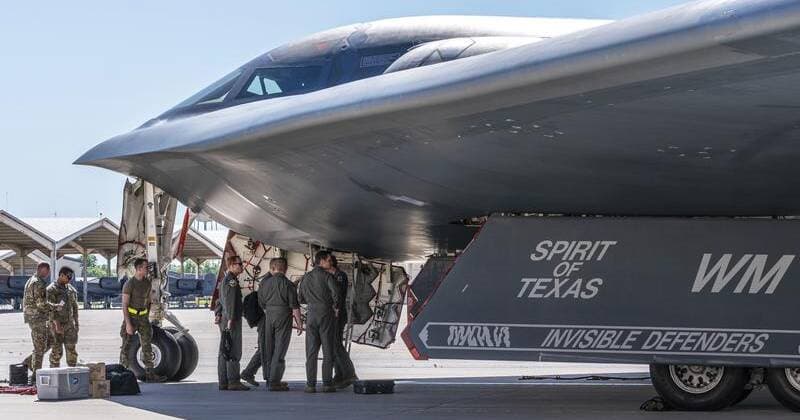
The attack marked Iran's first operational deployment of intermediate-range ballistic missiles and represented the longest-range attack carried out by Tehran since the beginning of 'Operation Epic Fury' three weeks earlier.
Iranian media framed the targeting as a 'significant step' demonstrating that Iran's missile capabilities extend far beyond what adversaries had previously imagined.
Strategic Importance
Diego Garcia, located approximately 4,000 kilometers from Iran's coastline, serves as one of the most strategically important military installations operated jointly by the United States and United Kingdom.
The base, part of the Chagos Archipelago, hosts critical infrastructure including long-range bombers like the B-2 Spirit, nuclear-powered submarines, guided-missile destroyers, and intelligence assets that support military operations across the Middle East, Asia, and Africa.

Its deep-water port and long runway make it an indispensable platform for U.S. security operations, having supported campaigns from Vietnam to Iraq and Afghanistan.
The base's isolation far from conventional conflict zones has long been considered one of its key advantages, serving as a stepping stone that allows the U.S. to launch missions across vast geographic areas while maintaining strategic distance from immediate threats.
Missile Capabilities Exposed
The attempted strike on Diego Garcia revealed significant gaps between Iran's publicly acknowledged missile capabilities and its actual operational reach.
“Selecting Allow all enables tracking technologies to support the purposes shown under we and our partners process data to provide”
Iranian officials, including Foreign Minister Abbas Araghchi, had previously maintained that Iran had intentionally limited its missile range to below 2,000 kilometers to avoid becoming a global threat, with Araghchi specifically stating in February 2026 that 'We intentionally kept the range of our missiles below 2,000 km so we don't have that capability.'
However, Diego Garcia lies roughly 4,000 kilometers from Iran - exactly double the distance Tehran had claimed as its self-imposed limit.
This discrepancy suggests either undeclared capabilities, modified systems, or early testing of longer-range missiles, potentially involving payload-range trade-offs where reduced warhead mass allows extended flight distance.
Western analysts have long suspected Iran's space program could serve as a pathway to intercontinental ballistic missile capability, and this incident appears to confirm those suspicions by demonstrating Iran's ability to threaten strategic rear-area bases supporting Western operations rather than limiting attacks to regional targets within the Persian Gulf.
Political Context
The attack occurred within a complex political context marked by shifting alliances and escalating tensions.
Just hours before the missile launch, UK Prime Minister Keir Starmer reversed his initial position and granted the United States permission to use British bases, including Diego Garcia and RAF Fairford, for 'specific and limited defensive operations' targeting Iranian missile sites used to attack shipping in the Strait of Hormuz.

This policy shift prompted immediate condemnation from Iranian officials, with Foreign Minister Abbas Araghchi stating that Starmer was 'putting British lives in danger by allowing UK bases to be used for aggression against Iran' and pledging that 'Iran will exercise its right to self-defence.'
The incident also drew sharp criticism from U.S. President Donald Trump, who suggested that the UK 'should have acted a lot faster' in providing military support and characterized the British response as 'very late.'
Meanwhile, Israel's military chief Lt. Gen. Eyal Zamir seized on the implications, noting that the 4,000-kilometer range means that 'Berlin, Paris, and Rome are all within direct threat range,' raising concerns about the potential expansion of the conflict beyond traditional Middle East boundaries.
Strategic Implications
The attempted strike on Diego Garcia represents a significant strategic shift that could fundamentally alter military calculations and expand the perceived conflict zone far beyond traditional boundaries.
“28 and have reportedly killed 1,300 people, including then-Supreme Leader Ali Khamenei”
Defense analysts suggest that the political and strategic implications outweigh the technical results of the unsuccessful attack, as Iran has demonstrated the ability to threaten key Western assets thousands of kilometers from its territory.
By compelling the U.S. to activate high-end interception systems and test response times, Tehran has effectively gathered valuable operational data on allied missile defense capabilities while sending a clear message about its willingness to strike deep into what were previously considered safe rear areas.
The incident forces strategic planners to reconsider defense of distant installations and stretches U.S. and allied resources across a broader geographic theater.
This development comes amid rising tensions in the Strait of Hormuz and increasing confrontations involving U.S. and allied forces, suggesting that the conflict may be entering a more dangerous phase with potentially global implications as Iran demonstrates its capacity to project power far beyond regional boundaries.
More on Iran
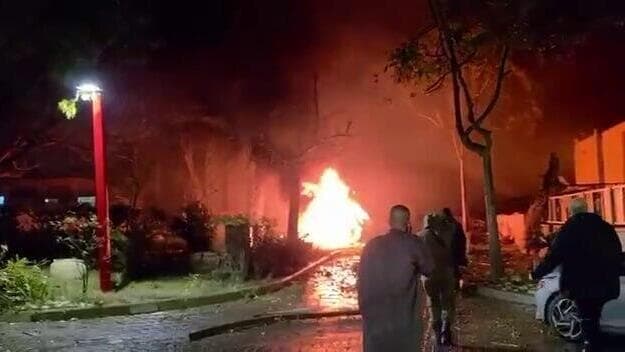
Iranian missiles strike Dimona and Arad, injuring over 100.
47 sources compared
Iran Attacks Dimona in Retaliation for Natanz Strike
44 sources compared

Trump Defends Iran War by Citing Pearl Harbor
12 sources compared
Israel's Defense Minister Warns Israel and United States Will Intensify Attacks on Iran
125 sources compared