Iran Attacks Dimona and Arad with Ballistic Missiles, Broadens War With Israel
Key Takeaways
- Iranian missiles hit Dimona and Arad, injuring more than 100 people.
- Strikes framed as retaliation for Natanz; UN officials: no evidence of Dimona damage.
- The incident escalates tit-for-tat clashes near nuclear sites, raising regional risk.
Missile Attacks Cause Heavy Casualties
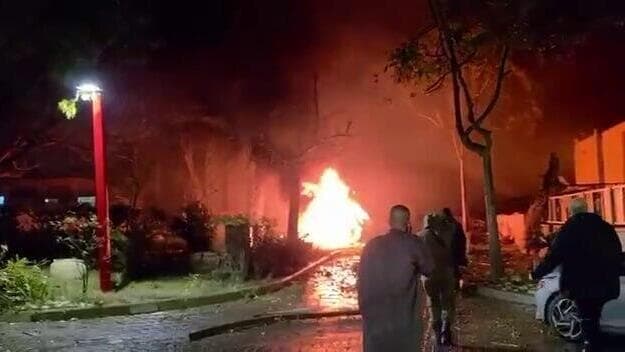
Iranian ballistic missiles struck the southern Israeli towns of Dimona and Arad on Saturday, March 21, 2026.
The attacks wounded over 100 people, including children, and caused extensive damage to residential buildings.

In Dimona, which hosts Israel's main nuclear facility, 33 people were injured including a 10-year-old boy in serious condition with shrapnel wounds.
Hours earlier, 75 people were wounded in Arad, with 10 in critical condition after a missile struck a residential area.
The strikes represent the first time Iranian missiles have penetrated Israel's air defense systems around the nuclear site.
Firefighters reported that interceptors were launched but failed to hit the threats, resulting in two direct hits by ballistic missiles with warheads weighing hundreds of kilograms.
Iran Claims Retaliatory Strikes
Iranian state television framed the attacks as direct retaliation for earlier Israeli strikes on the Natanz nuclear enrichment facility in Iran.
Iranian officials claimed the Dimona strike was specifically targeting Israel's nuclear capabilities in response to what they described as US-Israeli attacks on Iranian nuclear infrastructure.

Iran's Parliament Speaker Mohammad Bagher Ghalibaf stated that the failure to intercept missiles in the heavily protected Dimona area 'is operationally a sign of entering a new phase of the battle.'
Tasnim news agency affiliated with Iran's security forces declared that 'the enemy has once again received an unforgettable lesson' and that 'no area is safe from Iranian missiles.'
Iranian Foreign Ministry subsequently accused Israel of 'deliberately striking civilians with missiles' in both Dimona and Arad.
Israeli Response and Defense Failures
Israel's military acknowledged that its air defense systems operated but failed to intercept the missiles that struck both Dimona and Arad.
“He reiterated his call for all the peoples of the nation to stand united against the enemy and work together for the central issues, foremost among them the liberation of Palestine”
Military spokesman Brig. Gen. Effie Defrin stated it was 'not a matter of a different or special type of missile.'
The Israeli Defense Forces announced they would investigate the failures and learn from the incidents.
Prime Minister Benjamin Netanyahu described the attacks as 'a very difficult evening in the battle for our future' and vowed to continue striking Iran and its allies 'on all fronts.'
Defense Minister Israel Katz warned that the intensity of strikes against Iran would rise significantly beginning March 22.
The Israeli military also claimed it had successfully struck a facility inside Tehran's Malek Ashtar University that it said was being used to develop components for nuclear weapons.
International Reaction and Nuclear Concerns
The International Atomic Energy Agency (IAEA) reported that it had not received any indication of damage to the Shimon Peres Negev Nuclear Research Center in Dimona.
No abnormal radiation levels had been detected in the area, according to the IAEA.

The UN nuclear watchdog reiterated its calls for 'maximum military restraint to avoid any risk of nuclear accident' following both the earlier strike on Natanz and the subsequent attacks on Israeli nuclear-related sites.
Russian Foreign Ministry spokesperson Maria Zakharova warned that such strikes posed a 'real risk of catastrophic disaster throughout the Middle East.'
Saudi Arabia expelled Iran's military attaché and staff in protest against what it described as 'blatant Iranian aggression.'
Twenty-two countries issued a joint statement condemning Iranian attacks on civilian infrastructure and expressing readiness to ensure safe passage through the Strait of Hormuz.
Economic Impact and Regional Escalation
The conflict has had severe economic repercussions, with Iran's partial closure of the Strait of Hormuz to vessels from 'hostile countries' triggering a sharp surge in oil prices.
“This article was produced by AFP”
Brent crude surpassed $105 per barrel—an increase of 50 percent within one month—threatening global energy markets.
Iran has also attempted to strike the joint US-UK military base on Diego Garcia in the Indian Ocean, some 4,000 kilometers from Iranian territory.
This demonstrates an expanded missile range that has raised concerns about broader international implications.
Military experts suggest Iran may have used its space launch vehicles for improvised long-range strikes.
Israel's army chief Gen. Eyal Zamir claimed Iran had fired 'a two-stage intercontinental ballistic missile with a range of 4,000 kilometers.'
The attacks mark a dangerous escalation in the conflict's fourth week, with both sides indicating they are prepared for continued and potentially intensified military operations.
More on Iran
Israel and U.S. Strike Natanz Nuclear Facility Again; Iran Blames Attack
69 sources compared

Iran fires two long-range missiles at Diego Garcia base
102 sources compared

Trump Defends Iran War by Citing Pearl Harbor
12 sources compared
Israel's Defense Minister Warns Israel and United States Will Intensify Attacks on Iran
125 sources compared