Iran18 March, 20263 min read
Iran Attacks Qatar's World's Largest LNG Export Terminal.
This article is an automated aggregation of coverage from news outlets. Our editorials offer in-depth analysis curated by the NewsCord team.
Iran attacked Qatar's LNG export terminal, the world's largest, causing extensive damage. Retaliatory strikes followed an Israeli attack on Iran's South Pars gas field.
Qatar LNG Attack
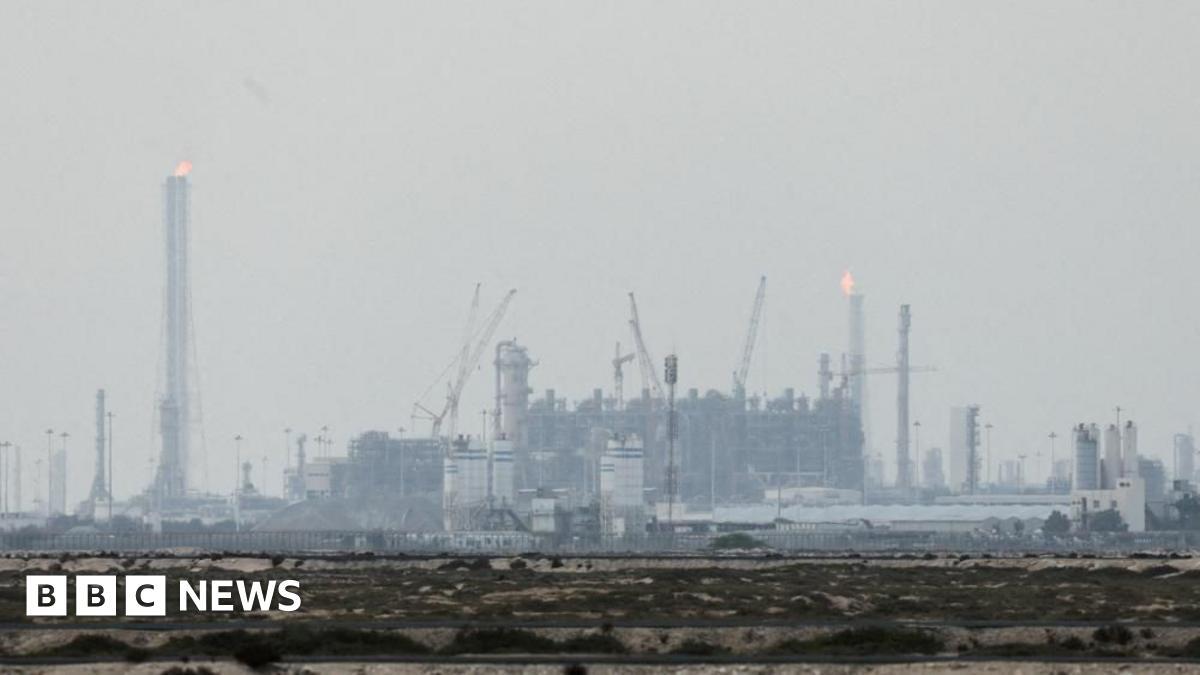
Iran launched ballistic missiles that struck Qatar's Ras Laffan Industrial City, home to the world's largest liquefied natural gas export terminal. The attack caused significant damage and fires at this critical energy facility, which handles approximately 20% of global LNG supply.
“Iran hit the world's largest liquefied natural gas export terminal in Qatar, according to the Qatari interior ministry. 'Civil defence is dealing with a fire in the Ras Laffan area following an Iranian targeting,' the ministry said in a post on X.”
Qatari authorities confirmed the attack, stating that while four of the five missiles were intercepted, one successfully hit the facility. This represents a dramatic escalation in the conflict as Iran shifts from targeting Israeli and US military assets to economic infrastructure in neighboring Gulf states.

Energy Infrastructure Targeting
The attack on Qatar's LNG terminal comes amid a broader pattern of energy infrastructure becoming a central target in the escalating regional conflict. Iran's actions appear to be retaliatory strikes following Israel's attack on Iran's South Pars natural gas field, a critical energy source that supplies about 80% of Iran's natural gas.
This represents a significant strategic shift as both sides now directly target each other's economic lifelines rather than purely military objectives. The conflict has expanded beyond direct military exchanges to include systematic targeting of energy facilities across the Gulf region, creating widespread concern about regional stability and global energy security.
Market Impacts
The attacks on energy infrastructure have triggered significant market disruptions and economic consequences, with oil prices surging dramatically following the strikes. International benchmark Brent crude has risen nearly 50% since the start of the war, with prices climbing another 5% to over $108 per barrel following the latest attacks.
“The price of oil surged another 5% to over $108 a barrel on international markets, increasing the price of gasoline and other goods. The price of Brent crude, the international benchmark for oil, is now up close to 50% since the start of the war.”
The Ras Laffan facility, which serves as a crucial hub for feeding Europe, Asia, and other global markets with LNG, had already seen parts of its operations shut down due to earlier attacks. This disruption comes at a time when global energy markets were already facing supply constraints, leading to increased prices for gasoline and other consumer goods worldwide.
Diplomatic Fallout
The attack has led to significant diplomatic consequences, with Qatar taking immediate action by declaring Iranian military and security personnel as 'persona non grata' and requiring them to leave the country within 24 hours. This represents a severe breakdown in previously cooperative relations between the two Gulf nations, which had amicably shared the giant South Pars gas field that helped propel Qatar toward unprecedented wealth.
Qatari authorities had reportedly argued strongly against the current conflict, making Iran's retaliatory strike particularly damaging to regional relations. The Qatari Ministry of Foreign Affairs condemned the Israeli targeting of facilities 'linked to Iran's South Pars field, an extension of Qatar's North Field,' calling it a 'dangerous & irresponsible step amid the current military escalation in the region.'

Regional Escalation
The conflict has expanded beyond bilateral exchanges to include attacks on multiple Gulf states' energy infrastructure, indicating a broader regional escalation. Iran has simultaneously targeted energy facilities in Saudi Arabia's Eastern Province (home to many of its oil fields), Kuwait, Bahrain, and the United Arab Emirates. The Islamic Revolutionary Guard Corps issued evacuation orders for energy assets in Qatar, Saudi Arabia, and the UAE, warning that 'these facilities have become direct and legitimate targets and will be targeted in the coming hours.'
“Iran kept up attacks on its Persian Gulf neighbors' energy facilities, striking a major natural gas facility in Qatar, as it continued to squeeze the Strait of Hormuz shipping channel — through which one-fifth of the world's oil travels.”
This coordinated attack strategy suggests Iran is attempting to pressure multiple regional states simultaneously, potentially in response to their perceived support for Israeli and US actions. The attacks also coincide with Iran's attempts to block some shipping traffic through the strategically vital Strait of Hormuz, through which one-fifth of the world's oil travels.
