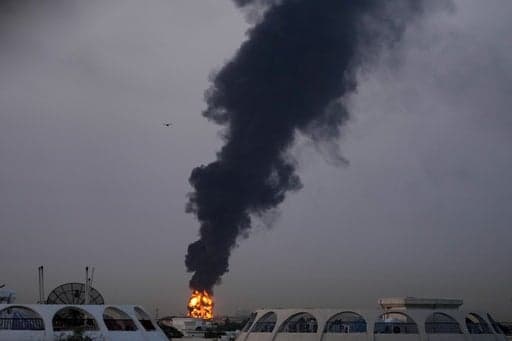
Iran Attacks With Missiles After Israel Kills Two Senior Iranian Officials
Key Takeaways
- Israel killed Ali Larijani and Gholam Reza Soleimani, senior Iranian security officials.
- Iran launched a missile and drone barrage in retaliation.
- Intelligence Minister Esmail Khatib killed, according to NBC and Washington Examiner.
Iranian Officials Eliminated
Israel's overnight strikes killed two of Iran's most senior officials, marking the most significant blow to the country's wartime leadership since Iran's supreme leader, Ayatollah Ali Khamenei, was killed at the outset of the conflict late last month.
“President Donald Trump saidhe had demandedthat roughly a half-dozen countries send warships to keep theStrait of Hormuzopen”
Israeli Defense Minister Israel Katz confirmed that Ali Larijani, the head of Iran's Supreme National Security Council, and Gen. Gholamreza Soleimani, the commander of the Revolutionary Guard's Basij militia, were "eliminated" in separate airstrikes.

"Larijani and the Basij commander were eliminated overnight and joined the head of the annihilation program, Khamenei, and all the eliminated members of the axis of evil, in the depths of hell," Katz's office stated.
Larijani was considered one of Iran's most powerful figures, a former parliamentary speaker and senior policy adviser who had been appointed to advise the late Khamenei on strategy in nuclear talks with the Trump administration.
Soleimani, meanwhile, led the Basij militia forces which Israel's military accused of leading "the main repression operations, employing severe violence, widespread arrests, and the use of force against civilian demonstrators" to quash anti-government protests.
Iran's Supreme National Security Council later confirmed Larijani's death in a statement carried by Mehr news, describing him as having "proudly attained the blessed rank of martyrdom in the service front."
Iran Missile Response
Iran responded swiftly to the killing of its senior officials by launching multiple-warhead missiles at Israel early Wednesday, using weapons specifically designed to spread maximum damage and evade Israel's multiple layers of air defenses.
A statement from Iran's paramilitary Revolutionary Guard, reported by Iranian state television, confirmed the launch of both Khorramshahr-4 and Qadr multiple-warhead missiles targeting an area near Tel Aviv.

The Guard described the attack as revenge for Israel killing top security official Ali Larijani.
Footage filmed by The Associated Press showed the release of cluster munitions from at least one missile over Israel, demonstrating the sophisticated nature of Iran's response.
The attack resulted in at least two deaths in Israel - a man and a woman in Ramat Gan, a district east of Tel Aviv, who suffered "severe shrapnel injuries" according to Israel's Magen David Adom medical service.
"We saw smoke rising from a building with extensive damage and shattered glass," MDA paramedic Inbar Green and MDA EMT Naftali Halberstadt reported.
"From among the debris, we saw two unconscious casualties, with no pulse and not breathing, with severe injuries to their bodies."
In Bnei Brak, also near Tel Aviv, medics treated one man for minor shrapnel injuries to his hand.
The missile attacks represent Iran's latest attempt to demonstrate its military capabilities and retaliate against the targeted killing of its senior leadership by Israeli forces.
Gulf Energy Attacks
While Iran focused its missile attacks on Israel, the Islamic Republic also maintained pressure on Gulf Arab nations, particularly targeting energy infrastructure in a strategy designed to demonstrate its regional capabilities and inflict economic damage.
“Iran launches barrage of missiles after Israel kills 2 of its top officials Iran launches barrage of missiles after Israel kills 2 of its top officials DUBAI, United Arab Emirates (AP) — Israel killed two senior Iranian security officials in a major blow to the Islamic Republic’s leadership as it faces its greatest test in decades, and Iran responded Wednesday with renewed missile and drone attacks on its Gulf Arab neighbors and Israel”
Iran's parliamentary speaker, Mohammad Bagher Qalibaf, defended the attacks on shipping traffic in the Strait of Hormuz, stating "They are flying, launching missiles, should we just sit back and do nothing in response?"
Iran kept up the pressure by hitting an oil facility in Fujairah, a UAE emirate on the country's east coast with the Gulf of Oman that has been repeatedly targeted.
State-run WAM news reported that no one had been injured in the blast from the drone strike, but the attacks have had significant economic consequences.
Brent crude, the international oil benchmark, continued to rise, settling at $103.42 per barrel on Tuesday, up 3.2 percent for the day and over 42 percent since the war began.
Iran's attacks on Gulf nations and its grip on the Strait of Hormuz, through which a fifth of the world's oil is transported, have given rise to increasing concerns of a global energy crisis.
Early Tuesday it hit a tanker anchored off the coast of Fujairah, one of about 20 vessels hit since Israel and the United States started the war with an attack on Iran on Feb. 28, demonstrating the broadening scope of Iran's military response.
International Reactions
The escalating conflict has triggered significant international reactions, with European allies expressing reluctance to join U.S.-led efforts to secure the Strait of Hormuz while Gulf Arab nations appear to be strengthening their ties with Washington.
The European Union's foreign policy chief, Kaja Kallas, stated that the bloc is consulting with Gulf countries to potentially "bring forward proposals for Iran, Israel and the U.S." to get out of their war in a situation where "everybody saves face."

"Nobody is ready to put their people in harm's way in the Strait of Hormuz," Kallas told Reuters, noting that the EU is willing to assist "diplomatically to bring the parties together to really stop this war."
Meanwhile, Gulf countries have become much more realistic and see that they are being attacked by Iran, not by Israel, according to Anwar Gargash, diplomatic adviser to the president of the United Arab Emirates.
Gargash noted that the nearly 2,000 Iranian attacks on the UAE so far are more than the Islamic Republic's attacks on Israel, and he expects the U.S. relationship with Gulf countries "to be much, much stronger."
"We are seeing a relationship that is on an upward trajectory," Gargash said in a video event at the Council on Foreign Relations.
This geopolitical realignment comes as President Donald Trump has struggled to muster support from allies, with NATO and most other allies rejecting his calls to help secure the strait, creating a complex international dynamic as the conflict intensifies.
Humanitarian Crisis
The conflict has created a severe humanitarian crisis with significant civilian casualties on multiple fronts and millions displaced from their homes.
“sanctions and implicated in the violent repression of mass protests in January”
In Lebanon, Israeli strikes have killed 968 people, including 116 children and 77 women, according to Lebanon's Health Ministry, with the death toll rising as the conflict continues.

More than one million people have been displaced in Lebanon by the conflict, representing roughly 20% of the country's population.
Israel has also been targeting Hezbollah positions in Lebanon, hitting multiple apartment buildings in Beirut and killing at least a dozen people in recent strikes.
In Israel, 14 people have been killed by Iranian missile fire, including the two victims in Ramat Gan.
Meanwhile, Iran has also suffered significant casualties, with more than 1,300 people killed in Iran since the conflict started, according to the Iranian Red Crescent.
The United Nations food agency warned that the U.S.-Israeli war on Iran threatened to drive up the number of people suffering from acute hunger by tens of millions worldwide, as disruption of shipping lanes delays lifesaving food aid deliveries.
Shipping costs have risen 18 percent, and higher oil prices are driving up the agency's operating costs, creating a cascade of humanitarian and economic consequences that extend far beyond the immediate combat zones.
Conflict Escalation
The targeted killings of Iranian officials and Iran's retaliatory missile attacks represent a dangerous escalation in an already complex regional conflict that has evolved significantly since the U.S.-Israeli joint military operation began on Feb. 28.
With Iran's Supreme Leader Ayatollah Ali Khamenei killed on the first day of the strikes, and now the elimination of Larijani and Soleimani, Iran's leadership structure has been severely disrupted.
Western observers fear that, by taking out Iran's current leaders, it will only create a vacuum to be filled by the powerful Islamic Revolutionary Guard Corps, the country's feared paramilitary, political and economic behemoth.
"If you look at how the assassination of Ali Khamenei empowered the most hard-line and security elements within the Islamic Republic of Iran, then Larijani's death could act as an accelerator to that path," said Ellie Geranmayeh, a senior policy fellow at the European Council on Foreign Relations.
Larijani, who had been a key figure in Iran's nuclear negotiations with the West, represented a more pragmatic approach, and his death "could increase internal tensions in the short term, even if it ends up reinforcing the IRGC in the longer term."
The conflict shows no signs of de-escalation, with both sides continuing to strike targets and the humanitarian crisis deepening, suggesting that the region faces a prolonged and increasingly dangerous period of instability as the international community struggles to find diplomatic solutions to contain the escalating violence.
More on Iran
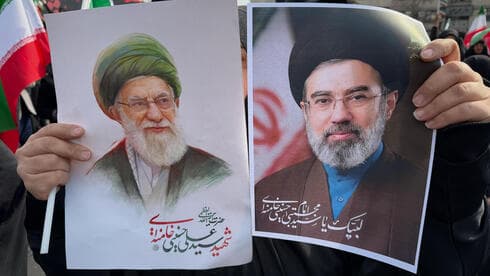
Iran weakened but intact, not rebuilding enrichment, says U.S. intelligence chief Tulsi Gabbard.
27 sources compared

Israel Kills Iran's Security Chief Ali Larijani in Air Strike, Iran Vows Decisive Retaliation
34 sources compared

Israel Kills Ali Larijani and Gen. Gholam Reza Soleimani in Overnight Strikes
31 sources compared

Trump Waives Jones Act for 60 Days to Relieve Oil Price Surge Amid Iran War
10 sources compared