
Iran Blames United States as NPT Review Conference Ends Without Final Agreement
Key Takeaways
- NPT Review Conference ends without final agreement; Iran blames United States and allies.
- US-Israel military preparations against Iran escalate, raising fears of renewed conflict.
- Iran warns of broader regional conflict, potential naval blockade and NPT withdrawal.
NPT deadlock and blame
The 11th Review Conference of the Treaty on the Non-Proliferation of Nuclear Weapons ended at the United Nations headquarters in New York without a final agreement for the third consecutive time, with Iran blaming “excessive demands and obstruction by the United States and its allies.”
“In remarks published on Sunday, Rezaei warned that any military action against Iran in the Strait of Hormuz could trigger a much wider regional conflict, saying Tehran may break what he described as a “naval blockade” and could even withdraw from the Treaty on the Non-Proliferation of Nuclear Weapons (NPT)”
WANA News Agency said the chair announced that no consensus had been reached among member states and therefore no final document would be submitted for adoption, while Iran’s closing statement criticized the policies of the United States, the United Kingdom, and France for the collapse of negotiations.
In that closing statement, Iran accused nuclear-armed states and members of the “nuclear umbrella” of failing to fulfill disarmament obligations and of violating the NPT by expanding both the quantity and quality of their nuclear arsenals.
WANA also reported that Iran warned that continuation of the current trend could “seriously undermine the credibility and effectiveness of the NPT and potentially weaken international mechanisms related to global peace and security.”
The WANA statement further said Iran welcomed the inclusion of proposals in the draft final document, including immediate nuclear disarmament and a ban on attacks against peaceful nuclear facilities, and said the 12th NPT Review Conference is scheduled to be held in 2031.
Talks shift, obstacles remain
While WANA described NPT negotiations ending in deadlock, ynetnews reported that regional sources told CNN on Saturday there was cautious optimism over progress in U.S.-Iran negotiations, with one source saying “things are moving in a positive trajectory” and another saying “the deadlock is over.”
ynetnews said the talks centered on a Pakistan-backed draft agreement aimed at ending the war, and Reuters reported that a proposed framework would unfold in three stages: formally ending the war, resolving the crisis in the Strait of Hormuz, and opening a 30-day window for negotiations on a broader agreement with the possibility of an extension.
A source familiar with Iran’s negotiating team told Iran’s Fars news agency that three obstacles remained: the nuclear issue, the release of Tehran’s frozen funds, and full Iranian control over movement and navigation in the Strait of Hormuz.
ynetnews added that Pakistan’s army chief Field Marshal Asim Munir completed meetings in Tehran on Saturday, holding hours of talks into the night with Iranian Foreign Minister Abbas Araghchi and later meeting Iranian parliament speaker Mohammad Bagher Ghalibaf and President Masoud Pezeshkian.
The same ynetnews report said Reuters expected President Donald Trump to speak overnight with leaders from Saudi Arabia, Qatar, the United Arab Emirates, Egypt, Turkey and Pakistan, while Prime Minister Benjamin Netanyahu was set to hold a security discussion with coalition party leaders.
Hormuz blockade and escalation fears
As diplomacy and NPT talks stalled, Al-Sharq Bloomberg reported that “No movement of shipping through the Hormuz Strait has resumed,” describing a “double blockade” and a stalled diplomatic horizon between the United States and Iran.
“WANA (May 23) –The 11th Review Conference of the Treaty on the Non-Proliferation of Nuclear Weapons (NPT), held over the course of a month at the United Nations headquarters in New York, concluded without a final agreement for the third consecutive time, with Iran blaming the outcome on what it described as the excessive demands and obstruction by the United States and its allies”
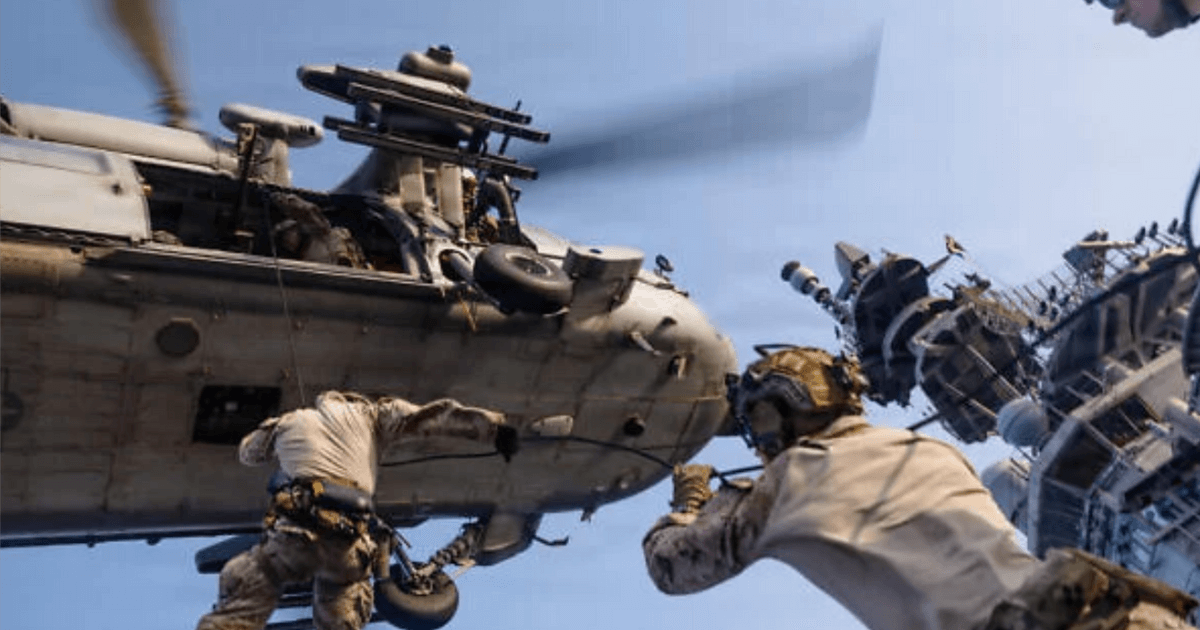
The same Al-Sharq Bloomberg report said a U.S. Navy helicopter intercepted the vessel MV Sevan in the Arabian Sea on Saturday, and that CENTCOM said Sevan was one of 19 ships belonging to the Shadow Fleet that the U.S. Treasury sanctioned for transporting energy products, oil, and Iranian gas worth billions of dollars to foreign markets.
Al-Sharq Bloomberg also said Tasnim News Agency reported that the Iranian Revolutionary Guard Corps seized two container ships owned by Israel, named MSC Francesca and Baminondas, and that the agency said the two vessels were moored near the Hormuz Strait in response to “American maritime piracy.”
Mehr News Agency quoted Rezaei warning that any military action against Iran in the Strait of Hormuz could trigger a much wider regional conflict, saying Tehran may break what he described as a “naval blockade” and could even withdraw from the NPT.
Mehr News Agency further warned that Washington and the administration of Donald Trump are facing a “complete deadlock,” and Rezaei said any decision to enter a war with Iran would place the U.S. inside “a dark and endless corridor” stretching from the Strait of Hormuz to the Persian Gulf, the Gulf of Oman, Bab al-Mandab and the Indian Ocean.
More on Iran
Donald Trump Says U.S. Iran Framework Extends Ceasefire 60 Days, Reopens Strait of Hormuz
21 sources compared

Donald Trump Tells U.S. Negotiators Not To Rush Iran Deal On 60-Day Ceasefire
38 sources compared

Trump Says US-Iran Deal Is Largely Negotiated, Framework Gives 60 Days
21 sources compared
Donald Trump Says U.S. and Iran Have Largely Negotiated Deal to Reopen Strait of Hormuz
24 sources compared