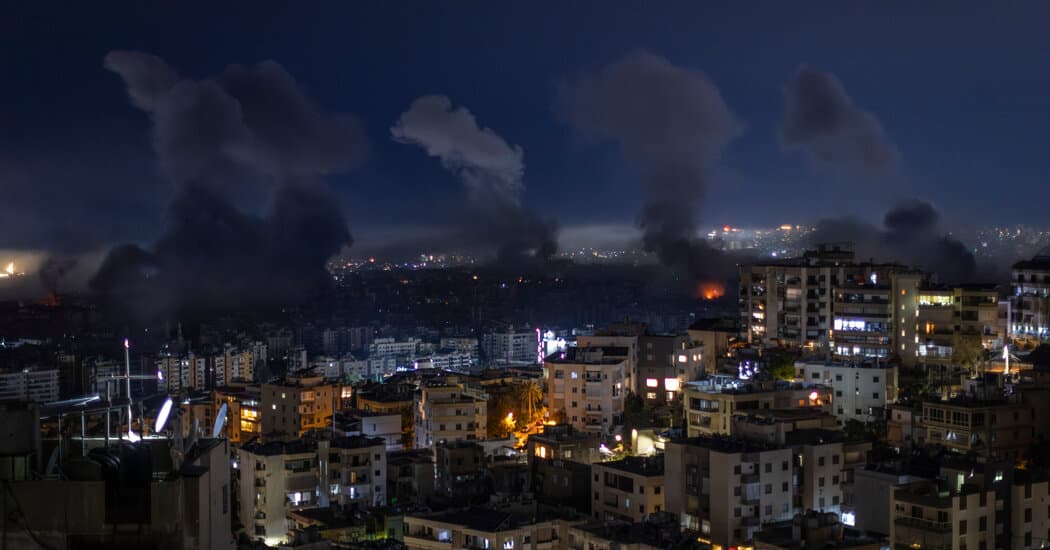
Iran Claims Strike on Tanker Off Iraq, Prompting Iraq and Oman to Close Oil Terminals
Key Takeaways
- Iran claimed responsibility for striking one of two oil tankers burning off the Iraqi coast
- Iraq and Oman closed oil terminals
- International Energy Agency warned the war caused the largest global oil supply disruption in history
Iran claims tanker strike
Iran’s military publicly said it launched attacks in the wider regional conflict and Iran’s Revolutionary Guards Corps claimed responsibility for striking one of two tankers off Iraq’s coast, describing the struck vessel as a Marshall Islands‑flagged ship and saying in a statement that the ship had “disobeyed and ignored” warnings; the Guards’ statement did not mention the other tanker, while Iraqi officials said they believed Iran was responsible for the attacks that killed one person.
(All information reported by The New York Times.)
Iraq, Oman close terminals
The strikes and related security fears prompted closures and operational disruptions at oil facilities: both of the struck tankers were used by Iraq for its own oil transport and were hit while in a ship‑to‑ship transfer area, and Oman closed its key oil export terminal, Mina Al Fahal, citing security; the reports said it remained unclear in some cases who was responsible for specific attacks even as states and companies took precautionary measures.
(All information reported by The New York Times.)
Maritime attack pattern
Multiple reports and maritime authorities described a wider campaign of attacks and attempted strikes across the Gulf and nearby waters: the United Kingdom Maritime Trade Operations recorded at least 16 reports of attacks on ships in and around the Persian Gulf, the Strait of Hormuz and the Gulf of Oman, a third ship was struck by an unknown projectile near Dubai, and the U.S. military said it had attacked Iranian mine‑laying vessels near the Strait; Gulf states also reported intercepting missiles or destroying drones during the same period.
(All information reported by The New York Times.)
Energy market disruption
The attacks have had immediate and severe effects on global energy markets: the International Energy Agency said global oil supplies were set to plunge by about 8 million barrels a day and traffic through the Strait of Hormuz had dropped from roughly 20 million barrels a day before the war to “a trickle,” prompting an unprecedented coordinated release of 400 million barrels from IEA member strategic reserves and pushing Brent crude briefly back above $100 a barrel as Gulf producers curtailed output by at least 10 million barrels a day.
(All information reported by The New York Times.)
Human toll and escalation
Reports also highlighted civilian harm, regional escalation and political statements: the number of people killed in Iran was described as unclear though Iran’s U.N. representative said more than 1,348 civilians had died, Israeli strikes in Lebanon were reported to have killed more than 600 people and displaced over 800,000, Israel expanded evacuation orders deeper into southern Lebanon and its defense minister warned Lebanon’s president that Israel could take territory to stop Hezbollah, while U.S. and Pentagon details — including a preliminary finding that a U.S. strike on an Iranian school killed 175 people, most of them children — were cited in the same coverage.
(All information reported by The New York Times.)
More on Iran
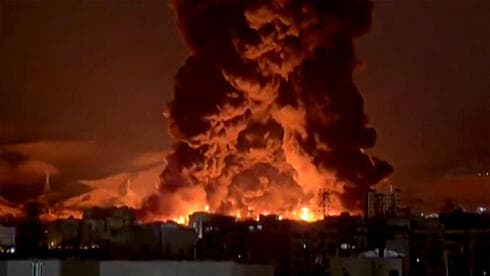
US obliterates military targets on Iran’s Kharg Island, Trump warns
13 sources compared
US Deploys About 2,500 Marines to Middle East After Iran Attacks Gulf Shipping
33 sources compared
FBI Warns of Iranian Drone Plot Based on Unverified Tip; California Says No Credible Threat
10 sources compared

White House Demands ABC Retract Report Claiming Iran Sought To Launch Drone Attacks On California
11 sources compared