Full Analysis Summary
Verification of claim
I cannot find any provided source that reports an "unprecedented espionage offensive" by Iran against Israel.
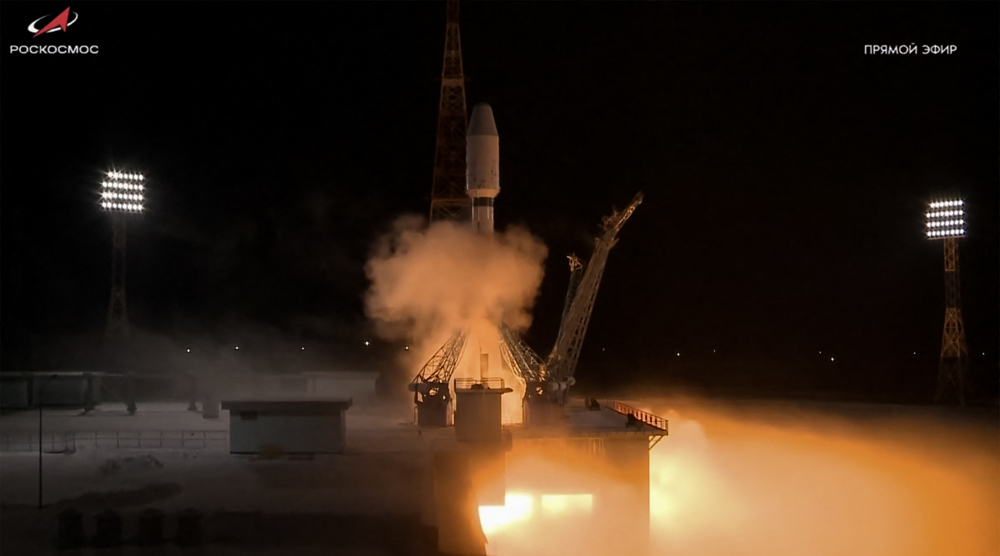
The only supplied article (PressTV) covers Iran’s recent launch of three domestically built remote‑sensing satellites on a Russian Soyuz rocket and makes no claim that Tehran carried out an espionage offensive against Israel.
The PressTV report states: "Iran has launched three domestically built remote‑sensing satellites into orbit using a Russian Soyuz rocket from the Vostochny Cosmodrome, Tehran said — the seventh time Iran has relied on Russian vehicles for satellite deployment."
It also lists the satellites carried: "The Soyuz lifted off Sunday at 16:48 Tehran time carrying Zafar‑2, Paya (Tolou‑3) and Kowsar‑1.5."
Because only this PressTV snippet is available, I cannot corroborate or describe an espionage offensive from other sources.
PressTV satellite descriptions
PressTV provides technical and programmatic details about three satellites while framing them as civilian remote‑sensing assets rather than weapons or tools explicitly tied to espionage.
The report states the satellites were designed and built in Iran with involvement from government agencies, universities, and private knowledge‑based firms.
It describes Paya as a 150 kg satellite—Iran’s heaviest to date—that provides approximately 5 m black‑and‑white and 10 m color imagery.
Zafar‑2 is presented as a platform that will monitor natural resources and the environment and aid disaster response and mapping.
Kowsar‑1.5 is portrayed as an upgraded imaging and IoT‑capable satellite for real‑time data transmission and smart monitoring.
Overall, these descriptions emphasize civilian monitoring and scientific uses in the sole available source.
PressTV report on satellite launch
While remote-sensing satellites can collect imagery and real-time data that may have intelligence applications, the PressTV report frames the mission in civilian and developmental terms and does not allege any offensive espionage actions against Israel.
PressTV quotes the Space Agency chief as calling the mission evidence of rapid growth in the country's space sector, noting that Tehran has expanded its civilian program since its first 2009 launch, Omid, despite Western sanctions.
The available material therefore supports describing the event as a satellite launch with remote-sensing capabilities rather than an explicitly reported espionage offensive.
Source limits and options
I must decline to fabricate assertions not present in the provided material about the requested article titled Iran Conducts Unprecedented Espionage Offensive Against Israel.
The single available source, PressTV, contains no reporting of an espionage offensive; it documents a satellite launch and describes civilian uses.
If you want an article explicitly about espionage actions, I can write a clearly labeled analytical piece discussing how remote-sensing satellites can be used for intelligence, explicitly marked as speculative and not claimed by the source.
Alternatively, I can synthesize an article only if you provide additional sources that directly report such an offensive.
Please indicate which option you prefer or provide the additional sources needed.
Satellite analysis next steps
Next steps: tell me whether you want a speculative, clearly labeled analysis of how Iran’s new remote-sensing satellites might enhance intelligence collection (explicitly flagged as not in the provided reporting).
Or please supply other source articles that specifically allege or document an espionage offensive against Israel so I can summarize and compare them across source types.
As a reminder, the only source provided here (PressTV) focuses on the satellite launch and civilian monitoring capabilities.
It notes "Paya (150 kg) is Iran’s heaviest satellite to date" and "Kowsar-1.5 is an upgraded imaging/IoT-capable satellite for real-time data transmission and smart monitoring."