Full Analysis Summary
Iran medical staff report
A coalition of Iranian medical workers and forensic staff, led by a physician identified as Ahmadi, compiled testimony and data from more than 80 colleagues across 12 provinces.
The coalition's findings suggest that the state's post-protest crackdown caused far more deaths than official figures indicate.
The reporting emphasizes that an internet shutdown coincided with efforts that medical staff say hid the scale of killings.
Independent corroboration beyond this reporting is limited because one expected news source (Associated Press) was not provided in full.
Coverage Differences
Casualty figures
The Guardian (Western Mainstream): Presents large, specific excess-death estimates based on networks of doctors, morgues and human-rights data — arguing official figures are severe undercounts (tens of thousands potentially dead). | Associated Press News (Other): Avoids publishing a high consolidated death toll; emphasizes that the scale is coming into focus despite an internet blackout and that activist counts are growing, without endorsing multi‑ten‑thousand estimates.
Hospital injuries and images
Medical staff interviewed by the coalition say hospitals initially treated mainly cuts and lacerations.
They say hospitals then began receiving large numbers of severe, often fatal, close-range gunshot and stab wounds to the chest, head, eyes and genitals.
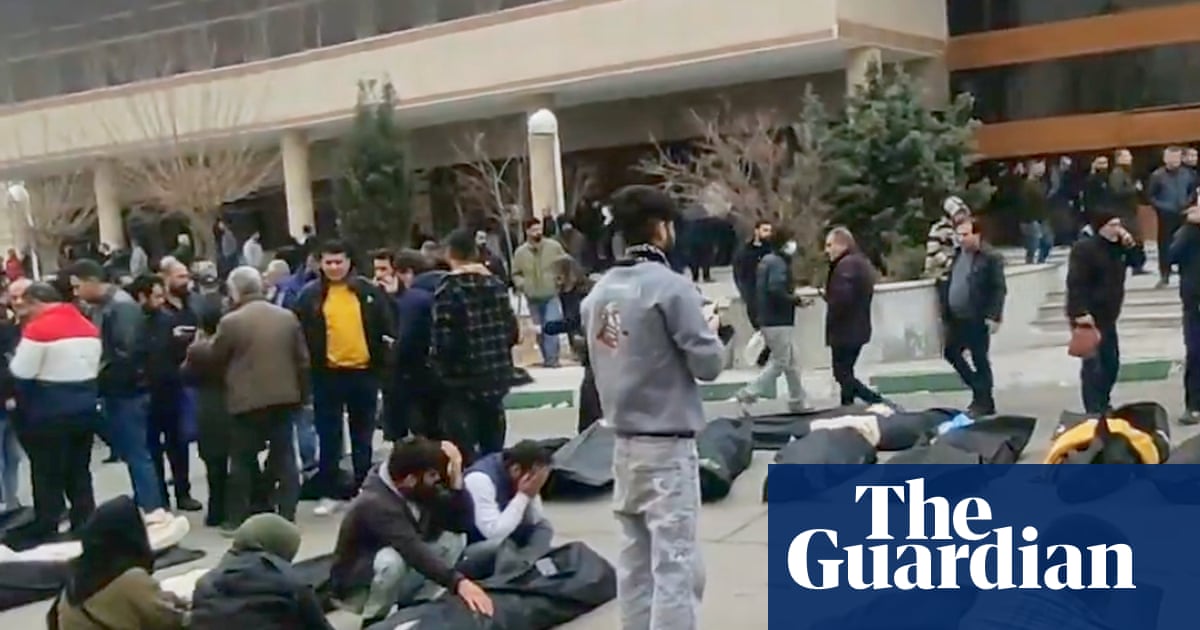
Verified images cited in the reporting show bodies in hospital gowns with catheters still attached and apparent execution-style headshots.
Doctors interpret the images as indicating some victims died while under medical care.
Coverage Differences
Concealment claims
The Guardian (Western Mainstream): Describes systematic efforts to hide deaths — bodies moved in trucks, mass burials and missing corpses — based on eyewitnesses, morgues and cemetery staff. | Associated Press News (Other): Focuses on visible scenes of destruction, tactics of security forces and the impact of the internet blackout, but does not report the specific mass-burial/vehicle-transport claims described by the Guardian.
Disputed death-toll estimates
The coalition and other cited figures offer sharply differing death-toll estimates.
Ahmadi's group suggests the true death toll could be far higher than official counts, saying it is 'perhaps tens of thousands' and arguing that registered deaths may represent less than 10% of fatalities.
The reporting notes independent estimates ranging from the government's 3,000+ figure to HRANA's verified 6,000 (with many more under investigation) and some outside doctors' estimates up to 33,000.
These disparities create wide uncertainty about the real scale of fatalities.
Coverage Differences
Narrative emphasis
Associated Press News (Other): Frames the crackdown as an event with international escalation risk, highlighting U.S. policy implications and potential military consequences alongside domestic repression. | The Guardian (Western Mainstream): Centers on first-hand medical, morgue and cemetery evidence of domestic state violence and concealment, with graphic testimony from doctors and witnesses rather than international military angle.
Reports of corpse concealment
Medical personnel report systematic intimidation, obstruction of death registration, and what they describe as a coordinated system of corpse relocation and mass burial.
They say refrigerated ice-cream and meat trucks were used to move bodies and that burials were hurried.
The sources say these measures were intended to conceal killings and to "suppress memory".
The reporting cautions that some visual material has not been independently verified and that the broader picture remains contested and incomplete.
Coverage Differences
Evidence sources
Associated Press News (Other): Relies on a mix of visible video evidence, international experts, activist statements and a tally of state-run IRNA reports for damage estimates and situational reporting. | The Guardian (Western Mainstream): Relies heavily on a confidential network of medical professionals, morgue and cemetery staff, and human-rights groups to reconstruct events and produce death‑toll estimates.