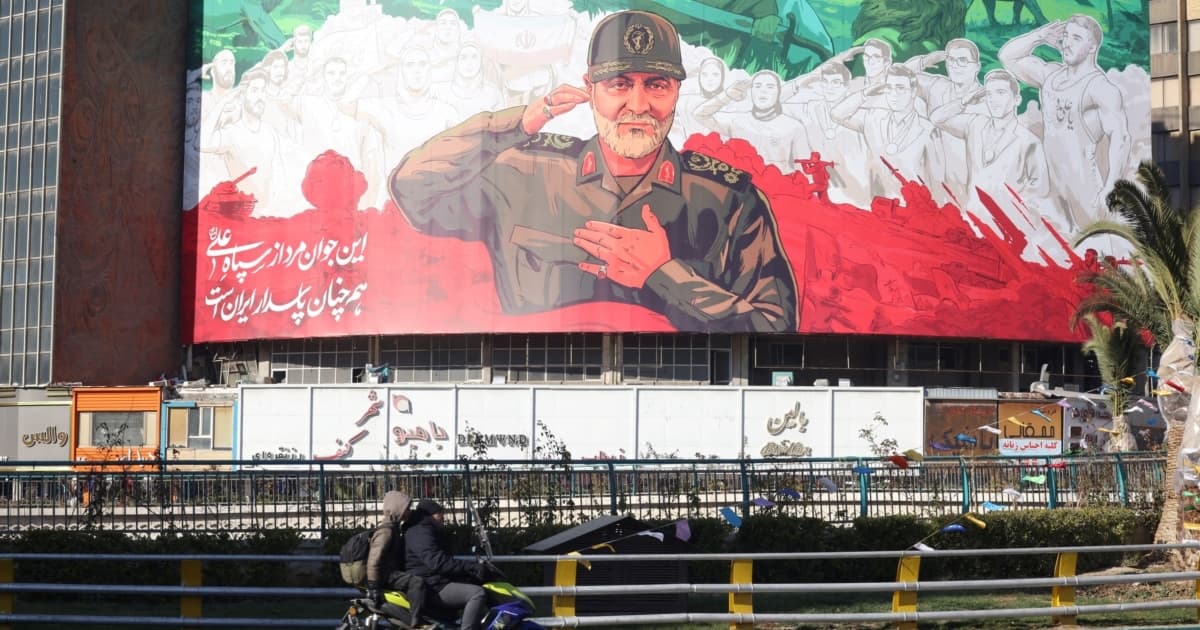
Iran Deploys Decentralized 'Mosaic' Command After US and Israel Kill Khamenei, IRGC Chief Pakpour
Key Takeaways
- IRGC decentralized command, empowering junior ranks to act autonomously
- Decentralization responds to a massive US-Israeli aerial bombardment that began February 28
- The February 28 campaign killed numerous senior leaders, including IRGC chief Mohammad Pakpour
Leadership losses and shift
A US-Israeli aerial campaign beginning on February 28 killed numerous senior Iranian military and political leaders, including IRGC chief Mohammad Pakpour and Supreme Leader Ayatollah Ali Khamenei, prompting Tehran to shift its force posture by decentralizing the Islamic Revolutionary Guards Corps (IRGC).
“Iran's powerful Islamic Revolutionary Guards Corps (IRGC) has decentralized its command-and-control structure, handing junior ranks more power to respond to the massive US-Israeli aerial bombardment of the Islamic republic”
Radio Free Europe/Radio Liberty reports that the IRGC "has decentralized its command-and-control structure, handing junior ranks more power to respond to the massive US-Israeli aerial bombardment of the Islamic republic," and that the strikes "killed numerous senior military and political leaders, including IRGC chief Mohammad Pakpour and Supreme Leader Ayatollah Ali Khamenei."
The outlet states Iran "has activated a so-called mosaic defensive strategy, which is designed to empower local IRGC commanders during wartime."
Provincial 'mosaic' structure
The mosaic approach formalizes existing provincial-level IRGC structures and the long-standing practice of decentralization dating back to the 2009 reorganization; each of Iran’s 31 provinces already "has its own IRGC headquarters, command-and-control structure, and chain of command."
The strategy explicitly hands more autonomy to local commanders and accompanying Basij elements, and expert commentary cited in the article notes that "Every province is a mosaic, and the commanders have the ability and power to make decisions."
Iranian officials signalled the change publicly: Foreign Minister Abbas Araqchi told Al Jazeera that "our military units are now independent and somehow isolated, and they are acting based on instructions -- general instructions -- given to them in advance."
Operational effects observed
Operationally, the decentralization appears to have allowed Iran to mount sustained retaliatory fire.
“Iran's powerful Islamic Revolutionary Guards Corps (IRGC) has decentralized its command-and-control structure, handing junior ranks more power to respond to the massive US-Israeli aerial bombardment of the Islamic republic”
The article documents Iran's use of "unprecedented barrages of ballistic missiles and kamikaze drones at Israel, US military and diplomatic facilities across the Middle East, and critical energy infrastructure in the Persian Gulf," and analysts quoted say this "implies the command-and-control system is still functioning, at least for now."
Observers warn that as long as missiles and launchers remain, "the region is likely to experience an ongoing Iranian retaliation campaign."
Risks and vulnerabilities
Analysts and the article caution that decentralization is a double-edged sword: while it boosts resilience by allowing local initiative, it also raises risks of miscalculation, fragmentation, and "chaos" if ties to central command are severed.
Experts say Iran's reliance on missiles and drones makes replenishment a vulnerability—"with their production facilities above ground hit, the capacity to replenish stocks is at least in doubt"—and warn that if stockpiles or facilities are destroyed the IRGC will have "few capabilities beyond their strategic deterrents."
Summary and limits
Overall, RFE/RL frames the mosaic move as an adaptation that for now preserves Iran's ability to retaliate but leaves open major uncertainties about longer-term cohesion and logistics.
“Iran's powerful Islamic Revolutionary Guards Corps (IRGC) has decentralized its command-and-control structure, handing junior ranks more power to respond to the massive US-Israeli aerial bombardment of the Islamic republic”
The outlet also notes decentralization "has been a key part of the IRGC's doctrine since around 2009, when the force was reorganized."
I can only base this summary on the single provided source; to incorporate West Asian, Western alternative, and regional perspectives as requested, please provide additional articles and I will expand the analysis with multi-source citations.
More on Iran
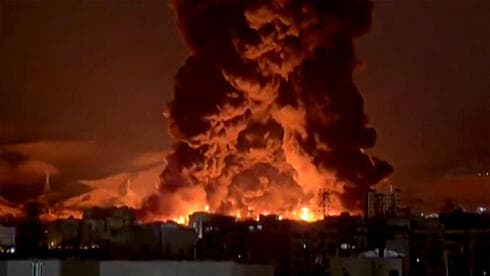
US obliterates military targets on Iran’s Kharg Island, Trump warns
13 sources compared
US Deploys About 2,500 Marines to Middle East After Iran Attacks Gulf Shipping
33 sources compared
FBI Warns of Iranian Drone Plot Based on Unverified Tip; California Says No Credible Threat
10 sources compared

White House Demands ABC Retract Report Claiming Iran Sought To Launch Drone Attacks On California
11 sources compared