
Iran Fires Ballistic Missiles at US-UK Base in the Indian Ocean for First Time
Key Takeaways
- Iran's actions raise risk of a wider regional escalation.
- UK condemnation and Gulf states may take action in response.
- War involving Iran underscores broader Middle East conflict and spillover concerns.
Missile Strike on Diego Garcia
Iran has conducted a major escalation in the Middle East conflict by firing ballistic missiles toward a joint U.S.-UK military base in the Indian Ocean.
“Iran has fired ballistic missiles toward a joint U”
This marked the first such attack on the remote outpost of Diego Garcia in the Indian Ocean.

The U.K. Ministry of Defence condemned what it called Iran's 'reckless attacks across the region,' describing them as a 'threat to British interests and British allies.'
According to officials cited by Newsweek, Iran has been 'lashing out indiscriminately' at partners across the Gulf since the conflict began.
The attempted strike occurred before the U.K. confirmed expanded U.S. use of British bases, though permission had already been granted for RAF Fairford and Diego Garcia.
This incident underscores how far the conflict has spread geographically, reaching well beyond the Middle East as tensions continue to intensify.
Regional Tensions Escalate
The attempted missile strike on Diego Garcia comes amid deepening regional tensions and growing concern that the conflict could spiral into a wider crisis.
Türkiye's Foreign Minister Hakan Fidan reported that Gulf officials expect the war to continue for another two to three weeks with 'risk levels steadily rising.'
Fidan emphasized that Gulf states made clear they would not allow their airspace or bases to be used against Iran and would not become parties to the war.
Gulf states simultaneously accused Iran of deliberately targeting both military installations and civilian infrastructure.
The incident reflects the complex regional dynamics at play as Gulf countries navigate their relationships between Iran, the United States, and Israel.
These nations are seeking to maintain stability in the face of escalating violence across the region.
Geographical Expansion of Conflict
The missile attack on Diego Garcia represents a significant geographical expansion of the conflict.
“Iran has fired ballistic missiles toward a joint U”
It demonstrates Iran's capability to strike at U.S.-UK military assets far beyond the traditional Middle Eastern theater.
U.S. officials cited by The Wall Street Journal reported that Iran launched two intermediate-range ballistic missiles toward Diego Garcia.
Neither missile is believed to have hit the base, with one reportedly failing during flight and the other intercepted or tracked by U.S. forces.
The attempted strike occurred against the backdrop of Britain's approval for U.S. use of its bases for limited operations linked to Iran's actions in the Strait of Hormuz.
This decision has drawn Iran directly into confrontation with U.K.-linked military infrastructure.
Regional Diplomatic Efforts
Regional diplomatic efforts are underway to address the escalating conflict, with Türkiye playing a key role in facilitating discussions.
Fidan described a March 19 meeting in Riyadh that brought together regional countries directly or indirectly affected by the war.
The meeting aimed to form a shared assessment of the situation and was intended as 'an effort to seek common ground.'
Participants 'underscored the urgency of the situation' according to Fidan's account.
While the focus was primarily on Iran's actions, Türkiye ensured that concerns over Israel's role were also reflected in the joint statement.
These diplomatic efforts come amid warnings that the trajectory of the conflict could shift further, with signs of divergence emerging between the United States and Israel.
Conflict Duration and Future Outlook
Analysts are warning that the conflict could potentially last longer than initially anticipated.
“Iran has fired ballistic missiles toward a joint U”
Israel may adopt 'a policy of prolonging the war as much as possible in order to inflict greater damage on Iran' according to Fidan's assessment.
He highlighted that 'the key obstacle is not the absence of plans to end the war, but rather a lack of willingness to pursue peace.'
While negotiations during active fighting appear unlikely, a possible pathway could involve a short-term ceasefire that opens space for talks.
The longer-term outlook suggests the war could reshape regional dynamics, with Gulf countries potentially revisiting defense strategies.
If conditions are met after the war, the focus could shift toward economic cooperation, while Iran may raise demands regarding U.S. military presence in the Gulf.
More on Iran

President Trump Says Iran Deal Within Reach Amid Talks With Senior Iranian Official
10 sources compared

Trump Approves Iran Operation After Netanyahu Presses for Joint Strike on Khamenei
12 sources compared

President Donald Trump orders ICE officers deployed to airports amid DHS shutdown.
227 sources compared
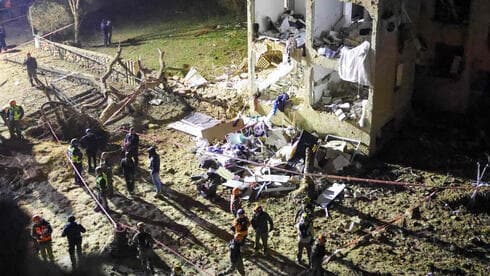
Iranian Missiles Strike Israel; Officials Report 180 Injured Amid Conflicting Casualty Figures.
12 sources compared