
Iran Fires Cluster Munitions Into Israeli Cities, Scattering Bomblets Over Civilians
Key Takeaways
- Iran fired cluster munitions into Israeli cities
- Cluster munitions scattered bomblets across populated areas, endangering civilians
- Attacks aimed to overwhelm and test Israel's air defenses
What happened
Iran has launched missiles at Israeli cities equipped with cluster munitions, with officials and imagery showing warheads erupting in the sky and scattering small bomblets across wide areas of civilian territory.
“Iran deploys cluster munitions, intensifying threats near Israel and testing its defenses”
New York Post reporting states that “Iran is using cluster bombs for its attacks on Israeli cities, officials said,” and that “Images of Tehran’s retaliatory attacks on Israel show evidence of the Islamic Republic’s missiles erupting in the sky and scattering small bomblets across wide areas below.”

Local reporting adds that, “according to Israeli military officials, Iran is arming the majority of its missiles with payloads capable of carrying cluster submunitions… About half of the missiles launched during this war were so equipped.”
Impact on air defenses
Observers and analysts reported that cluster warheads complicate interception and defeat some of Israel’s air-defence advantages, because once a warhead disperses dozens of submunitions they are harder for systems like Iron Dome to stop.
The New York Post noted that “The weapons are more difficult to intercept, even for the Iron Dome defense system,” and quoted an Israeli researcher saying “there is little that can be done to counter a cluster bomb once the warhead splits.”
Mezha.net likewise described how “these munitions create a significant new challenge for Israel’s air defense system” because interceptors struggle with small, dispersed bomblets.
Casualties and hazards
The attacks have caused civilian casualties and left unexploded submunitions that pose ongoing danger: outlets reported at least several deaths from bomblets striking populated areas and construction sites, and imagery-authenticating groups published photos of unexploded bomblets found in Israel.
“Iran deploys cluster munitions, intensifying threats near Israel and testing its defenses”
The New York Post reported that “at least three people [were] killed on Tuesday after one of the bombs hit a construction site in central Israel,” and added that “Roughly half of the projectiles that Iran has been firing at Israel since the war began have been cluster munitions, an Israeli military official said, with the strikes killing at least 12 people.”
The Post also cited the Open Source Munitions Portal, which “has published multiple photos of unexploded submunitions found in Israel this week.” Mezha.net emphasised the inherent indiscriminate risk of such dispersal patterns in densely populated areas.
Legal and humanitarian concerns
Human-rights and legal observers have previously condemned the use of cluster munitions in conflicts and raised concerns about violations of international humanitarian law; local reporting highlighted past Amnesty International criticism and drew parallels to earlier uses.
Mezha.net noted that “Amnesty International previously condemned Iran’s use of cluster munitions during the 12-day conflict last summer as an ‘open violation of international humanitarian law,’” and also reminded readers that similar condemnations were made regarding Israel’s use in 2006.
The New York Post recalled historical examples of long-term danger from unexploded bomblets, saying “The bombs’ dangerous aftermath was clear during America’s bombing campaigns in Vietnam and Laos, which left unexploded bomblets for decades.”
Strategic intent
Analysts quoted in local reporting argued the use of cluster payloads serves strategic and psychological aims: by dispersing bomblets at high altitude Iran may be attempting to bypass active missile defenses, to impose economic and social costs, and to erode civilian morale.
“Iran deploys cluster munitions, intensifying threats near Israel and testing its defenses”
Mezha.net quoted experts saying, “This is a mechanism for bypassing active anti-missile defense,” and that “The ongoing use of such munitions is likely to have primarily a deterrent and psychological effect: Iran aims to exhaust Israel’s will and impose economic and social costs by forcing people to continually seek shelter from attacks.”
The New York Post similarly described how the design trades precision for mass coverage and emphasised the lasting danger posed by unexploded submunitions.
More on Iran
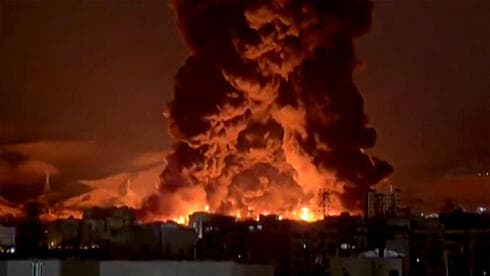
US obliterates military targets on Iran’s Kharg Island, Trump warns
13 sources compared

US Deploys About 2,500 Marines to Middle East After Iran Attacks Gulf Shipping
33 sources compared
FBI Warns of Iranian Drone Plot Based on Unverified Tip; California Says No Credible Threat
10 sources compared

White House Demands ABC Retract Report Claiming Iran Sought To Launch Drone Attacks On California
11 sources compared