
Iran Fires Drones and Missiles at Israel and Gulf States
Key Takeaways
- Iran launched drones and missiles at Israel and neighboring Gulf states
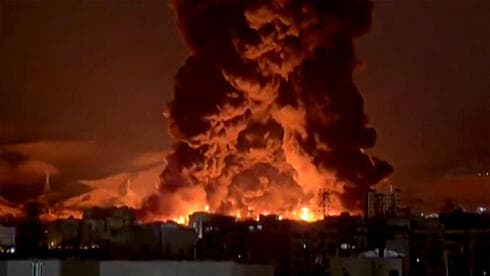
- Iranian projectiles struck Gulf-state territory, including an industrial area in Ma'ameer, Bahrain
- The attacks have escalated into an ongoing conflict between Iran and Israel
Scope of the strikes
Iran launched drones and missiles at Israel and Gulf states on Tuesday in a significant escalation, with Western reporting describing a coordinated attack across multiple fronts.
“Iran fired drones and missiles at Israel and Gulf states Tuesday as Israeli Prime Minister Benjamin Netanyahu vowed his country will keep striking the Islamic Republic, saying the aim of the campaign was the popular overthrow of its government”
The Washington Post reported that "Iran fired drones and missiles at Israel and Gulf states Tuesday," highlighting the scale and cross-border nature of the strikes.
The World from PRX noted regional concern and framed the assaults as something Iran appears to treat as broader than a bilateral confrontation, writing that "The Gulf countries insist this is not their war, but Iran doesn’t seen to see it that way."
Taken together, the available accounts describe a multi-pronged campaign that has widened the geographic scope of hostilities beyond the Israel-Gaza theatre.
Israel's stated goals
Israeli leadership framed its response posture as aggressive and open-ended: Prime Minister Benjamin Netanyahu vowed that Israel "will keep striking the Islamic Republic," and stated the aim of Israel’s campaign included the popular overthrow of Iran’s government.
The Washington Post relayed Netanyahu’s vow and his stated objective, underscoring how Israel positions its campaign as not merely defensive but aimed at changing Iran’s political trajectory.
PRX’s reporting about Gulf states distancing themselves from the conflict provides context for how neighbouring states are attempting to avoid direct involvement even as Israeli rhetoric signals continued military pressure on Iran.
Gulf responses and risk
Regional reactions are mixed and politically fraught: Gulf states publicly insist they do not want to be drawn into the fighting even as the strikes extended into their airspace or territories, according to PRX.
“Iran fired drones and missiles at Israel and Gulf states Tuesday as Israeli Prime Minister Benjamin Netanyahu vowed his country will keep striking the Islamic Republic, saying the aim of the campaign was the popular overthrow of its government”
The Washington Post’s coverage of the strikes indicates Iran’s capacity to project force beyond its borders and into the Gulf, increasing pressure on Gulf governments to navigate between protecting their soil and avoiding escalation.
The available sources depict a region facing heightened risk of spillover even as some states try to emphasize containment.
Casualties and gaps
Available reporting does not provide full or consistent details about casualties, damage, or subsequent military exchanges; the sources focus on the occurrence, scope, and political messaging around the strikes rather than exhaustive on-the-ground impacts.
The Washington Post reported the strikes and Netanyahu’s response but did not, in the excerpt provided, offer comprehensive casualty figures or damage assessments.
PRX highlighted the geopolitical framing — Gulf states insisting the conflict is not theirs — but likewise did not supply detailed casualty or humanitarian data in the snippet.
Because the supplied articles are limited in scope, a complete picture of human cost and operational outcomes cannot be drawn solely from these accounts.
More on Iran
US obliterates military targets on Iran’s Kharg Island, Trump warns
13 sources compared

US Deploys About 2,500 Marines to Middle East After Iran Attacks Gulf Shipping
33 sources compared
FBI Warns of Iranian Drone Plot Based on Unverified Tip; California Says No Credible Threat
10 sources compared

White House Demands ABC Retract Report Claiming Iran Sought To Launch Drone Attacks On California
11 sources compared