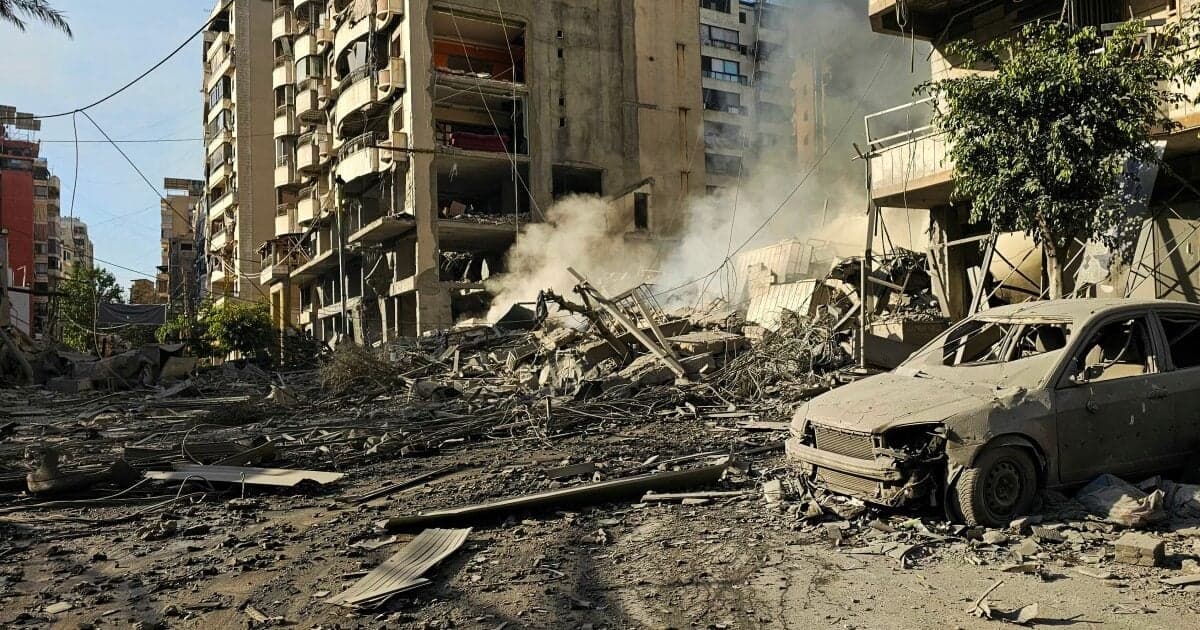
Iran Fires Missiles at Israel After Strikes on Tehran and Beirut
Rapid military escalation
Multiple reports describe the situation as a major military escalation.
“Iran retaliates after Israel strikes Beirut and Tehran as war enters Day 7 Israel's military said it launched a "broad wave" of strikes on Tehran targeting regime infrastructure, with additional strikes in Beirut's southern suburbs”
They say strikes hit Iran and spread beyond its borders, after which Iran launched missile and drone attacks toward Israel.

One News Page summarized this phase as "Major military escalation" and noted that "U.S. forces have struck Iranian naval vessels and missile launchers, and allied strikes reported hitting targets in Tehran and Beirut."
Punch Newspapers wrote that "Iran has responded with missile and drone attacks on Israel and targets in the Gulf."
NPR's query about its own coverage underscores the still-developing nature of reporting: "I don't see the article text — only 'U.S.' Was the article omitted? Please paste the article or share a link."
Regional escalation and reporting gaps
Coverage emphasizes that the fighting quickly widened beyond Iran’s borders to Lebanon and Beirut, involving local actors such as Hezbollah and prompting strikes and evacuations.
One News Page noted the "Geographic spread: Strikes and tensions are reported beyond Iran’s borders (including Beirut), indicating a widening regional impact."
Punch Newspapers reported that "Hezbollah fired missiles from Lebanon in support of Iran, and Israel struck towns in southern Lebanon and the southern suburbs of Beirut, causing widespread destruction and mass evacuations."
NPR highlighted gaps in public reporting during the fast-moving episode, asking: "I don’t see the article text — only \"U.S.\" Was the article omitted? Please paste the article or share a link."
Casualties and verification issues
Early casualty figures and displacement are severe but contested in reporting.
“Fresh strikes rocked Iran and Lebanon on Friday as Israel vowed to escalate to a new phase in the Middle East war that has spiralled rapidly throughout the region and beyond”
Punch Newspapers cited Iran’s health ministry saying "US and Israeli strikes had killed 926 people (a figure not independently verified)".
Punch Newspapers also reported that "Lebanon’s health ministry reported 123 killed in strikes" and published images of "hundreds of displaced families gathering on Ramlet al-Baida beach".
One News Page cautioned that coverage shows "ongoing uncertainty: Coverage emphasizes rapidly evolving developments with differing details across sources; casualty and long-term-political outcomes are not settled."
NPR noted that its full article text was missing, saying "I don’t see the article text — only \"U.S.\" Was the article omitted? Please paste the article or share a link," which reflects why numbers remain difficult to corroborate in real time.
U.S. strikes and politics
Reports link direct U.S. military strikes and high-level U.S. rhetoric to the unfolding conflict while noting domestic political moves in Washington.
One News Page described U.S. action and politics, saying "U.S. forces have struck Iranian naval vessels and missile launchers…" and that "The U.S. Congress is moving toward a vote related to the conflict/war authorization, per coverage cited by Euronews."
Punch Newspapers quoted U.S. figures warning of escalation, quoting US Defence Secretary Pete Hegseth that "firepower over Iran and over Tehran is about to surge dramatically," and citing President Trump saying sending ground troops would be "a waste of time" while insisting he would "have to be involved" in choosing Iran's next leader.
NPR’s outreach for article text signaled gaps in mainstream coverage in the aggregated snippets, asking "I don’t see the article text — only \"U.S.\" Was the article omitted? Please paste the article or share a link."
Market, security and conflict effects
Analysts and outlets linked the fighting to immediate economic and security effects while questioning whether tactical strikes would produce strategic resolution.
“Skip to main content Iran retaliates after Israel strikes Beirut and Tehran as war enters Day 7 about 2 hours ago”
One News Page highlighted 'Immediate global effects: Markets and energy flows are feeling strain — reports link the fighting to higher mortgage/borrowing costs and disruptions in oil/gas supply chains,' and noted 'Security and law-enforcement fallout: Several arrests and increased security measures have been reported.'
Punch Newspapers documented on-the-ground effects including 'widespread destruction and mass evacuations' and that 'Israel’s military chief, Aviv Zamir, ordered an expansion of his army’s control in southern Lebanon,' illustrating how the conflict’s footprint changed rapidly.
NPR’s comment thread reflected the fragmented state of some mainstream reporting, with a user writing: 'I don’t see the article text — only "U.S." Was the article omitted? Please paste the article or share a link.'
Key Takeaways
- Israel launched strikes on Tehran and Beirut's southern suburbs targeting regime infrastructure
- Iran fired missiles toward Israel in retaliation
- War entered its seventh day as strikes spread across Iran, Lebanon, and Israel
More on Iran-Israel

Israel Pounds Tehran, Beirut With Broad-Scale Airstrikes
16 sources compared
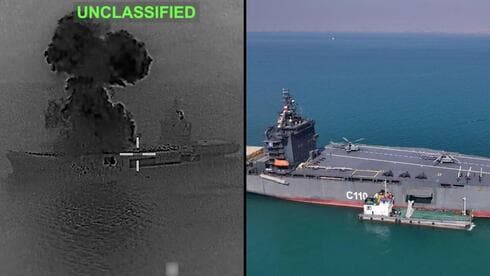
US and Israel Intensify Airstrikes on Tehran, Hit Iranian Drone-Carrier Ship
11 sources compared

US Sinks Iranian Warship
19 sources compared

US, Israel Pound Iran After Killing Ayatollah Ali Khamenei; Trump Warns War Could Last Weeks
37 sources compared