
Iran FM Seyed Abbas Araghchi Warns U.S. Against Miscalculation in Persian Gulf
Key Takeaways
- Iranian FM Araghchi warns against a new US miscalculation in the Persian Gulf.
- Warnings come amid ongoing US–Iran talks with potential breakthroughs.
- Beirut attack would trigger full-scale regional war.
Hormuz warning after Trump claim
Iran’s Foreign Minister Seyed Abbas Araghchi warned against any potential U.S. miscalculation in the Persian Gulf, saying Iran prefers diplomacy but is fully capable of responding to threats if necessary.
Speaking on Tuesday evening, June 9, Araghchi said the Strait of Hormuz is not located in international waters but is jointly shared by Iran and Oman, and he stressed that the waterway lies thousands of miles away from the United States.

Araghchi’s remarks came after U.S. President Donald Trump claimed in a post on Truth Social that an advanced Apache helicopter conducting a patrol mission over the Strait of Hormuz had been targeted by Iranian forces.
Trump said the two pilots involved were unharmed but added that the United States may be required to respond to the incident, prompting Araghchi to argue that foreign forces operating near Iranian territory are always exposed to risks.
Araghchi also said Iran’s armed forces remain on constant alert and are prepared to respond to any violation of Iran’s airspace, territorial waters, or land borders.
Araghchi: leave to cut risk
On X, Araghchi wrote that foreign forces in proximity to Iran’s territory are at constant risk on account of their own human errors, plain accidents, or potentially being caught in crossfire.
Mehr News Agency quoted Araghchi saying, "To reduce risk, best solution is for them to leave," and added that Iran prefers the language of diplomacy while speaking other languages too.
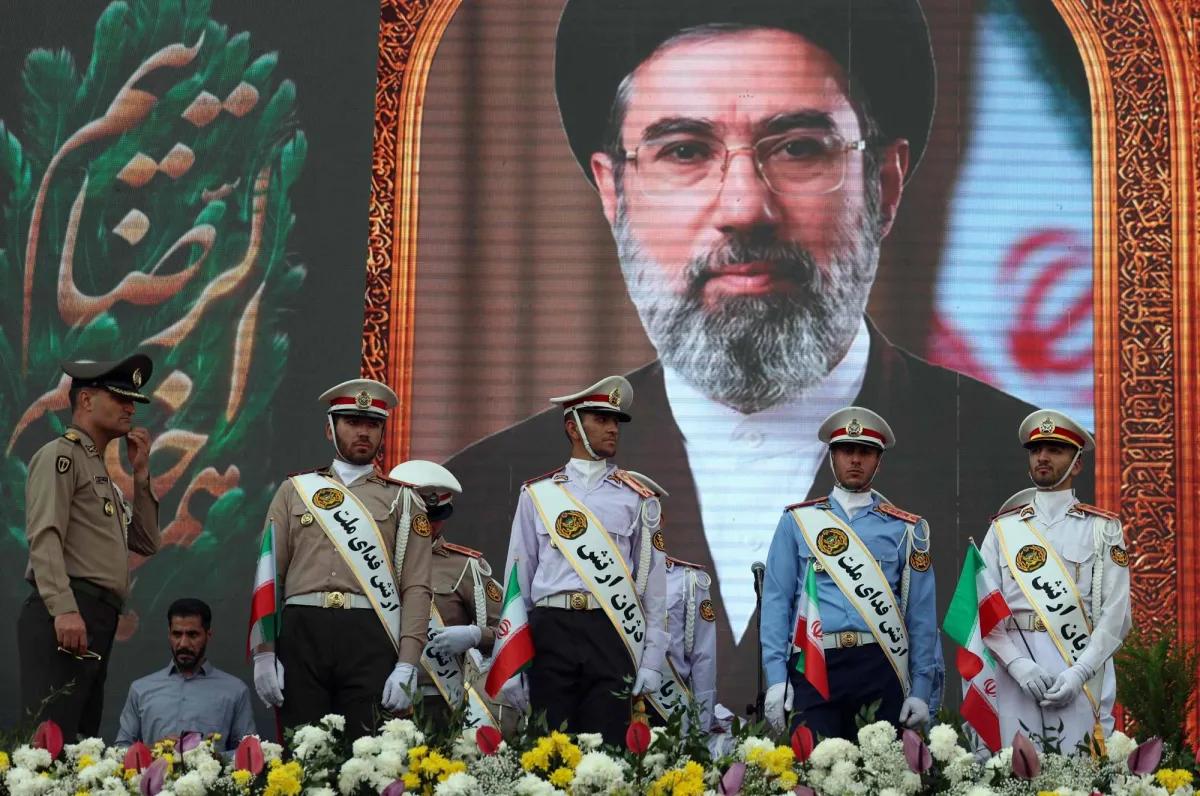
WANA News Agency reported that Araghchi argued the most effective way to reduce such risks is for foreign military forces to leave the region as soon as possible.
In the same WANA account, Araghchi said the Persian Gulf region has never welcomed the presence of hostile forces, and he reiterated Tehran’s position that Iran prefers diplomacy.
WANA News Agency also said Araghchi concluded by stressing that Iran is well versed in speaking other languages when circumstances require it.
Diplomacy track and regional tensions
Separate from the Hormuz warning, a telephone call was held between Dr. Badr Abdel Atty, Minister of Foreign Affairs and International Cooperation and Egyptians Abroad, and Mr. Muhammad Ishaq Dar, Deputy Prime Minister and Minister of Foreign Affairs of the Islamic Republic of Pakistan on Friday, April 24.
“Abbas Araghchi, Iran's Foreign Minister, in a sharp reaction on his X account to today’s U”
The call discussed ways to advance the diplomatic track between the United States and Iran, with the two ministers expressing their hope to hold the second round of negotiations.
The ministers said the negotiations would contribute to reach understandings that support stabilizing the ceasefire, reducing escalation, and creating the conditions to end the ongoing conflict, while stressing that dialogue and negotiation remain the best means to resolve the crisis.
At the conclusion of the call, the two ministers stressed the importance of continuing coordinated and joint consultations, ensuring support for the diplomatic path, reducing tensions, resuming negotiations, and strengthening political solutions away from military escalation.
The call also included Abdel Atty’s emphasis on preserving freedom of international navigation and taking into account the security concerns of the region’s states, foremost among them the Gulf Arab states.
More on Iran

US Launches Proportional Strikes Against Iran After Trump Says Tehran Shot Down Apache Helicopter
16 sources compared

Trump Orders US Strikes on Iran After Iran Shoots Down Apache Helicopter Near Strait of Hormuz
29 sources compared

Trump Vows US Response After Iran Downs Apache Near Strait of Hormuz
10 sources compared
Gunman In Military Uniform Killed After Firing On Israeli Troops At Lebanon Border
13 sources compared