
Iran Foreign Minister Abbas Araghchi Arrives in Islamabad as US Envoys Prepare Ceasefire Talks
Key Takeaways
- Iran's foreign minister Araqchi arrives in Islamabad for mediation with the US.
- US envoys head to Pakistan to resume ceasefire talks with Iran.
- Pakistan hosts mediation and aims for a second round of talks in Islamabad.
Islamabad becomes the hinge
Iran’s foreign minister Abbas Araghchi arrived in Islamabad as the United States prepared to send envoys for a second round of ceasefire diplomacy, with both sides projecting different levels of openness to direct engagement.
Al Jazeera reported that “Iran’s foreign minister is in Islamabad, with US envoys also on the way,” while Iranian officials denied they planned to hold talks with US delegates in Islamabad.

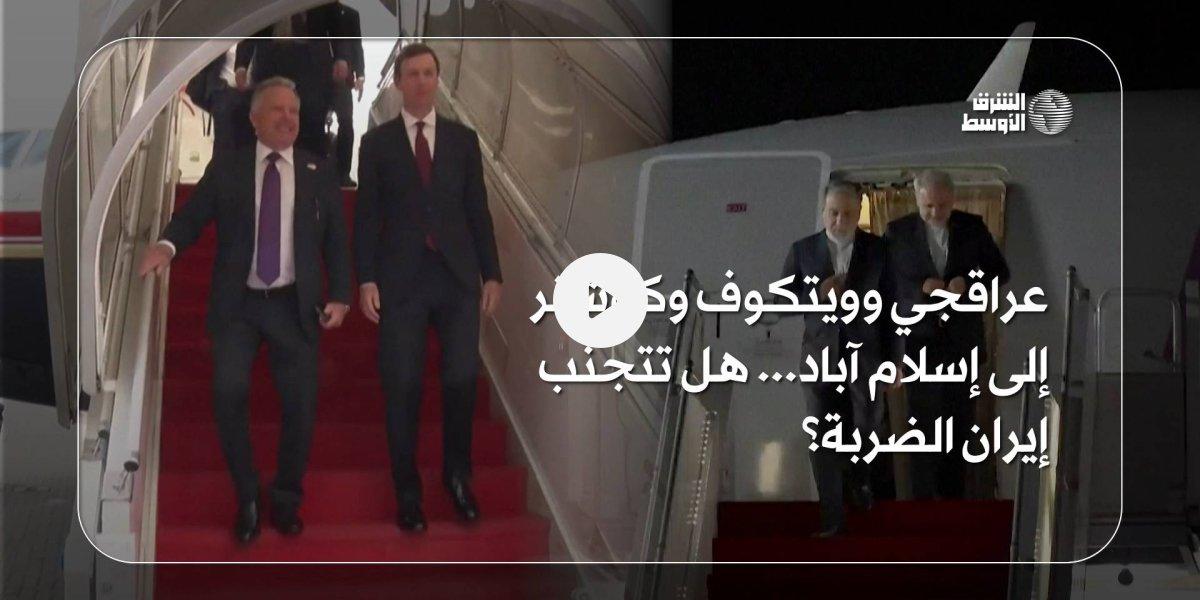
The Tribune said the White House confirmed envoys Steve Witkoff and Jared Kushner would lead negotiations in Pakistan, adding that “US-Iran talks set for second round in Islamabad” were expected “likely on Sunday.”
In Islamabad, Pakistan’s mediation role was repeatedly emphasized, including in the Al Jazeera report that the Iranian Foreign Ministry said Araghchi met Pakistani Army Chief General Asim Munir and also met Prime Minister Shahbaz Sharif.
The Diplomat described Pakistan as mediating “between Washington and Tehran” and said the Islamabad talks marked “the between the U.S. and Iran since 1979,” framing the moment as a rare diplomatic opening.
At the same time, the National News Desk said Iran “will not hold direct negotiations with U.S. officials during its foreign minister's visit to Pakistan,” even as President Donald Trump sent envoys for ceasefire talks.
The stakes for the talks were tied directly to the Strait of Hormuz deadlock, which Al Jazeera said the visits raised hopes could be broken “with diplomacy.”
Ceasefire diplomacy and its limits
The diplomatic push in Islamabad unfolded against a backdrop of an extended ceasefire and continuing maritime and energy disruptions, with multiple outlets linking the negotiations to the Strait of Hormuz.
The National News Desk said Trump earlier extended the ceasefire “until Iran's leaders and representatives can come up with a unified proposal,” and it tied the pause in fighting to “global energy shipments disrupted by the closure of the Strait of Hormuz.”

Hawaii News Now, citing the Associated Press, said the war had “snarled crucial energy exports through the Strait of Hormuz,” and it described how the strait remained tense even as a ceasefire held.
The PBS/AP report said “Iran has kept its stranglehold on traffic through the strait,” while the U.S. maintained “its blockade of Iranian ports and ordered the military to ‘shoot and kill’ small boats that could be placing mines.”
In parallel, Al Jazeera’s West Asian report said the visits raised hopes to break the “Strait of Hormuz deadlock with diplomacy,” but it also noted Iranian officials denied plans for talks with US delegates.
The صوت بيروت إنترناشونال report added that Iran had “nearly fully closed the Strait of Hormuz,” while the United States blocked Iranian oil exports, and it stated the conflict was “now in its ninth week.”
It also described the operational reality of the standoff by saying “only a few ships pass through the Strait of Hormuz,” and it compared “five ships crossing the Strait of Hormuz in the past 24 hours” with “about 130 ships daily before the war that the United States and Israel began on February 28.”
Taken together, the sources portrayed diplomacy as constrained by ongoing pressure at sea and by the economic consequences of disrupted shipping.
Even the Tribune’s framing of the talks as a second round came with the caveat that “internal divisions in Tehran cast a shadow over prospects of a breakthrough,” underscoring that ceasefire diplomacy was not occurring in a vacuum.
Voices on the negotiating posture
Multiple sources captured sharply different public postures from Washington and Tehran, while Pakistan’s officials and intermediaries were positioned as the channel for any exchange.
The National News Desk quoted White House Press Secretary Karoline Leavitt saying, “The president, as I’ve said many, many times to all of you, [is] always willing to give diplomacy a chance,” and it added that Leavitt said Steve Witkoff and Jared Kushner would “be heading to Pakistan tomorrow to hear the Iranians out.”
The Tribune also quoted Leavitt confirming the envoys’ travel, saying, “Yes, I can confirm, special envoys Steve Witkoff and Jared Kushner will be off to Pakistan again tomorrow morning to engage in talks.”
By contrast, Al Jazeera’s West Asian report said Iranian officials denied they planned to hold talks with US delegates, even as the visits raised hopes for diplomacy.
The صوت بيروت إنترناشونال report said Iran’s Foreign Ministry spokesman posted on X that Iranian officials “do not intend to meet U.S. representatives and that Tehran's concerns will be conveyed to Pakistan.”
It also quoted U.S. Defense Secretary Pete Hegseth telling reporters that Iran has a chance to strike a “good” deal and adding, “Iran knows it has an opportunity to choose wisely… all it needs to do is abandon its nuclear weapons in verifiable ways.”
In Islamabad, the PBS/AP report said Araghchi’s trip was confirmed by Iran’s state-run IRNA news agency, which said his focus was “bilateral consultations” and regional developments, and it reported that the White House did not immediately respond to questions about whether a U.S. delegation would also do so.
The Al Jazeera (Arabic) report described Iranian messaging as cautious, saying Noor al-Dagher, head of Al Jazeera’s Tehran bureau, said information from Iran indicated Araghchi’s visit was at Pakistan’s invitation and that the Iranian side approached it “with a certain degree of caution.”
Pakistan’s role was reinforced by statements attributed to Pakistan’s Foreign Ministry and to Araghchi’s own account of meetings, including that Dar “underscored the importance of sustained dialogue and engagement to address outstanding issues, in order to advance regional peace and stability at the earliest.”
How outlets framed the same talks
While the core event—Islamabad hosting a second round of Iran-U.S. ceasefire negotiations—was consistent across reporting, outlets diverged in how they described the likelihood of direct talks and the meaning of Iranian denials.
Al Jazeera’s West Asian segment emphasized that Iranian officials denied they planned to hold talks with US delegates, but it still framed the visits as raising hopes to “break the Strait of Hormuz deadlock with diplomacy.”

The Tribune presented the White House confirmation as a clear step toward renewed engagement, quoting Leavitt that the envoys would “engage in talks,” and it described the process as “a tentative revival of engagement” even as Tehran’s internal divisions cast doubt.
The National News Desk, however, foregrounded Iran’s refusal of direct negotiations, stating Iran “will not hold direct negotiations with U.S. officials during its foreign minister's visit to Pakistan,” while also describing Trump’s envoys as heading to Islamabad for a “second round of negotiations aimed at securing a peace deal with Iran.”
In the Arabic-language Al Jazeera report, the emphasis shifted to Iranian messaging and mediation mechanics, stating that after White House confirmation of direct talks, Iran’s Foreign Ministry spokesperson said there were “no plans to hold any meeting between Iran and the United States in Islamabad,” and that Tehran’s notes would be relayed by Pakistan.
The صوت بيروت إنترناشونال report similarly described a “costly impasse” and said Iran had “nearly fully closed the Strait of Hormuz,” while the U.S. blocked exports, framing the diplomatic posture as constrained by operational realities at sea.
PBS/AP, meanwhile, focused on the logistics and the uncertainty of whether a U.S. delegation would also travel, noting that “The White House did not immediately respond to questions about Araghchi's trip to Pakistan and whether a U.S. delegation would also do so.”
Even within the same AP-based reporting, the Hawaii News Now live update tied the diplomatic effort to energy market stabilization, including the Brent crude movement and the Jones Act waiver extension.
Across these accounts, the same Islamabad meeting was portrayed either as a pathway to direct engagement or as a mediated exchange shaped by Iranian refusal to meet U.S. delegates in person.
What happens next and what’s at risk
The sources portrayed the immediate next steps as a tightly managed sequence of travel, meetings, and mediated exchanges, with the possibility of further escalation if diplomacy fails.
“WASHINGTON (AP) — Iran’s top diplomat is expected to travel to Pakistan by this weekend for talks, two Pakistani officials told The Associated Press on Friday, raising hopes for revived negotiations in the Iran-U”
The Tribune said the envoys were expected to lead negotiations in Pakistan and that “likely on Sunday” a second round would take place, while also noting that “both sides continue to hold firm on core issues, including sanctions relief, nuclear commitments and regional security concerns.”

The National News Desk said Pakistan was preparing to receive Witkoff and Kushner for the start of renewed talks, while also stating that “officials have not specified when they are due in Islamabad.”
In the Arabic Al Jazeera report, Iran’s Foreign Ministry said Araghchi carried Tehran’s response to proposals put forward by Pakistan’s Army Chief during his mid-month visit, and it said the response was “comprehensive and takes into account all of Tehran's notes.”
The صوت بيروت إنترناشونال report added that a ceasefire remained in effect and that Trump had “unilaterally extended the ceasefire for two weeks on Tuesday to allow more time for negotiations,” while also describing ongoing violence and the risk of maritime disruption.
It said the U.S. and Israel began the war on February 28 and that shipping data showed only “five ships crossing the Strait of Hormuz in the past 24 hours,” compared with “about 130 ships daily before the war,” underscoring how fragile the energy environment remained.
The PBS/AP report tied the diplomatic effort to broader regional casualties, stating “at least 3,375 people have been killed in Iran” and “over 2,290 people in Lebanon,” while also listing “Fifteen Israeli soldiers in Lebanon and 13 U.S. service members throughout the region have been killed.”
Beyond battlefield and shipping, the Hawaii News Now and PBS/AP reports described energy policy adjustments, including a “90-day extension to the Jones Act waiver” and the Brent crude price retreat to “around $104 a barrel,” showing how negotiations were entangled with market expectations.
Finally, The Diplomat argued that Pakistan’s mediation depended on its “personal trust” with President Donald Trump and Pakistan’s leadership, saying Pakistan “wouldn’t be convening these talks if it didn’t have that strong relationship with Washington and that personal trust between its leaders and President Trump.”
More on Iran
Trump Sends Steve Witkoff and Jared Kushner to Pakistan for Direct Iran Talks
31 sources compared

Iran’s Abbas Araghchi Travels to Pakistan as Trump Sends Witkoff and Kushner for Ceasefire Talks
36 sources compared
Trump Orders U.S. Forces To Board Iranian Ships Amid Hormuz Blockade
17 sources compared

Ahmad Vahidi and the IRGC Control Iran, Jerusalem Post Says Mojtaba Khamenei Not Leading
22 sources compared