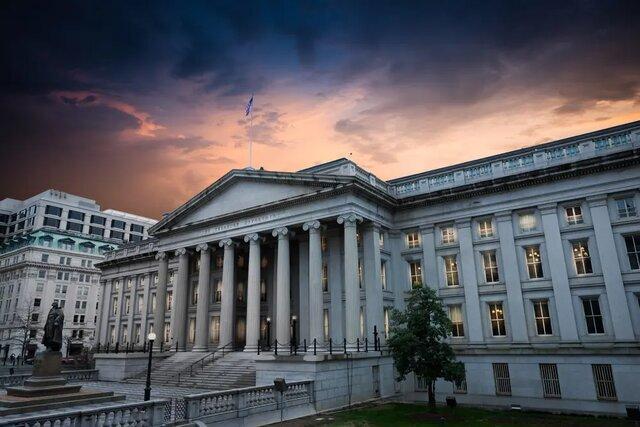
Trump Orders U.S. Forces To Board Iranian Ships Amid Hormuz Blockade
Key Takeaways
- U.S. forces boarded a ship carrying Iranian oil in the Indian Ocean.
- The action is part of a broader U.S. naval blockade against Iran's oil exports.
- Iran seized two ships amid the Hormuz blockade, signaling escalating maritime tensions.
Blockade begins, Hormuz closes
The U.S. naval blockade of Iran began on April 13, and President Donald Trump used the move to argue that Iran was “financially collapsing.”
“United States President Donald Trump has claimed Iran is “collapsing financially” and said the country is losing millions of dollars a day due to Washington’s naval blockade of Iranian ports”
In a post on his Truth Social platform on Tuesday evening, Trump wrote: “Iran is financially collapsing! They want to open the Strait of Hormuz immediately; they are starving for cash! They are losing $500 million a day. The army and police are complaining that they are not receiving their salaries.”

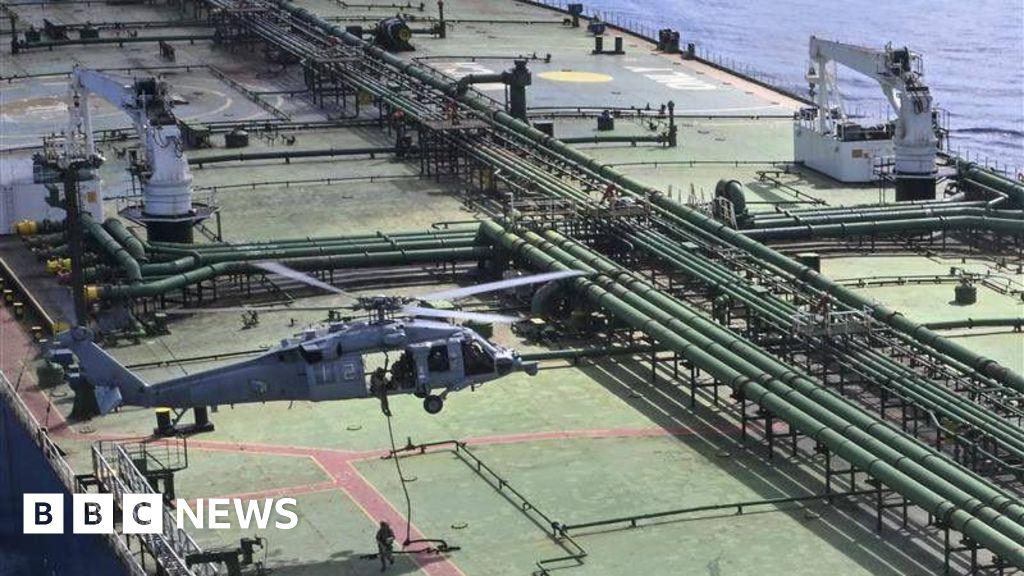
The Al Jazeera report says that since the start of the blockade, U.S. forces have boarded three Iranian ships and redirected at least 33 ships at sea carrying shipments from Iran or to it, citing the U.S. Department of Defense.
In response, Iran closed the Strait of Hormuz and detained several ships flying foreign flags, according to the same Al Jazeera report.
The BBC similarly described that the U.S. blockade began on 13 April and that Iran closed the strait to all foreign shipping and captured several foreign-flagged ships.
The BBC also reported that the U.S. ordered 33 vessels to return to port and said it would continue to stop ships suspected of “providing material support to Iran - anywhere they operate.”
In parallel, Iran’s First Vice President Mohammad Reza Aref said on April 19 that “the security of the Strait of Hormuz is not free,” adding: “One cannot restrict Iran’s oil exports while expecting free security for others.”
Oil flows, prices, and traffic
The blockade’s impact on Iran’s oil trade is presented through detailed figures on exports, prices, and shipping traffic.
Al Jazeera reported that Iran exports oil and gas and other goods by sea, and that Iran’s oil exports via the Strait of Hormuz account for about 80% of its total oil exports.

It cited Kpler data saying Iran exported 1.84 million barrels per day of crude oil in March and shipped 1.71 million barrels per day so far in April, compared with an average of 1.68 million barrels per day in 2025.
From March 15 to April 14, Al Jazeera said Iran exported 55.22 million barrels of oil, and that the price per barrel of Iranian oil did not fall below $90 per barrel during the past month and on many days exceeded $100 per barrel.
The report added that even a conservative estimate of $90 per barrel implies Iran earned at least $4.97 billion last month from ongoing oil exports, while early February before the war had Iran earning about $115 million a day from crude oil exports.
On shipping movements, Al Jazeera said ship transits through the Strait of Hormuz fell sharply due to the blockade, with security incidents involving ships doubling, and that after peaking at 26 tankers on 18 April, the number fell to the lowest level since the war began.
It stated that from 19 to 22 April, the strait was crossed by only 18 ships, at about 4.5 ships per day, compared with about 9 ships per day between March 1 and April 17.
The report contrasted that with peacetime records showing about 120 transits per day, concluding current traffic is down by more than 96% from normal levels.
Trump escalates: mines and force
As the blockade hardened, Trump’s statements escalated from economic pressure to direct military instructions about mines in the Strait of Hormuz.
NBC News reported that President Donald Trump ordered the U.S. military to “shoot and kill” any Iranian boats laying mines in the strait, while also saying the U.S. would intensify its efforts to clear mines that had helped choke off global shipping.
The BBC similarly said the U.S. Navy was ordered to “shot and kill” boats laying mines in the Strait of Hormuz and that “There is to be no hesitation,” adding that U.S. mine “sweepers” were clearing the strait “right now.”
In the same BBC account, the Pentagon dismissed reports suggesting the U.S. might need six months to remove mines, with Pentagon Chief Spokesman Sean Parnell telling the BBC that “One assessment does not mean the assessment is plausible, and a six-month closure of the Strait of Hormuz is an impossibility and completely unacceptable to the Secretary.”
The BBC also described that the U.S. said it had boarded a sanctioned ship carrying Iranian oil in the Indian Ocean, the M/T Majestic X, as part of a “maritime interdiction.”
It reported that Trump said the blockade was “100% effective” and that Iran was “getting no business,” while also claiming he had rejected an offer from Iran to reopen the strait three days earlier.
The BBC further said Trump wrote on Truth Social that U.S. forces have “total control” of the Strait of Hormuz while claiming Iranians were “having a very hard time figuring out who their leader is.”
Iran’s foreign ministry spokesperson Esmail Baghaei said Iran had acted “entirely” lawfully, stating: “From a legal perspective, both under international law and domestic law, the measures taken regarding the Strait of Hormuz are entirely lawful.”
Ceasefire tension and seizures
Despite a ceasefire extension, Iran and the U.S. continued to exchange actions around the Strait of Hormuz, including seizures of ships and continued blockade measures.
The wyomingnewsnow.tv report said Iran’s vow not to reopen the Strait of Hormuz so long as a U.S. naval blockade remained in place was held into Thursday despite a ceasefire extension, and it quoted Iranian parliament speaker Mohammad Bagher Ghalibaf saying: “A complete ceasefire only has meaning if it is not violated through a naval blockade.”
It added: “Reopening the Strait of Hormuz is not possible amid a blatant violation of the ceasefire.”
The same report said US Central Command (CENTCOM) told that it had “directed 31 vessels to turn around or return to port” as part of its own “blockade against Iran.”
It described Iran’s elite Revolutionary Guards forcing two ships to the Iranian shore, identifying the vessels as the Panama-flagged container ship MSC Francesca and the Liberia-flagged Epaminondas, and it said Panama’s foreign ministry confirmed the seizure of MSC Francesca as a “serious attack on maritime security” and an “unnecessary escalation.”
USA Today reported that Iran’s Islamic Revolutionary Guard Corps seized two vessels for alleged maritime violations and escorted them to Iran’s shores, citing semi-official Tasnim news agency.
USA Today also said the ships were the first seized since the beginning of the U.S.-Israeli war on Iran began Feb. 28, and it described that a ceasefire between the United States and Iran remained in effect after Trump extended the break in hostilities.
The BBC reported that Iran’s navy said it had seized two cargo ships in the strait and taken them to the country’s coast after reports that three vessels came under fire from Iranian forces, while Greek authorities denied the Epaminondas was seized and said its captain remains in control.
Pain tolerance, legal battles, and fallout
The sources also frame the standoff as a contest of endurance and political constraints, with multiple actors warning about consequences and legal limits.
Al Jazeera’s Q&A report said that after the start of the U.S.-Israeli war on Iran on 28 February, Tehran authorities effectively closed the Strait of Hormuz, and it described how the near-total closure led to a rise in global oil and gas prices while Iran continued to export energy products via the waterway.

It also said that in an interview with Al Jazeera on 14 April, Frederic Schneider, a senior visiting fellow at the Middle East Global Affairs Council, said President Trump would face a legislative challenge by May 1, when the 60-day window during which he can continue an external attack without congressional approval ends.
Schneider added that harsh conditions on ships enforcing the blockade were reported and that it remains to be seen how China will respond to continuing detention of ships carrying its cargoes, while China’s foreign ministry spokesperson said the U.S. attempt to impose a blockade represents “a dangerous and irresponsible act.”
The PBS/AP analysis quoted Max Boot saying, “It's really a question now of which country, the U.S. or Iran, has a greater pain tolerance,” and it described that Iran’s leverage over the Strait of Hormuz gives it power during a shaky ceasefire.
PBS also said that stalled shipments through the strait sent gasoline prices skyrocketing far beyond the region and raised the cost of food and a wide array of other products, creating a political problem for Trump before the November’s elections.
The Daily Sabah report, citing AFP, quoted economic analyst and professor at Shahid Beheshti University in Tehran, Saeed Laylaz, saying: “If the blockade lasts for more than two or three months, it can cause more damage” to Iran, and that “If Iran suffers any damage, the damage to the countries in the southern Persian Gulf will definitely be greater.”
It also quoted Global Risk Management chief analyst Arne Lohmann Rasmussen saying Iran “was expected to run out of storage capacity within approximately one month,” while MEES managing editor Jamie Ingram told AFP that the timeline for Iran to hit oil storage limits would be measured in “weeks rather than days.”
More on Iran

Ahmad Vahidi and the IRGC Control Iran, Jerusalem Post Says Mojtaba Khamenei Not Leading
20 sources compared

Iran FM Abbas Araghchi Visits Islamabad Without U.S. Talks, Says Esmail Baghaei
11 sources compared

Trump Administration Sanctions Hengli Petrochemical And 40 Shippers Over Iranian Oil
16 sources compared

Pentagon Considers Suspending Spain From NATO Over Iran War Support Dispute
16 sources compared