Full Analysis Summary
Repairs at Iranian nuclear sites
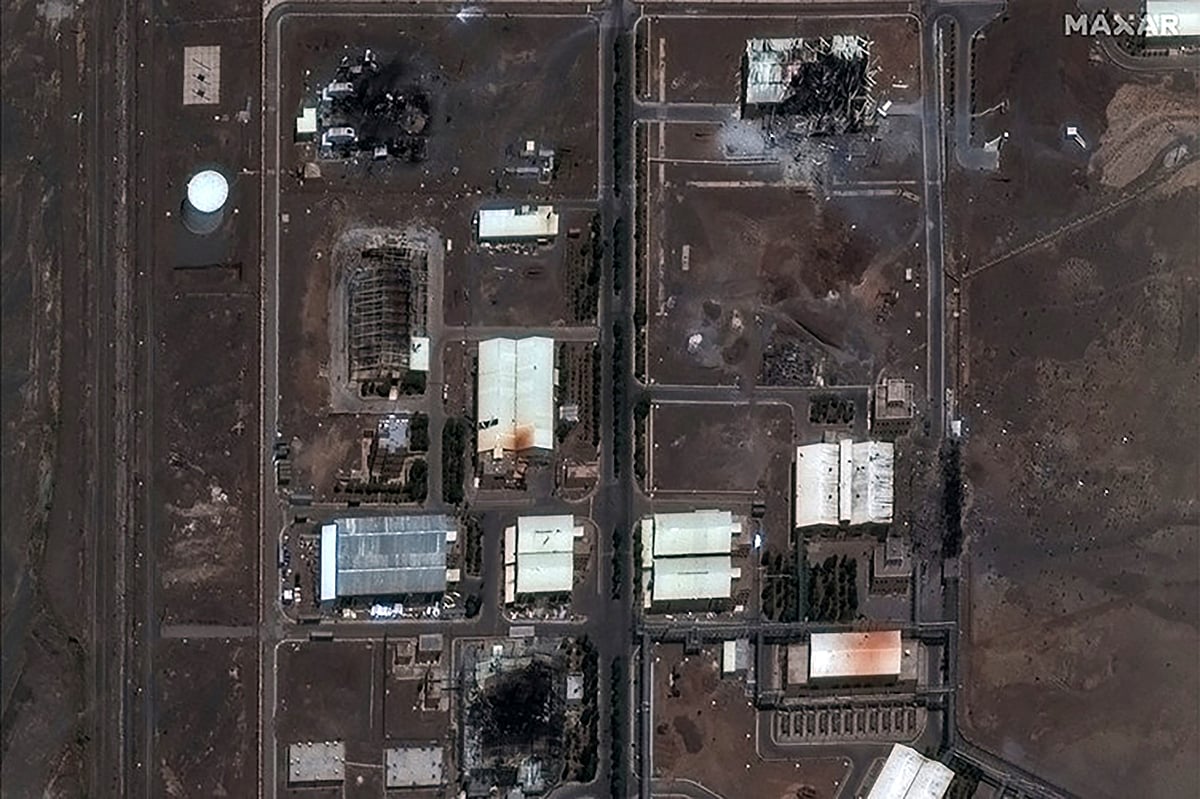
Satellite imagery analysed by independent experts shows Iran carrying out construction, repair and concealment work at multiple sensitive nuclear sites, notably Natanz, the Isfahan complex and a site near Mount Kolang Gaz La (Pickaxe Mountain).
Gulf News reports tunnel entrances at Isfahan "buried under soil" and notes a "new white‑panel roof placed over a section of an enrichment facility that was damaged in Israeli strikes last summer—possibly to hide activity or enable salvage of equipment or material, including highly enriched uranium."
The BBC cites analysts from the Institute for Science and International Security (ISIS) and UK firm Maiar identifying "fresh concrete over a Pickaxe Mountain tunnel entrance, a concrete‑delivery boom pump, a flattened tunnel entrance, and a new concrete‑reinforced structure."
The BBC says the works could be intended "to strengthen and protect entrances against air strikes."
Coverage Differences
Tone
Gulf News (West Asian) emphasises concealment and possible salvage of material, citing imagery that shows Isfahan tunnel entrances “buried under soil” and a new roof over a damaged enrichment facility, implying an intent to hide or recover sensitive material. BBC (Western Mainstream) focuses on defensive hardening and repair, reporting ISIS and Maiar analysts who assess the works “would help blunt air strikes and defend against ground seizure of any highly enriched uranium,” and lists concrete‑delivery equipment that suggests fortification rather than immediate operation.
Nuclear site activity
Analysts cited in the reporting indicate imagery shows activity concentrated between December and January, with heavy machinery and new concrete suggesting substantial engineering work rather than completed operational facilities.
Gulf News describes expansion and concealment efforts at "key nuclear sites" as tensions with the US rise, linking the activity to escalating diplomatic and military pressures.
The BBC similarly notes heavy machinery and states the site near "Pickaxe Mountain" "is not yet operational," while highlighting repairs at Natanz and reinforcing measures at Isfahan.
Coverage Differences
Narrative Framing
Gulf News frames the work as part of a broader regional reaction to rising tensions with the US, describing it as “expanding and concealing infrastructure at key nuclear sites,” while the BBC frames the same imagery through technical analyst observations (ISIS/Maiar), emphasising that heavy machinery indicates the sites “is not yet operational” and characterising the works as repairs and defensive strengthening.
Assessments of repaired portals
Analysts offered differing interpretations of motive and function in the two reports: both Gulf News and the BBC cite possibilities including recovery, concealment or hardening, but emphasise different aspects.
Gulf News highlights the possibility of hiding activity or salvaging equipment or material — explicitly mentioning "highly enriched uranium" as a potential item of concern — whereas the BBC gives more weight to the protective and defensive rationale proposed by ISIS and Maiar, saying backfilling and new roofs "would help blunt air strikes and defend against ground seizure."
Both reports, however, stop short of asserting active enrichment or operations at these repaired portals.
Coverage Differences
Emphasis
Gulf News emphasises concealment and potential salvage, explicitly naming “highly enriched uranium” as a possible focus of the work, while BBC emphasises defensive hardening as per analyst assessments (ISIS/Maiar) that such measures “would help blunt air strikes and defend against ground seizure of any highly enriched uranium.” Neither source claims the sites are operational, showing cautious wording across both outlets.
Media context and focus
Context and attribution differ between the outlets.
The BBC explicitly places the images and analyst assessments alongside the wider diplomatic and military history.
It notes that after President Trump ordered strikes on underground sites in June 2025, he said they had 'obliterated' Iran's enrichment capacity.
The BBC also says Iran might be planning new sites.
Gulf News situates the imagery in the present escalation with the US and increased diplomatic and military activity.
Gulf News focuses more narrowly on the imagery's implications for concealment and recovery at specific facilities.
Coverage Differences
Context
BBC (Western Mainstream) connects the imagery to a recent history of strikes and quotes President Trump’s June 2025 claim that the strikes had “obliterated” Iran’s enrichment capacity, and raises the possibility Iran “might be planning new sites.” Gulf News (West Asian) stresses contemporary tension with the US and interprets imagery as expansion and concealment at specific sites without recounting the June 2025 strikes in the same quoted terms; the difference reflects BBC’s broader historical framing and Gulf News’s local/regional emphasis.
Analysts' caveats on sites
All reporting includes caveats and analyst caution: both sources report that the works could reflect 'recovery, concealment or hardening' and that heavy machinery indicates the sites may not be operational.
The BBC lays out the analysts' specific observations — new concrete, flattened tunnel entrances and concrete-reinforced structures — while Gulf News frames the developments as part of Iran's response to rising tensions with the US.
Given the limited set of publicly shared imagery and the analysts' own hedged language, the exact purpose (salvage, concealment, hardening or future operation) remains unclear in the sources.
Coverage Differences
Uncertainty
Both Gulf News and BBC report analysts’ cautious formulations — describing the works as possible “recovery, concealment or hardening” — and neither source asserts definitive operational intent; the BBC provides more granular physical detail (concrete‑delivery boom pump, flattened entrance) while Gulf News stresses the geopolitical context and potential for concealment of material such as “highly enriched uranium.” This demonstrates aligned uncertainty but different emphases in reporting.