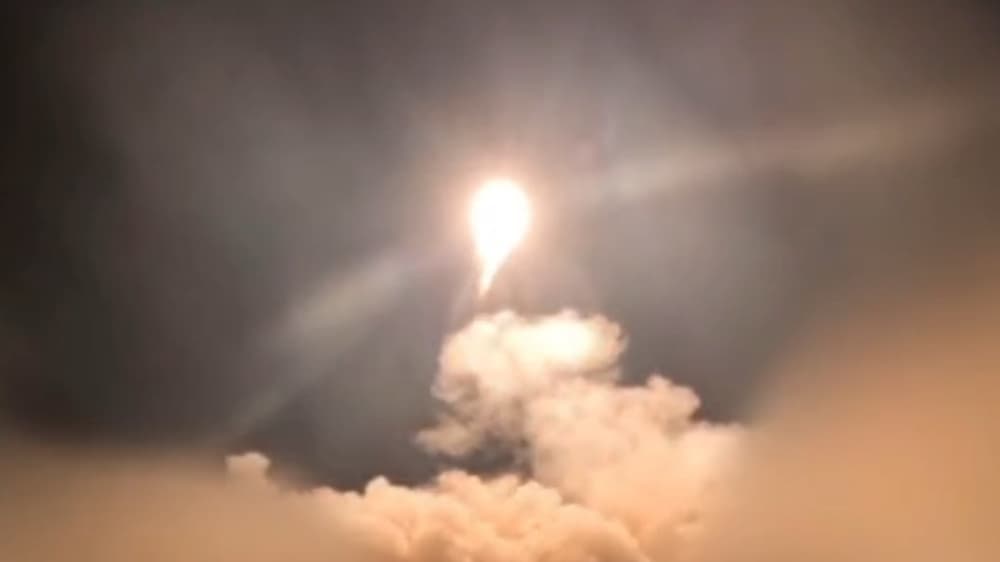
Iran Launches 70th Wave of Missile Strikes on Israel in Operation True Promise 4
Key Takeaways
- IRGC announced the 70th wave of Operation True Promise 4.
- More than 55 locations across West Asia targeted by the operation.
- Disagreement over wave number: 70th per S1/S2 vs 73rd per S3.
Operation Overview
Iran has launched a major missile strike operation against Israel, described as the 73rd wave of Operation True Promise 4 according to PressTV.
“The Islamic Revolutionary Guard Corps (IRGC) announced on Saturday, March 21, 2026, that it has launched the 70th wave of missile and drone strikes under “Operation True Promise 4”
The user query references it as the 70th wave, indicating a potential discrepancy in reporting.
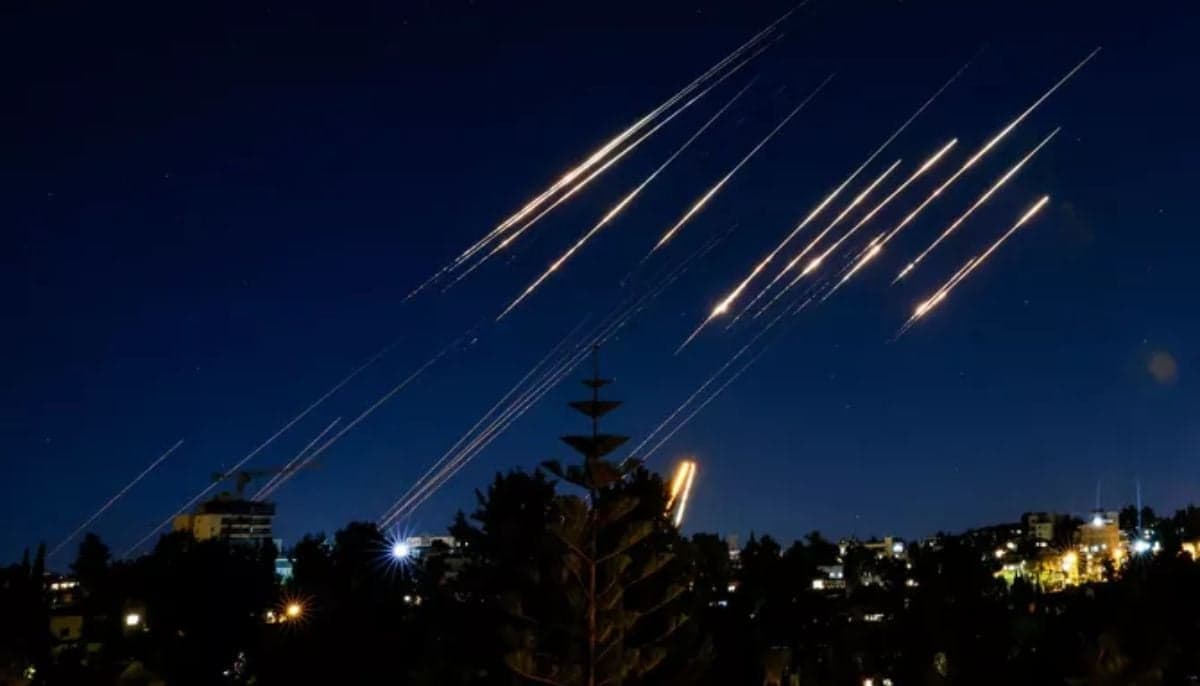
The Islamic Revolution Guards Corps (IRGC) executed widespread attacks targeting both Israeli military installations and US bases across the Middle East.
This marks a significant escalation in regional tensions.
The operation involved sophisticated missile systems and resulted in substantial casualties.
The IRGC claims hundreds of Israeli personnel were either killed or wounded during the strikes.
The timing comes amid heightened regional conflicts following recent US and Israeli airstrikes on Iranian infrastructure, including the Natanz nuclear facility earlier in the day.
Targeted Locations
The missile strikes targeted multiple strategic locations throughout Israel and US military installations across the region.
Within Israel, the IRGC specifically hit military installations and security centers in Arad, Dimona, Eilat, Be'er Sheva, and Kiryat Gat.

The IRGC described this as following the collapse of Israeli air defense systems.
Beyond Israeli borders, the operation struck five US military installations in Saudi Arabia, the UAE, Kuwait, Iraq and Bahrain.
Specific bases hit included Ali al-Salem in Kuwait and al-Minhad and al-Dhafra in the UAE.
The attack utilized advanced Iranian missile technology including Fattah, Qadr, Emad, and Khorramshahr-4 systems.
This demonstrates Iran's growing military capabilities and precision targeting capabilities in the region.
Casualties and Damage
The operation resulted in significant casualties and material damage.
“The Islamic Revolution Guards Corps (IRGC) says hundreds have been either killed or wounded during the latest phase of its ongoing retaliatory Operation True Promise 4, pointing to significant tilting of the scale against adversaries”
Reports indicate that shrapnel from Iranian cluster munitions struck a daycare in Rishon Lezion, causing civilian harm.
The IRGC claimed that field reports indicated more than 200 Israeli personnel were killed or injured in the early hours of the latest stage of reprisal.
Zionist authorities were reported to have stepped up pressure on journalists and eyewitnesses to censor coverage of damage and casualty figures.
This was particularly evident in Dimona where the nuclear reactor is located.
Despite Israel's defense systems intercepting many projectiles, the effectiveness of the Iranian attack raised serious questions about Israeli air defense capabilities.
This also raised questions about the Israeli military's ability to protect its territory and strategic assets from missile threats.
Regional Strategy
Iran framed the operation within a broader regional resistance strategy.
This highlighted the crucial role of Lebanon's Hezbollah movement in opening a 'tough and high-pressure battlefront' against northern and central areas of Israeli-occupied territories.
The IRGC praised Hezbollah's 'proud efforts' in defending Lebanon's territorial integrity.
They congratulated the Lebanese people and Muslims in the region.
Iran also described the situation of illegal settlers in the occupied territories as 'dire and forsaken.'
They attributed this to prime minister Benjamin Netanyahu's war cabinet's incendiary policies.
The attack represents Iran's commitment to a strategy of 'gradual attrition.'
The IRGC emphasized that 'any source of aggression against Iran's territory and national sovereignty would face attacks beyond previous levels.'
This signals a potential further escalation in the conflict cycle.
Strategic Assessment
The IRGC concluded its statement by declaring that 'the equations of war are rapidly changing.'
“The Islamic Revolutionary Guard Corps announced the launch of the 70th wave of Operation True Promise 4, saying more than 55 locations linked to the United States and Israel across West Asia were targeted”
They asserted that control over the defense of the occupied territories by the Israeli military was 'collapsing.'
This assessment reflects Iran's confidence in its evolving military capabilities.
It also reflects Iran's assessment of Israeli vulnerabilities.
The operation comes amid heightened tensions following recent US and Israeli strikes on Iranian nuclear facilities.
This represents a significant escalation in the ongoing cycle of retaliation between Iran and Israel.
The simultaneous targeting of both Israeli and US military installations demonstrates Iran's strategic approach.
This confronts what it perceives as Western-backed aggression in the region.
It potentially sets the stage for further military exchanges in the coming days and weeks.
More on Iran

President Trump delays strikes on Iran power plants for five days amid conflicting reports.
41 sources compared

Trump Extends Deadline to Reopen Strait of Hormuz, Delays Strikes on Iranian Power Plants.
27 sources compared
Trump Says Talks With Iran Ongoing; Iran Denies Negotiations.
15 sources compared

Iran Threatens to Close Strait of Hormuz, Hit Power Plants After Trump's Ultimatum
41 sources compared