Iran-Israel31 January, 20262 min read
Iran Launches Live-Fire Naval Drills In Strait Of Hormuz
Iran's IRGC conducts two-day live-fire naval exercises in the Strait of Hormuz. U.S. Central Command warned it will not tolerate unsafe Iranian naval actions near U.S. forces.
10 outlets told this the same way.
Outlets did split on U.S. Intercepts Iran Message Activating Sleeper Cells After U.S.-Israel Strike Kills Khamenei →
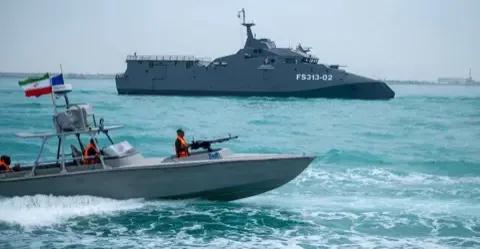
IRGC naval exercise
Iran's Islamic Revolutionary Guard Corps (IRGC) announced a two-day live-fire naval exercise in the Strait of Hormuz and issued a maritime notice warning ships to avoid portions of the waterway on the scheduled days. Multiple reports say the drill involves IRGC naval forces and may extend into established shipping routes, and outlets note the exercise comes amid heightened tensions with the United States following U.S. carrier movements in the region. The Strait of Hormuz is a strategically vital chokepoint that carries roughly one-fifth of the world's oil, so military activity there could disrupt international trade.
“Iran’s Islamic Revolutionary Guard Corps Navy began two days of live-fire exercises in the Strait of Hormuz on Feb. 2–3, issuing a maritime warning asking ships to avoid the area.”
U.S. Warning to Iran
U.S. Central Command publicly warned Iran to conduct its exercises 'safely and professionally,' listing specific actions it would deem unacceptable, including armed or unclear low‑altitude overflights, high‑speed boat approaches on collision courses, and weapons trained on U.S. assets.
Several sources repeated CENTCOM’s language and said the command stressed it will protect U.S. personnel, ships, and aircraft.

Other accounts added that U.S. carrier strike groups and naval assets are in the region as a deterrent.
Some reporting framed the warning as part of a broader U.S. posture intended to deter escalation rather than to seek immediate confrontation.
Maritime exercise risks
Analysts and reporters warn the exercise's location and nature risk accidental clashes and broader escalation. Multiple outlets highlight that the exercise could intersect or extend into the Traffic Separation Scheme (the two-lane shipping corridor), raising the potential for interference with commercial traffic. Some reporting also cites prior incidents in the area and warns that past threats to the route have driven global energy prices higher, underlining the economic stakes of any miscalculation.
“The notice’s coordinates suggest the exercise could extend into the Traffic Separation Scheme, a two‑lane shipping corridor used to separate inbound and outbound traffic.”
Media framing of regional drills
Coverage diverges on context and potential next steps. Some outlets include reports or unnamed-sourced scoops suggesting the U.S. might authorize strikes if provoked. Other outlets stress restraint and de-escalation efforts by regional partners.
Separately, at least one West Asian source places the drills in the context of Iran's domestic unrest, reporting disputed death tolls from protests. That source frames Washington's approach as calibrated pressure rather than immediate military action, a perspective largely absent from Western accounts of the drills themselves.