
Iran Launches Missiles at Israel as Iran Denies Trump Talks
Key Takeaways
- Iran launched multiple waves of missiles at Israel, escalating the conflict.
- Missiles hit Tel Aviv and central Israel, injuring several people.
- Trump claimed progress in talks with Tehran; Iran dismissed it as fake news.
Missile Escalation
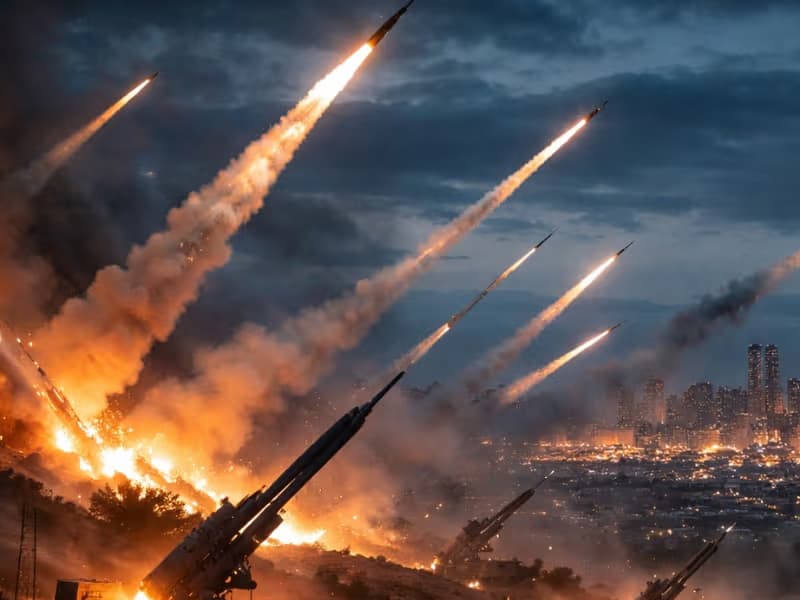
Iran launched a new wave of missiles against Israel on Tuesday, escalating tensions in the Middle East conflict just hours after US President Donald Trump claimed Washington and Tehran were holding 'very good and productive talks' aimed at resolving hostilities.
“Israel bombs petrol station in southern Lebanon The war launched by the United States and Israel against Iran entered its 25th day on Tuesday, as conflicting claims emerged over possible peace talks”
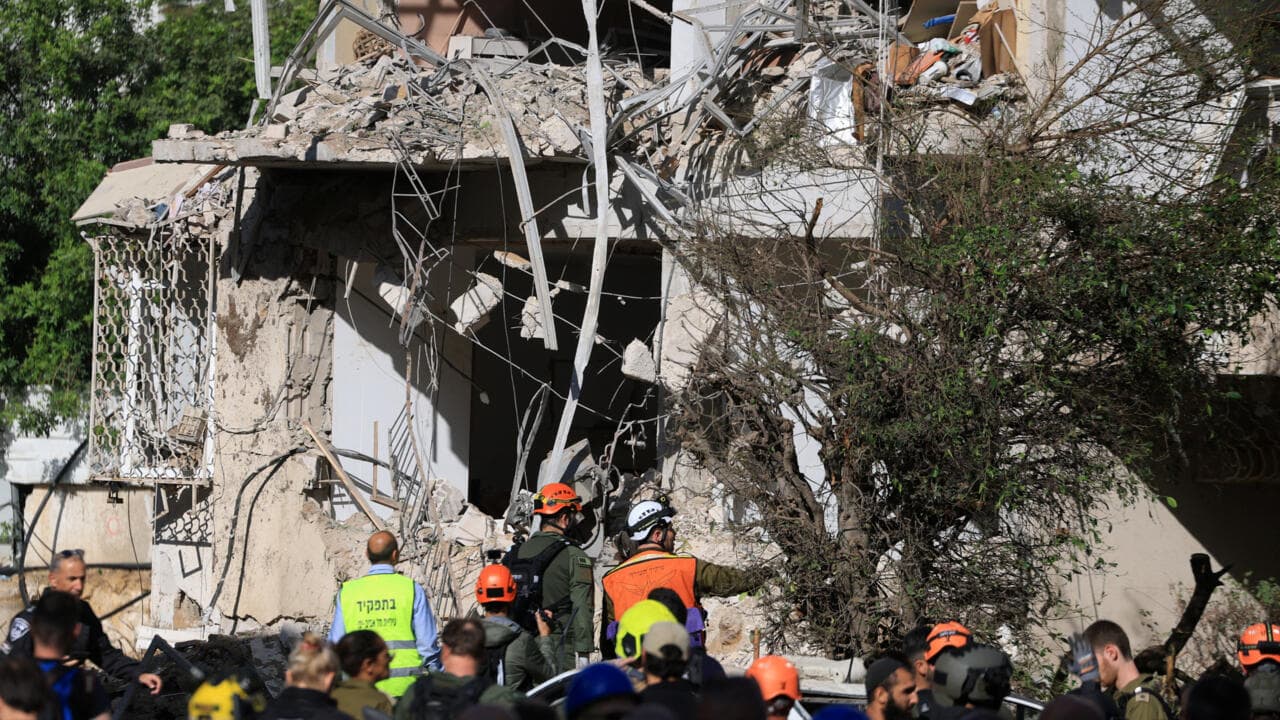
The missile attack triggered air raid sirens across Israel, including in major population centers like Tel Aviv, where interception blasts were heard and falling debris damaged homes in northern Israel, though no deaths were reported from the strikes.

The attack came despite Trump's surprise disclosure that he had ordered a five-day postponement of planned strikes on Iranian power plants and energy infrastructure, with his administration speaking with an unidentified 'top person' while warning if talks failed in the next five days 'we'll just keep bombing our little hearts out'.
The timing of Iran's missile barrage demonstrated that Tehran continued military operations even as diplomatic signals were being sent from Washington, creating confusion about the actual state of negotiations and the likelihood of de-escalation in the conflict that began on February 28, 2026.
Iranian Denial
Iran firmly rejected Trump's claims of ongoing negotiations, dismissing them as 'fake news' aimed at manipulating financial and oil markets while helping the US and Israel escape what Iranian officials described as a 'quagmire'.
Iranian parliamentary speaker Mohammad Bagher Qalibaf took to X to explicitly state that 'no negotiations have been held with the US,' accusing Washington of spreading misinformation to influence global markets and shape perceptions of the conflict.
The Islamic Revolutionary Guard Corps (IRGC) reinforced this stance, describing Trump's remarks as 'psychological operations' that were 'worn out' and having no impact on Tehran's fight, while announcing fresh attacks on US targets.
Iran's foreign ministry joined the chorus of denial, stating that 'remarks by the US president are part of efforts to reduce energy prices and buy time to implement his military plans,' while Foreign Minister Abbas Araghchi maintained that Iran's stance on the Strait of Hormuz had not changed despite international pressure.
This unified Iranian rejection of diplomatic overtures from Washington created a stark contradiction between Trump's optimistic assessment and Tehran's continued military posture.
Market Volatility
The conflicting signals between Washington's diplomatic claims and Tehran's military actions created volatile market reactions, with oil prices initially plummeting after Trump's announcement before rebounding sharply as Iranian missiles hit Israel.
“AFP The flag of Iran”
Global markets experienced significant swings as investors grappled with uncertainty about whether the conflict might de-escalate through diplomacy or intensify further through military confrontation.
Brent crude futures rose 4.2% to $104.21 per barrel and US crude climbed 4.3% to $91.93, reversing the 10% slide from the previous day when traders had priced in the possibility of de-escalation following Trump's remarks.
The US dollar regained lost ground while Treasury yields pushed higher, retracing the relief rally that had swept markets overnight after Trump extended his ultimatum deadline by five days.
Market analysts described the situation as 'incredibly fragile or flammable,' noting that the underlying geopolitical tensions remained elevated despite temporary diplomatic signals.
Asian markets opened higher on Tuesday following gains in Europe and on Wall Street, but the positive sentiment was quickly challenged by the reality of continued military escalation, leaving investors caught between competing forces of diplomacy and confrontation.
Military Escalation
While diplomatic signals were being exchanged, military operations continued to escalate across the region with significant human costs.
Israel struck 'more than 50 targets,' including ballistic missile sites, in Iran overnight according to the Israel Defense Forces, while Iranian missiles caused damage in parts of northern Israel and injured six people in Tel Aviv at multiple impact sites.
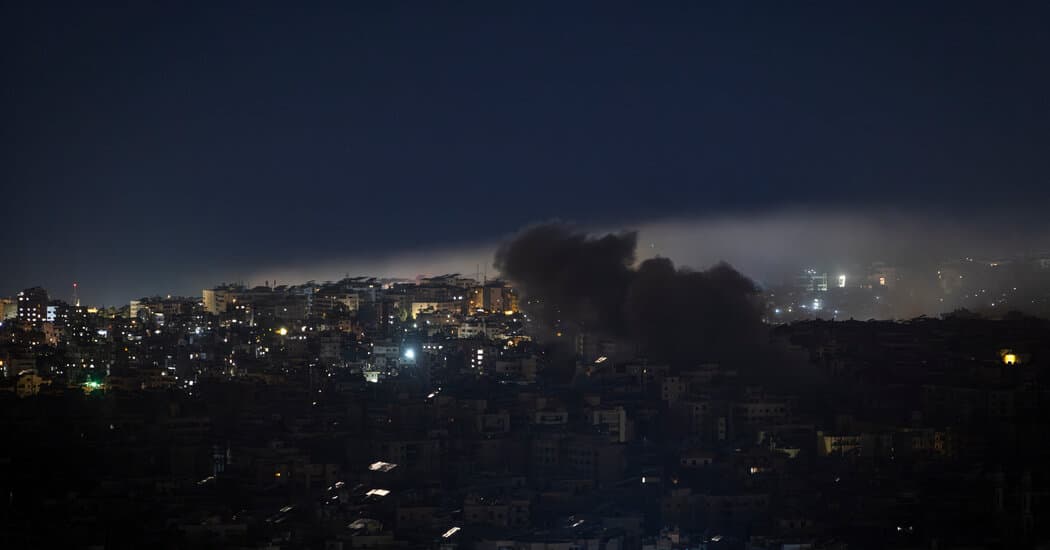
In Lebanon, an Israeli strike on Bshamoun, a town south of Beirut, killed at least two people and wounded five others, according to Lebanon's health ministry.
The conflict has taken a particularly heavy toll on civilians, with Iran's emergency service reporting that 208 children have been killed since the US-Israeli war began on February 28.
In Iraq, a strike in western Anbar province killed a commander and 14 fighters from the former paramilitary coalition Hashed al-Shaabi (Popular Mobilisation Forces), which blamed the United States for the 'treacherous American attack that targeted the operation headquarters.'
Meanwhile, Iran mourned the death of Saeed Shamaghdari, a leading scholar and professor at Iran University of Science Technology, alongside his two children, who were killed in a US-Israeli attack targeting their residence north of Tehran.
The continued military actions demonstrated that despite diplomatic overtures, the conflict remained intensely violent with widespread civilian casualties and infrastructure damage.
Diplomatic Efforts
International mediation efforts continued amid the escalating conflict, with regional powers attempting to facilitate dialogue between the opposing sides.
“Quick Summary Iran launched missile waves at Israel, while Trump’s claim of productive talks and a five‑day pause on striking Iran’s power grid sparked markets—but Iran’s speaker rejected any negotiations as “fake news,” unsettling relief rally”
Pakistan's Prime Minister Shehbaz Sharif spoke with Iran's President Masoud Pezeshkian, promising Islamabad's help to bring peace to the region, while Iranian Foreign Minister Abbas Araghchi was in contact with officials from Azerbaijan, Egypt, Oman, Japan, Pakistan, Russia, South Korea, Turkey and Turkmenistan to discuss the crisis.
Japan announced plans to release additional strategic oil reserves from Thursday after beginning to tap stockpiles the previous week, while the International Energy Agency warned that a prolonged war could lead to daily oil losses worse than the combined impact of both 1970s oil shocks and Russia's invasion of Ukraine.
Analysts suggested Trump might be seeking an 'exit ramp' because the war has been domestically unpopular and is causing significant economic pain through rising oil and fuel prices, while Israeli intelligence expert Danny Citrinowicz wrote that 'Trump blinked first -- out of a clear understanding that striking Iran's energy infrastructure would trigger a direct and significant retaliation.'
Despite these diplomatic efforts and economic pressures, the fundamental positions remained entrenched, with Tehran maintaining its closure of the Strait of Hormuz and Washington continuing military buildup in the region including deployment of thousands of US Marines to reinforce America's presence.
More on Iran
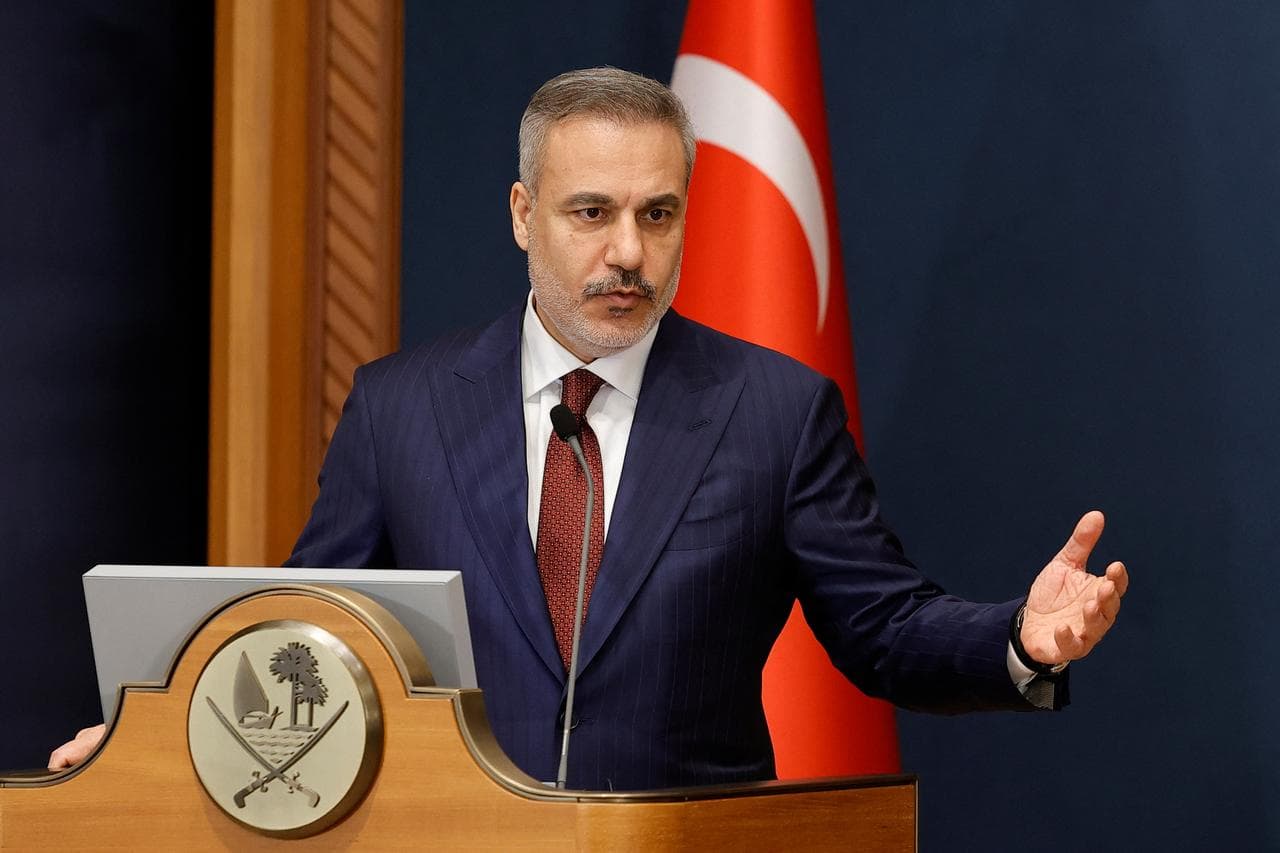
Trump Delays Five-Day Iran Strikes as Tehran Denies Talks
24 sources compared

Trump says U.S. negotiating with Iran to end war, Iran denies deal.
16 sources compared
Iran Fires Missiles at Israel as Trump Postpones Strikes Over Talks
12 sources compared

US and Israel Launch War on Iran, Unleash Nearly 900 Airstrikes
15 sources compared