Iran Launches Multi-Wave Missile Strikes on Israel
Key Takeaways
- Iranian missiles struck Israeli towns in waves.
- 303 injuries nationwide; 47 in Dimona.
- Missile strikes triggered sirens and explosions across Israeli regions.
Iran's Multi-Wave Strikes
Iran launched a comprehensive multi-wave missile strike against Israel, described as Wave 71 by the Islamic Revolutionary Guard Corps (IRGC).
“Israeli media: A large Iranian cluster missile directly hits a building in Haifa; ambulance teams rush to the scene Islamic Resistance fighters targeted a gathering of vehicles and soldiers of the Israeli enemy army in the Al-Zuhour neighborhood of Maroun Al-Ras town with artillery shells: statement 1 Israeli enemy launches the sixth air raid on Beirut’s Dahiey in a new wave of attacks: Al-Manar reporter Israeli media: A large Iranian cluster missile directly hits a building in Haifa; ambulance teams rush to the scene Islamic Resistance fighters targeted a gathering of vehicles and soldiers of the Israeli enemy army in the Al-Zuhour neighborhood of Maroun Al-Ras town with artillery shells: statement 1 Israeli enemy launches the sixth air raid on Beirut’s Dahiey in a new wave of attacks: Al-Manar reporter”
The operation was characterized as a "first crushing blow" to commemorate the new Persian year.
According to Iranian state television, the strikes targeted multiple Israeli locations including Tel Aviv and Rishon LeZion.
The IRGC emphasized that these were "impact-oriented operations" following weeks of monitoring vulnerabilities.
Iranian media confirmed that the attacks were a direct response to the US-Israeli strike on Iran's Natanz nuclear enrichment complex.
Iranian state television described the Natanz strike as "criminal attacks" that violated international law.
Israeli Damage and Casualties
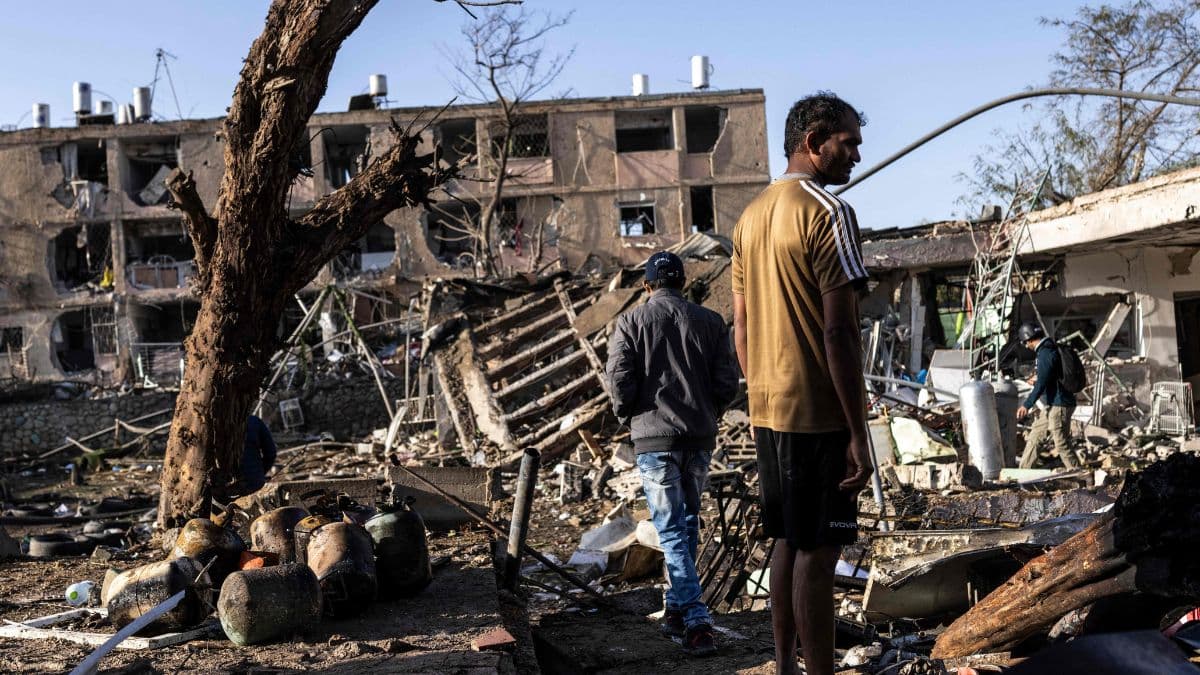
The Iranian missile strikes caused significant damage and casualties across multiple Israeli cities.
Arad was particularly hard hit, with Israeli authorities reporting more than 120 Israelis killed and injured.
Buildings were damaged and collapsed in Arad, with people trapped under the rubble.
Israeli media described the Arad incident as a "disaster" with multiple buildings collapsing completely.
In Dimona, more than 20 were injured and a building collapsed.
Dimona holds strategic importance due to its proximity to Israel's nuclear research center.
Iranian Retaliation Strategy
Iran justified the missile strikes as retaliation for the US-Israeli attack on its Natanz nuclear enrichment complex.
“About 47 people were injured in Israel's Dimona also known as "Little India" after an Iranian missile struck it on Saturday evening”
Iranian state television confirmed that targeting Dimona was part of the response to the Natanz attack.
Iran described the Natanz strike as "criminal attacks" that violated international law.
Iran warned of broader consequences and expanded retaliation.
The Iranian military emphasized the strikes were part of a "phased attrition campaign" targeting US bases.
This regional targeting was designed to send a message to both Israel and its regional allies.
Military Tactics and Technology
The Iranian military employed sophisticated tactics and advanced weaponry in the multi-wave strikes.
Wave 70 operations targeted more than 55 locations, including five US bases and assets linked to the US Fifth Fleet.
The IRGC emphasized that the attacks involved new offensive tactics developed after weeks of monitoring vulnerabilities.
Iranian state media reported the use of "super-heavy, precision-guided Emad missiles" and multi-warhead Qadr systems.
The use of cluster munitions in some strikes suggests an attempt to maximize damage in populated areas.
This technological sophistication indicates Iran's military capabilities have evolved significantly.
More on Iran

President Trump Says Iran Deal Within Reach Amid Talks With Senior Iranian Official
10 sources compared

Trump Approves Iran Operation After Netanyahu Presses for Joint Strike on Khamenei
12 sources compared

President Donald Trump orders ICE officers deployed to airports amid DHS shutdown.
227 sources compared
Iranian Missiles Strike Israel; Officials Report 180 Injured Amid Conflicting Casualty Figures.
12 sources compared