Iran-Israel07 March, 20264 min read
Iran Names Mojtaba Khamenei Supreme Leader After Airstrikes Killed Ayatollah Ali Khamenei
Supreme Leader Ayatollah Ali Khamenei was killed in U.S.-Israeli airstrikes on February 28. Iran’s Assembly of Experts selected the late leader’s son to succeed him as supreme leader.
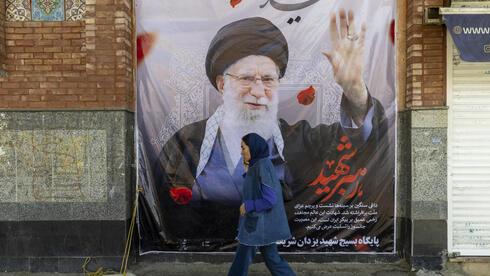
New Supreme Leader Named
Iran’s Assembly of Experts has named Mojtaba Khamenei as Iran’s new supreme leader following the death of his father, Ayatollah Ali Khamenei, in strikes at the end of February. NPR reported that the Assembly named 56-year-old Mojtaba Khamenei, son of the late Ayatollah Ali Khamenei, as the country’s new supreme leader. Al-Jazeera Net stated that official Iranian media announced Mojtaba Khamenei has assumed the post of Supreme Leader of the Islamic Republic, succeeding his father Ali Khamenei, who was killed in an Israeli–U.S. attack on Tehran on Saturday, February 28, 2026.
“Iran’s Assembly of Experts has named 56-year-old Mojtaba Khamenei — son of the late Ayatollah Ali Khamenei — as the country’s new supreme leader.”
ABC News noted that Iran’s Assembly of Experts selected Mojtaba Khamenei, the 56-year-old second-eldest son of assassinated Supreme Leader Ayatollah Ali Khamenei, as the country’s next supreme leader, Iranian state media reported. Anadolu Ajansı recorded the selection in constitutional terms, reporting that Mojtaba Khamenei, 56, has been named Iran’s new supreme leader by the 88-member Assembly of Experts.

Media coverage of Mojtaba Khamenei
Multiple outlets framed Mojtaba Khamenei’s elevation as continuity and as a consolidation of ties to Iran’s security establishment rather than the result of a career in formal public office. Anadolu Ajansı said he was born in Mashhad in 1969, has never held a formal government post or elected office, and built a career in the clerical establishment teaching advanced Islamic jurisprudence (dars-e kharej). France 24 emphasised that the post gives ultimate authority over state affairs, the armed forces and the Revolutionary Guard, and control of Iran’s stockpile of highly enriched uranium.
The Times of India highlighted that he has cultivated close ties with senior clerics, intelligence officials and commanders of the Islamic Revolutionary Guard Corps (IRGC), which it described as a dominant force in Iran’s military and economy. The Jerusalem Post described Mojtaba Hosseini Khamenei as a hardline cleric who has wielded influence without a formal post through his father’s patronage. NPR similarly noted his ties to the IRGC in reporting the Assembly’s choice.

Air strikes and casualties
The succession took place amid a dramatic military escalation after coordinated U.S.–Israeli strikes on Iran on 28 February that the outlets portray as the proximate cause of the leadership rupture.
“Ayatollah Ali Khamenei, who led Iran for 37 years, was killed on Feb. 28 in a U.S.–Israeli air strike at the start of the war.”
Several outlets reported that the strikes killed Ayatollah Ali Khamenei.
PBS noted that "Ayatollah Ali Khamenei, who led Iran for 37 years, was killed on Feb. 28 in a U.S.–Israeli air strike at the start of the war."
The BBC said "US and Israeli forces carried out wide-ranging strikes on Iran on 28 February that killed Iran’s supreme leader, Ayatollah Ali Khamenei, and dozens of senior IRGC figures."
NPR likewise recorded the same timeline: "Ayatollah Ali Khamenei, who led Iran for 37 years, was killed on Feb. 28 in a U.S.–Israeli air strike at the start of the war."
Reporting also documented heavy civilian tolls and regional spillover.
PBS gave cumulative tolls: "Official death tolls cited were at least 1,230 in Iran, 397 in Lebanon and 11 in Israel."
The BBC reported state-linked groups put Iran’s deaths at "roughly 1,100–1,230 deaths by 5 March."
The Independent excerpt also referenced the high casualty counts, underscoring the scale of the violence.
International reactions to Mojtaba
The announcement of Mojtaba’s selection drew immediate international political reactions and threats, reflecting a fast-escalating regional confrontation.
PBS reported U.S. President Donald Trump said he finds Iran’s Supreme Leader Ali Khamenei’s son 'unacceptable' and wants a say in who leads Iran after the war, telling ABC News a new leader 'is not going to last long' without his approval.

NPR recorded a similar posture, saying U.S. President Trump had called Mojtaba an unacceptable choice; it said Israel would pursue any successor and target those involved in the selection, while PM Benjamin Netanyahu said he aims to 'destabilize the regime and enable change'.
ABC News conveyed Trump’s line directly, quoting President Donald Trump as saying the new leader 'is not going to last long' if not approved by Washington.
The Jerusalem Post likewise reported that Israel indicated it would target successors and those involved in the Assembly’s decision.
Iran succession concerns
Observers and some outlets emphasised procedural and legitimacy questions raised by the speed of the succession, and flagged concerns about dynastic succession and the role of the IRGC during the crisis. BBC detailed interim arrangements and institutional steps, saying 'Iran has moved quickly to install interim national leadership: a temporary transitional council (President Masoud Pezeshkian, judiciary chief Gholamhossein Mohseni Ejei and cleric Alireza Arafi) and the IRGC naming Ahmad Vahidi as commander-in-chief.' BBC added that the Assembly of Experts - 88 senior clerics - must constitutionally select a new supreme leader 'as soon as possible.'
“Iran has moved quickly to install interim national leadership: a temporary transitional council (President Masoud Pezeshkian, judiciary chief Gholamhossein Mohseni Ejei and cleric Alireza Arafi) and the IRGC naming Ahmad Vahidi as commander‑in‑chief. The Assembly of Experts — 88 senior clerics — must constitutionally select a new supreme leader ‘as soon as possible,’ but doing so amid attacks may be difficult.”
France 24 warned of political implications, saying 'His elevation fuels concerns about a de facto theocratic dynasty in a republic founded against hereditary rule.' Türkiye Today and El País reported that Assembly members said a majority decision had been reached, though formal public announcement processes remained.

Türkiye Today noted 'a majority decision was reached and the Assembly secretariat... will make the formal announcement.' The Jerusalem Post and ABC News described the transfer as an unusually rapid, father-to-son consolidation at Iran's apex amid intense conflict.