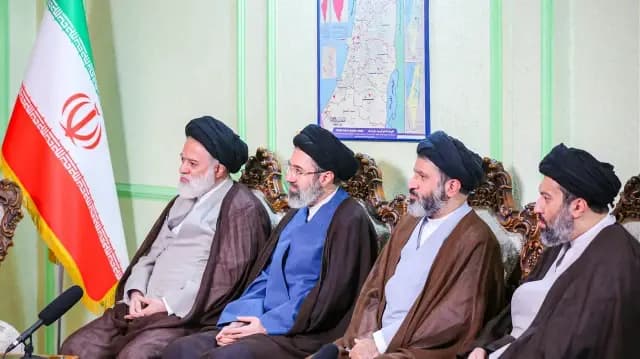
Iran Names Mojtaba Khamenei Supreme Leader After US, Israel Strike Kills Ali Khamenei
Iran's new supreme leader
Iran’s state media and the clerical Assembly of Experts announced on March 9 that Mojtaba Khamenei has been named Iran’s new supreme leader.
“Please paste the article (or share a URL) and tell me how you’d like the summary”
He is described as the 56‑year‑old son of Ayatollah Ali Khamenei, and the appointment was reported to follow Israeli- and U.S.-led strikes that killed his father at the opening of the war.

Associated Press News reported that Mojtaba Khamenei, son of the late Ayatollah Ali Khamenei, has been named Iran’s new supreme leader.
Al Jazeera noted that state media reported Mojtaba Khamenei, the 56‑year‑old second son of Ayatollah Ali Khamenei, had been selected as Iran’s new supreme leader after his father was killed on the first day of the war that the United States and Israel launched on Iran.
The New York Times summarized that Iran’s top clerics named Mojtaba Khamenei, a 56‑year‑old son of the slain supreme leader Ayatollah Ali Khamenei, as the country’s new supreme leader.
NBC News reported that Iranian state media and the Assembly of Experts identified Mojtaba Khamenei as the reported new supreme leader and said the IRGC pledged obedience.
Mojtaba's background and ties
Reporting across outlets highlights Mojtaba’s atypical profile for the post: he is widely described as having religious training but lacking the customary senior clerical rank, while being closely tied to Iran’s security apparatus and long operating behind the scenes.
The New York Times reported he was known for close ties to the Islamic Revolutionary Guard Corps, was groomed for leadership through seminary study and IRGC service, and was considered a front‑runner despite not having high religious standing.

CNN reported that he was born in 1969, received religious training but never attained the clerical rank of mujtahid, and was a low‑profile yet influential figure with close ties to the IRGC and regime economic networks.
Mint described him as reclusive and reportedly hiding underground, lacking the formal religious and political qualifications for the post, and tied to hardline security figures.
The Philadelphia Inquirer noted that although he held no elected or formal government post, Mojtaba—born in 1969 and a veteran of the Iran–Iraq war—long was viewed as a contender and was described in U.S. diplomatic cables as the 'power behind the robes'.
The sources vary in emphasis, with some stressing his grooming for leadership and others stressing his lack of formal qualifications or his low public profile.
Domestic reaction to Mojtaba
Multiple outlets reported domestic reaction that combined state consolidation with visible dissent and questions about legitimacy.
“Mojtaba Khamenei has been chosen as Iran’s new supreme leader Supporters took to streets of Tehran early on Monday to celebrate the appointment of Mojtaba Khamenei as Iran’s new supreme leader”
Associated Press News said 'Supporters marched in Tehran to celebrate; Mojtaba — who has not appeared publicly since the war began — had long been seen as a contender despite never holding an elected or appointed government post.'
State outlets and pro‑regime coverage showed rapid pledges of loyalty, with the Global Times reporting 'the vote was described as "strong," and state TV showed scenes of celebrations while Iran’s IRGC, armed forces and top officials quickly pledged unity behind him.'
The New York Times recorded that 'Hard-line political and military forces in Iran welcomed the selection, while some Tehran residents protested, reportedly chanting "Death to Mojtaba" from their windows.'
Commentators flagged controversy over dynastic succession and his qualifications.
Regional escalation and succession
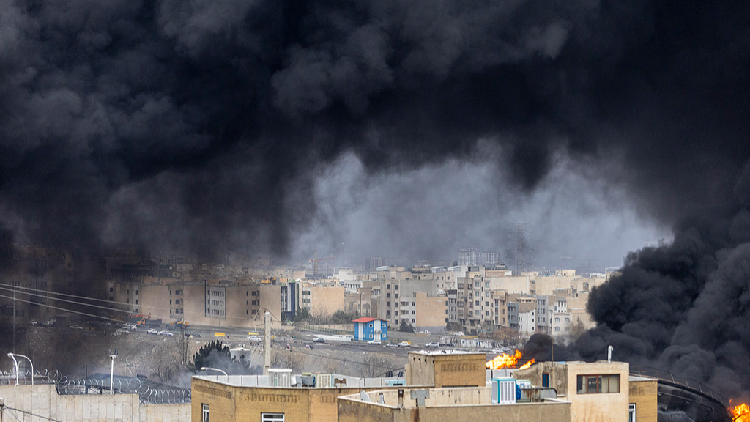
The elevation occurred amid intense regional fighting and a widening tally of strikes and casualties that multiple outlets tied to the same opening blows of the war.
NBC News described the broader escalation: “Regional tensions sharply escalated as Iran accused the U.S. of using neighboring countries’ airspace to strike inside Iran... cross-border attacks and air strikes by Iran, Israel and allied forces produced heavy casualties across multiple countries.”
CNN and The New York Times placed the succession “amid an expanding U.S.–Israeli campaign of strikes against Iranian military and energy targets.”
CNN noted “desalination plants in Iran and Bahrain were hit,” and The New York Times recorded that an “Israeli airstrike struck a Beirut hotel, killing at least four.”
Regional reporting added detail on damage and disruption, with Siasat saying “Heavy American and Israeli strikes since the Feb. 28 assassination of Supreme Leader Ayatollah Ali Khamenei have damaged ports, closed border crossings and struck factories,” and the Irish Times warning of wider economic fallout and oil price risks.
These reports underline that the leadership change came in the middle of active, damaging cross‑border strikes and economic shocks.
Reactions to Mojtaba's Elevation
International reactions and analysis combined immediate political pushback with caution about verification and forecasts of a harder Iranian posture under a leader tied to the IRGC.
The New York Times reported that 'Israel and former President Trump denounced Mojtaba’s appointment' and quoted Trump as calling it 'unacceptable' and warning the successor 'is not going to last long.'
Associated Press News recorded that 'U.S. President Donald Trump said he wants input on post-war leadership in Iran and suggested a new leader would need U.S. approval to last.'
These reports use different titles for Trump, with The New York Times calling him 'former President Trump' and Associated Press calling him 'U.S. President Donald Trump', a contradiction among the sources.
Observers and regional outlets framed the elevation as consolidating hardline power.
Global Times said the move 'is likely to be viewed as dynastic and as reinforcing control by the Islamic Revolutionary Guard Corps.'
The Philadelphia Inquirer wrote that 'As successor, Mojtaba will now shape Iran’s war strategy, assume command over the powerful IRGC, and gain control of the country’s stockpile of highly enriched uranium.'
The Financial Times’ analysis urged caution about treating early reports as confirmed, noting that 'Verification status: this claim should be treated as unconfirmed until corroborated by multiple reputable sources.'
These strands together convey a contested, consequential succession amid an ongoing regional war.
Key Takeaways
- Mojtaba Khamenei, son of Ali Khamenei, was chosen as Iran’s new supreme leader.
- His father, Ayatollah Ali Khamenei, was killed in US‑Israeli strikes that started the war.
- Assembly of Experts elected him amid ongoing war, with the IRGC pledging allegiance.
More on Iran
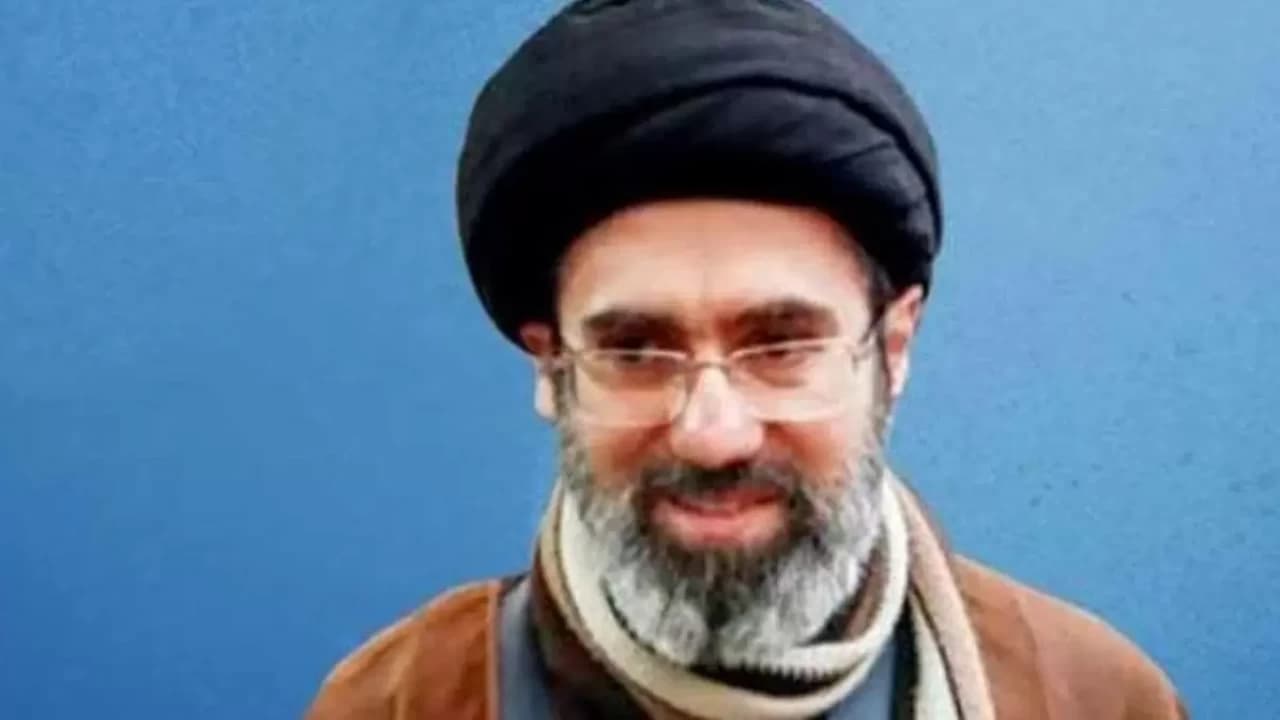
Iran names Mojtaba Khamenei supreme leader, elevating hard-line cleric
11 sources compared
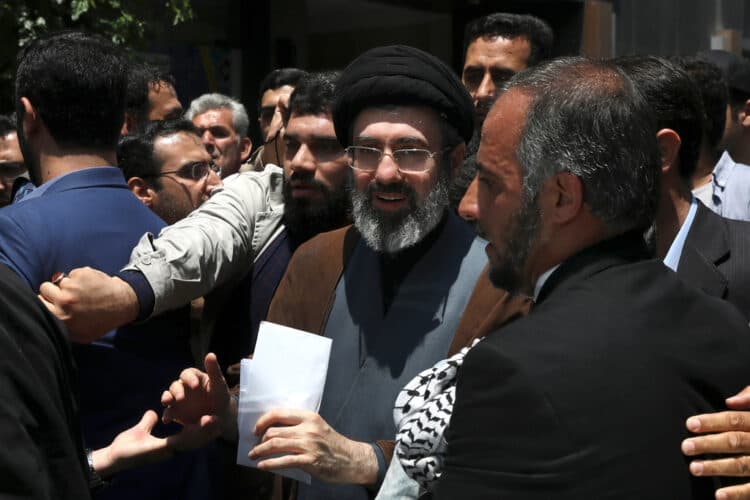
Iran Names Mojtaba Khamenei Supreme Leader After Father's Killing Sparks War
18 sources compared
Iran Names Mojtaba Khamenei Supreme Leader, Hard-Liner Succeeds Ali Khamenei
21 sources compared

Iran Names Mojtaba Khamenei Supreme Leader
24 sources compared