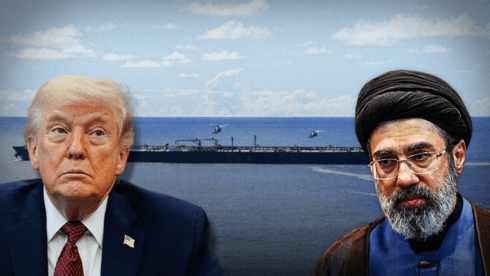
Iran Offers U.S. Deal To Reopen Strait Of Hormuz, Postpones Nuclear Talks
Key Takeaways
- Iran proposed a deal to reopen the Strait of Hormuz and postpone nuclear talks.
- Proposal conveyed via Pakistani mediators, bypassing the nuclear-concessions dispute.
- Oil prices rose as talks stalled and Hormuz disruption persisted.
Stalemate and a new offer
Negotiations over the war involving Iran and the United States are not moving forward, and the stalemate is now being described as a state of “neither war nor peace.”
Israeli outlet ynetglobal says it appears the U.S. blockade, alongside the closure of the Strait of Hormuz, may remain “for a long time,” while Iranian Foreign Minister Abbas Araghchi continues a tour of world capitals.

ynetglobal reports that Araghchi returned Sunday to Islamabad, Pakistan’s capital, for a brief visit he described as “very good,” and then landed Monday in St. Petersburg where he is expected to meet Russian President Vladimir Putin.
In parallel, Axios reports that Iran gave the U.S. a new proposal to reopen the Strait of Hormuz and end the war, with nuclear negotiations postponed for a later stage, according to a U.S. official and two sources with knowledge.
Axios adds that the diplomacy is in a stalemate and that the Iranian leadership is divided about what nuclear concessions should be on the table, with the Iranian proposal designed to bypass that issue “en route to a faster deal.”
The same Axios report says the White House has received the proposal, but it is unclear whether the U.S. is willing to explore it.
Forbes similarly frames the moment as stalled negotiations between the U.S. and Iran, with oil prices rising in Europe as the talks remain deadlocked.
How the stalemate deepened
The current deadlock is tied to a sequence of diplomatic steps and a widening pressure campaign that both sides describe in different ways.
Muslim Network TV says the conflict began on Feb. 28, when the United States and Israel launched joint airstrikes against Iran, and it reports that on April 7 Trump announced what he described as a “double-sided” two-week ceasefire that temporarily reduced hostilities but failed to produce a broader settlement.

Muslim Network TV also reports that negotiations held April 11 in Islamabad brought together senior officials from both sides, with Iran’s delegation led by Parliament Speaker Mohammad Bagher Ghalibaf and the U.S. team headed by Vice President JD Vance.
It then describes tensions escalating further on April 13, when the United States imposed a naval blockade on Iran, intensifying pressure on Tehran and complicating diplomatic efforts.
ynetglobal adds that the “neither peace nor war” situation appears to worry Iran because it cannot rebuild and because the naval blockade is weighing heavily on it economically, while Iranian President Masoud Pezeshkian appealed to the Iranian people Saturday to “Reduce electricity and energy consumption.”
Forbes provides a parallel timeline for the diplomatic breakdown, reporting that Abbas Araghchi left talks with Pakistan in Islamabad on Saturday and said he is “yet to see if the U.S. is truly serious about diplomacy,” and that Trump then said his envoys Steve Witkoff and Jared Kushner’s trip to Pakistan had been called off.
Across the coverage, the Strait of Hormuz disruption is repeatedly described as a central pressure point, with Arise News saying the waterway has effectively been shut due to the conflict and that roughly one-fifth of the world’s crude oil and liquefied natural gas flows through it.
Statements from Tehran, Washington, and mediators
The sources portray the stalemate through direct statements from Iranian officials and U.S. leadership, alongside comments about mediation and internal political dynamics.
ynetglobal quotes Abbas Araghchi saying, “The trip to Islamabad was a very good one, and good consultations were held, during which we examined under what conditions negotiations between Iran and the U.S. could continue,” and it adds that he said, “Iran’s conditions are of great importance in the negotiations.”
In the same report, Araghchi describes talks in Russia as “consultations on regional and international issues,” and says “coordination with Moscow is of special importance.”
Forbes reports that Araghchi left talks in Islamabad and said he is “yet to see if the U.S. is truly serious about diplomacy,” while also noting that Trump cancelled the trip of his representatives to Islamabad.
Forbes includes Trump’s Truth Social language, quoting: “I just cancelled the trip of my representatives going is Islamabad, Pakistan, to meet with the Iranians. Too much time wasted on traveling, too much work! ” and adding Trump’s claim that “there is tremendous infighting and confusion within their 'leadership.’ Nobody knows who is in charge, including them.”
Axios similarly quotes Trump’s rationale for cancelling travel, saying, “I see no point of sending them on an 18-hour flight in the current situation. It's too long. We can do it just as well by telephone. The Iranians can call us if they want. We are not gonna travel just to sit there,” and it reports that Trump signaled a “Situation Room meeting on Iran” on Monday.
Arise News adds that Seyed Abbas Araghchi confirmed ongoing discussions with Oman aimed at ensuring safe transit through the strait, and it says he is also travelling to meet Vladimir Putin in St Petersburg.
Oil markets react to Hormuz risk
Economic consequences are being reported through oil price moves and warnings about supply chain disruption tied to Hormuz.
Arise News says global oil prices climbed sharply on Monday as tensions linked to the Iran conflict continued to strain energy supplies and disrupt key trade routes, with Brent crude rising by around 2% to $109.33 per barrel and U.S.-traded crude gaining 2% to reach $96.78.
It adds that the surge comes amid heightened uncertainty over the closure of the Strait of Hormuz, describing the waterway as a critical passage through which roughly one-fifth of the world’s crude oil and liquefied natural gas flows.
Arise News also quotes Sophie Huynh of BNP Paribas telling the BBC’s Today programme that the impact could extend beyond fuel, saying, “I think we’re underestimating the extent of which products could be affected by the oil shortage,” and “We’re not consuming crude, we’re consuming products.”
It further reports that if the strait remains closed for more than a few weeks, effects will be “really far reaching in terms of supply chain,” and it notes that traders are awaiting concrete signs of de-escalation.
Forbes similarly reports that expectations of oil prices trending higher took hold after the weekend attempts to bring the U.S. and Iran to the negotiating table failed, and it says the key maritime artery through which a fifth of the world’s oil and gas supplies pass is currently being blockaded by both Iran and the U.S.
Gulf News adds that the International Energy Agency (IEA) warned that prolonged disruption in the strait is sharpening what had already been “one of the most tumultuous periods in the global oil market in decades.”
What happens next
The sources lay out multiple “what to watch” timelines and potential triggers for escalation or de-escalation, with the Strait of Hormuz reopening repeatedly treated as the hinge.
“Skip to main content 12 hours ago - Politics & Policy Iran offers U”
Axios says Trump is expected to hold a Situation Room meeting on Iran on Monday with his top national security and foreign policy team, and it frames the proposal as one that would lift the blockade and end the war, removing Trump’s leverage in future talks about enriched uranium and enrichment suspension.

Axios also reports that Trump signaled a warning about the consequences of a closed line, quoting: “When you have vast amounts of oil pouring through your system ... if for any reason this line is closed because you can't put it into containers or ships ... what happens is that line explodes from within.”
Forbes adds a market-oriented watch window, quoting SEB chief commodities analyst Bjarne Schieldrop saying “alarm bells will ring loudly if the Strait doesn't reopen during May,” and it warns that “Spot crude and product prices will trade higher and higher.”
Forbes also cites JPMorgan’s view that commercial inventories in OECD countries may hit “operational minimums” between May 9 and May 30, and it says oil price increases may “become exponential rather than linear.”
ynetglobal describes a “game for time” over the next week or two, saying both Iranians and Americans intend to play it, and it adds that Iran’s current rulers have no effective leverage over the United States other than blocking the Strait of Hormuz.
Arise News similarly says market watchers say the trajectory of oil prices depends on whether the route can be reopened and diplomatic progress achieved in the coming weeks.
More on Iran

Iran Offers U.S. Deal To Reopen Strait of Hormuz, End War, Postpone Nuclear Talks
11 sources compared

Oil Prices Rise as US-Iran Peace Talks Stall, Strait of Hormuz Tensions Grow
13 sources compared

King Charles III and Queen Camilla Begin Four-Day US State Visit With Trump Tea
10 sources compared

Oil Prices Rise as US-Iran Peace Talks Stall and Strait of Hormuz Remains Constrained
14 sources compared