
Iran Outperforms Washington in Strategic Communication, Daily Sabah Analysis Says
Key Takeaways
- Iran counters U.S. threats with assertive messaging.
- Doha talks between Iran and the U.S. advance after the MoU.
- Iran maintains non-negotiable defense capabilities, including missiles and drones.
Credibility and messaging war
A Daily Sabah analysis framed the Iran-U.S. confrontation as a contest over narrative dominance, arguing that Iran “appeared to outperform Washington in the realm of strategic communication” even as the U.S. had “overwhelming military capabilities.”
“Tehran, Iran – Iranian officials are in Qatar for mediated talks with the United States, more than four months after the US and Israel launched heavy air attacks across Iran”
The same piece said Iran’s leadership, commanders, diplomats, and state media maintained “narrative discipline,” with missile launches paired with “carefully crafted imagery” and statements that reinforced themes of “sovereignty, resistance, resilience and national defense.”

It pointed to the symbolic mission of Minab 168, an Iranian diplomatic aircraft that flew to Islamabad in April 2026 for indirect peace talks with the U.S., and said the aircraft’s designation referenced “the reported deaths of school children during U.S.-Israeli military operations.”
The analysis contrasted that with what it described as U.S. “strategic confusion,” citing Donald Trump shifting between “declarations of overwhelming success” and “threats of escalation,” and it said credibility was “destroyed by contradictions” after Operation Midnight Hammer was followed by another confrontation within less than a year.
It also cited a Quinnipiac University poll claiming 48% of respondents said the U.S. “backs Israel too much” and that 60% of U.S. voters said the fight was not “worth it.”
Missiles ‘non-negotiable’
In Tehran, the acting defense minister, Brig. Gen. Majid Ebn al-Reza, told lawmakers that Iran’s missile and drone capabilities are “a red line for our national security” and “They are not negotiable—now or in the future.”
Tehran Times said Ebn al-Reza briefed parliament after a meeting with members of parliament on the “strategic dimensions, military lessons, and operational outcomes” of a “recent 40-day US-Israeli war of aggression against the Islamic Republic.”

The same report said Iran relied “extensively” on its domestically developed missile and drone arsenal in retaliatory operations against Israeli military targets and U.S. military installations across the region, and it described Iran’s claim that several waves of missile attacks penetrated advanced Israeli and U.S.-supported air defense systems.
It also said Iran described the campaign as evidence of “accuracy, survivability, and operational effectiveness” and as altering the regional military balance by proving that heavily defended targets could still be reached with precision.
The report added that Iranian officials said the experience reinforced the importance of continued investment in indigenous defense technologies, and that they framed the missile and drone programs as part of Iran’s deterrence strategy.
NATO, Hormuz, and talks
As the Iran conflict shaped alliance planning, Radio Free Europe/Radio Liberty reported that U.S. Permanent Representative to NATO Matthew Whitaker said “Those days are past us, thankfully,” referring to tensions exposed by recent U.S. military operations against Iran.
Whitaker also said the Ankara summit agenda would include defense spending, industrial capacity, and security challenges from NATO’s “southern flank,” and he pointed to a dedicated session with representatives from four Gulf countries in the Istanbul Cooperation Initiative.
The same report said Whitaker reiterated U.S. expectations that all 32 NATO allies move toward a commitment to spend 5 percent of gross domestic product on defense, and it said allies had committed “nearly $120 billion” in additional defense spending since the Hague summit.
Separately, BBC reported that Iran’s Foreign Ministry said the ceasefire with the United States had become “practically ineffective,” adding that “the attacks have made the ceasefire practically void,” while the U.S. Central Command said precision-guided munitions were used to strike Iranian targets that posed a threat to U.S. forces and international merchant ships.
BBC also described conflicting reports about the Strait of Hormuz, including the Iranian Maritime Organization confirming the “complete closure of the Strait of Hormuz” and the U.S. military denying Iran’s claim that it had closed the strait entirely.
More on Iran

U.S. and Iran Hold Technical Talks in Doha as Service Member Missing After Arabian Sea Landing
11 sources compared
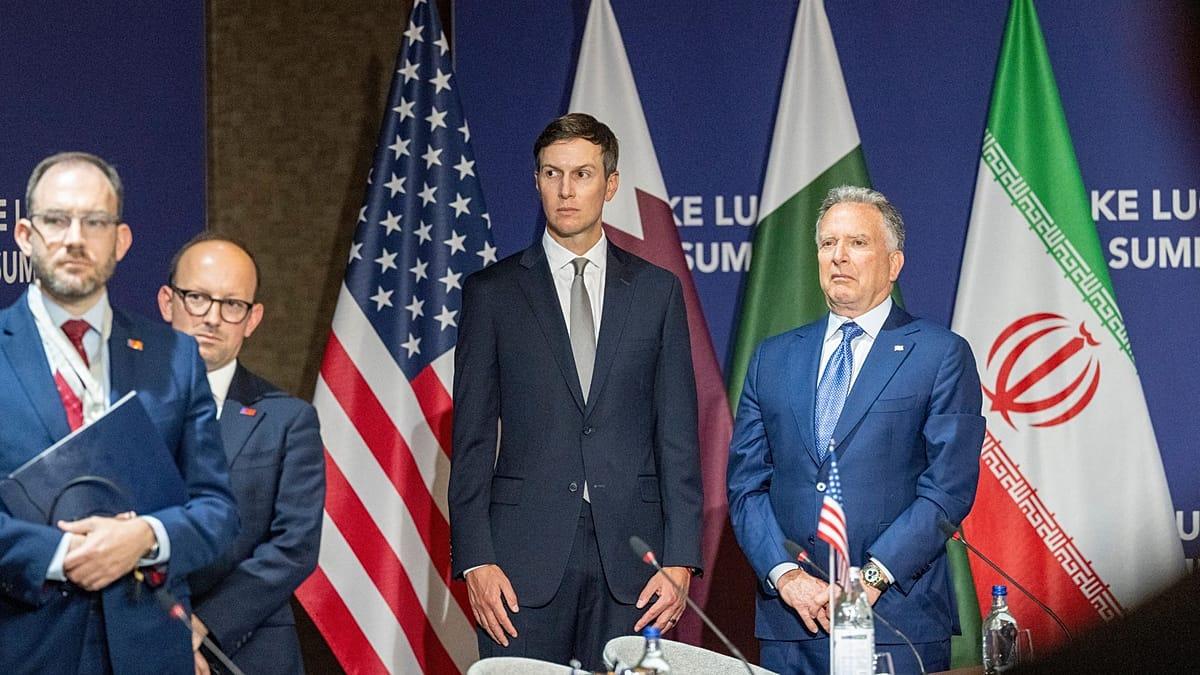
Iran Establishes Communication Channel With Washington After Indirect Talks in Qatar
36 sources compared

Iran’s IRIB Cuts Short Ghalibaf Interview, Parliament Accuses Censorship Over Nuclear Claims
12 sources compared

Iran’s Mohammad Qalibaf Rejects Expanded IAEA Inspections, Says Access Stays Restricted
16 sources compared