
U.S. and Iran Hold Technical Talks in Doha as Service Member Missing After Arabian Sea Landing
Key Takeaways
- Indirect Doha talks aim to govern Strait of Hormuz shipping and secure a lasting ceasefire.
- Qatari Emir Tamim bin Hamad Al-Thani hosted US envoys to review progress in US-Iran talks.
- Lebanon ceasefire remains a focal issue within Doha discussions and regional diplomacy.
Doha talks resume
U.S. and Iran delegations held technical talks in Doha on Wednesday as a U.S. service member remained missing after an aircrew conducted an emergency water landing in the Arabian Sea at 3:30 a.m. local time on Wednesday.
NewsNation reported that the talks were structured as sessions between chief negotiators and specialists, with discussions centered on frozen Iranian assets and the future of navigation through the Strait of Hormuz, and that Iran was holding meetings with Qatari and Pakistani mediators who relayed messages to the U.S. side.

A senior Iranian official told Reuters that negotiations have been ongoing since Tuesday night in Doha, while President Donald Trump said, “the denuclearization of Iran is moving along well,” without giving details.
Reuters also reported that Iran’s deputy foreign minister Kazem Gharibabadi traveled to Doha for peace talks and told Iranian state media that those meetings have ended, with more held between a delegation between Iran, Qatar and Pakistan.
Monitoring MoU channel
In Doha, Iran’s Deputy Foreign Minister Kazem Gharibabadi told Iranian state media outlet Islamic Republic News Agency that the trilateral Iran-Qatar-Pakistan talks included an initial meeting of a monitoring group to ensure implementation of the recently signed U.S.-Iran Memorandum of Understanding.
Gharibabadi said, "It was decided that the monitoring group's immediate communication channel will be formed by tomorrow, and the shortcomings of the MoU will be officially documented," and he cautioned that “the commitments of the MoU are an integrated set and cannot be seen in isolation."

The Jerusalem Post reported that U.S. Vice President JD Vance told CNN that indirect U.S.-Iran talks in Doha are “going well” and that “we’re worried about the nuclear issue; we’re going to start talking about that, so right now the talks are going well,” as the day’s sessions closed.
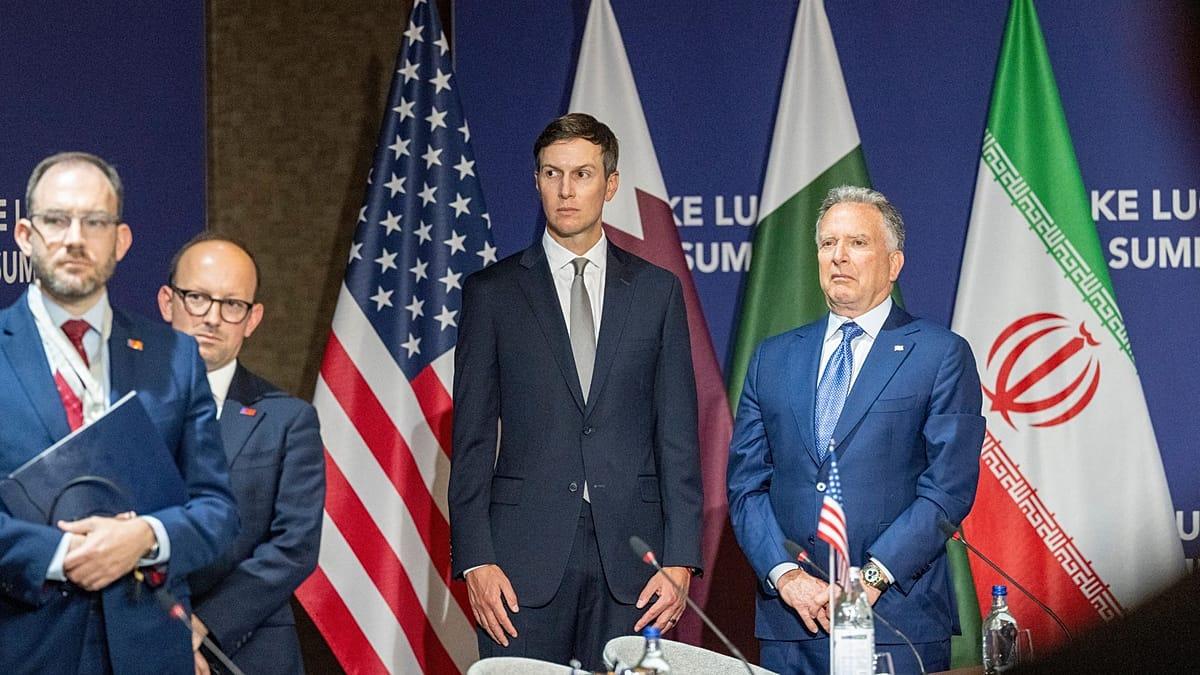
The Jerusalem Post also said the U.S. delegation to Doha, headed by U.S. Envoys Steve Witkoff and Jared Kushner, met Qatar’s Emir Sheikh Tamim bin Hamad Al Thani to discuss the “progress of negotiations” between the U.S. and Iran.
Strait of Hormuz stakes
The talks’ maritime focus centered on the Strait of Hormuz, where NewsNation reported that under the current interim arrangement Iran has agreed to allow ships to pass through the strait without charges for 60 days.
“The US and Iran held indirect technical talks in Doha on Wednesday as they seek to agree on the flow of shipping through the Strait of Hormuz and secure a lasting ceasefire, a source with direct knowledge of the talks and an Iranian official said”
NewsNation said Iranian officials interpret the deal as preserving their control over who can transit and how routes are managed, while U.S. officials said no country can block passage or impose tolls on an international waterway and Trump said there will be no fees for transit unless imposed by Washington.
Baird Maritime reported that the talks were based on a 14-point interim accord signed last month meant to halt the war that began with U.S.-Israeli strikes on Iran in February and reopen the strait, while setting up 60 days of negotiations for a permanent peace deal.
Baird Maritime added that Iran is determined to win international recognition of its control over the strait and its ability to levy fees on ships entering or leaving the Persian Gulf, even if it has to do so by force, and it said traffic has partially resumed through the waterway that handled one-fifth of global oil and liquefied natural gas trade before the war.
More on Iran
Iran Establishes Communication Channel With Washington After Indirect Talks in Qatar
36 sources compared

Iran’s IRIB Cuts Short Ghalibaf Interview, Parliament Accuses Censorship Over Nuclear Claims
12 sources compared
Iran’s Mohammad Qalibaf Rejects Expanded IAEA Inspections, Says Access Stays Restricted
16 sources compared
U.S. And Iran Negotiate in Doha To De-Escalate Strait of Hormuz Tolls
14 sources compared