U.S. And Iran Negotiate in Doha To De-Escalate Strait of Hormuz Tolls
Key Takeaways
- Indirect Doha talks between the U.S. and Iran show progress on technical details.
- Talks are indirect, not direct; exchanges have occurred without planned direct meetings.
- Scheduling uncertainty persists amid mixed signals and reports of postponed talks.
Doha talks and Hormuz tolls
U.S. and Iranian negotiators gathered in Doha for talks focused primarily on the Strait of Hormuz, with the Trump administration arguing that Iran stands to gain more from a nuclear deal than from tolls in the strait.
“Skip to main content 5 hours ago - World U”
Axios reported that after “several exchanges of fire,” the U.S. and Iran reached an understanding Sunday on de-escalating the situation in the strait for a week, with a U.S. official telling Axios, "We have reached an understanding that we will keep things quiet for the coming week, so progress on all aspects of the MOU can be worked on in a productive environment, without missiles flying,".
The same Axios report said Vice President Vance told reporters Wednesday that the U.S. technical team “is sitting down with the Iranians, with the Qataris, and with others in Doha... ensuring that we continue to make the progress,” adding, "It's still pretty early, but talks are going well."
Iran’s Deputy Foreign Minister Kazem Gharibabadi, heading the Iranian technical team, denied that there were any direct talks and said negotiations took place via Qatari and Pakistani mediators, while the parties decided to establish "an emergency communication channel by tomorrow" to address violations of the MOU.
Competing messages and mediators
While the U.S. technical talks moved forward in Doha, Radio Free Europe/Radio Liberty reported that Trump told reporters that “very good meetings” were held in the capital, Doha, and that the “denuclearization of Iran is moving along well.”
RFE/RL also quoted Iran’s Deputy Foreign Minister Kazem Qaribabadi saying the sides agreed “a communication channel would be established by tomorrow” to report and record violations of a memorandum of understanding signed last month.

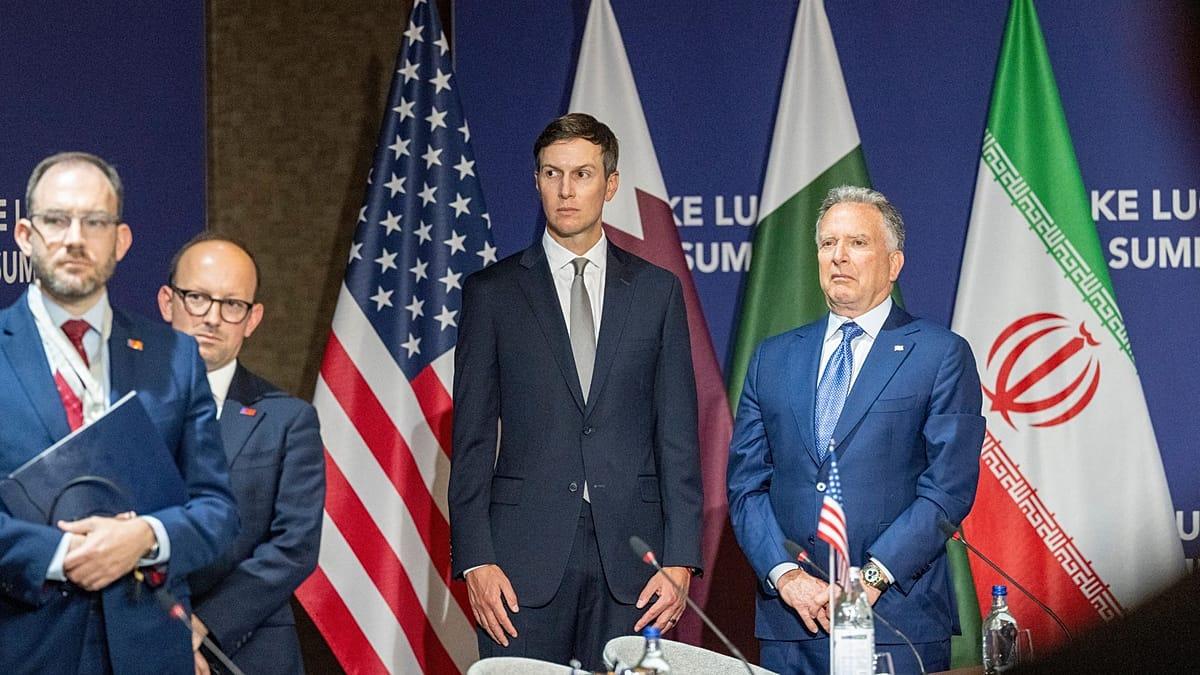
The Axios account described how President Trump’s envoys Steve Witkoff and Jared Kushner met in Doha with the prime minister of Qatar and other Qatari officials mediating between Washington and Tehran, and then met with the Qatari emir on Wednesday.
Axios further said Gharibabadi denied direct talks after Wednesday’s meetings and stated that the expenditure of Iran's frozen funds in Qatar was discussed, with goods to be purchased and delivered to Iran based on Iran's stated needs.
Deadline pressure and what’s at risk
The talks unfolded under a 60-day negotiating period that both sides set for reaching a comprehensive nuclear deal, but Axios said two weeks into that window they were still arguing over terms of the memorandum of understanding they already signed.
Axios warned that the understanding on de-escalation in the strait for a week could be followed by new clashes right after the 4th of July celebrations, and it quoted a U.S. official saying, "The President has been clear that every time they shoot, we will shoot more — and at targets that further degrade their position in the Strait,".
The AFP-cited reporting in the Military article said Witkoff and Kushner were not taking part in the Wednesday technical talks, while Iran formed working groups to discuss implementation of the current agreement and negotiating a final peace deal.
CBS News added that Iran’s chief negotiator Mohammad Bagher Ghalibaf told state television, "We are pursuing dialogue, but if the dialogue is not implemented, we are also prepared for war and will respond accordingly," as separate U.S. and Iranian discussions were due in Doha.
More on Iran

U.S. and Iran Hold Technical Talks in Doha as Service Member Missing After Arabian Sea Landing
11 sources compared
Iran Establishes Communication Channel With Washington After Indirect Talks in Qatar
36 sources compared

Iran’s IRIB Cuts Short Ghalibaf Interview, Parliament Accuses Censorship Over Nuclear Claims
12 sources compared
Iran’s Mohammad Qalibaf Rejects Expanded IAEA Inspections, Says Access Stays Restricted
16 sources compared