Iran-Israel08 March, 20263 min read
Iran President Masoud Pezeshkian Apologizes for Attacks on Neighbors, Mocks Trump
Iranian drone strike damaged a Bahrain desalination plant, cutting water to about 30 villages Attacks struck civilian infrastructure, including desalination and oil facilities, causing fires and civilian deaths

9 outlets told this the same way.
Outlets did split on U.S. Intercepts Iran Message Activating Sleeper Cells After U.S.-Israel Strike Kills Khamenei →
Pezeshkian's regional apology
Iran’s president, Masoud Pezeshkian, publicly apologised to neighboring countries after recent Iranian military actions crossed borders, framing the outreach as an effort to calm regional tensions and respect the sovereignty of nearby states. Vocal.media reported that Iran’s president, Masoud Pezeshkian, said Tehran does not seek conflict, respects neighbors’ sovereignty, and wants to calm rising regional tensions after military actions crossed borders and caused concern.
“Iran’s president, Masoud Pezeshkian, issued a public apology to neighboring countries after recent Iranian military actions crossed borders and caused concern, saying Tehran does not seek conflict, respects neighbors’ sovereignty, and wants to calm rising regional tensions.”
The Las Vegas Review-Journal noted in a video message that Iran’s president, Masoud Pezeshkian, urged neighboring states not to join U.S. and Israeli actions and said Iran does not want a wider regional war. Castanet reported that Israel stepped up airstrikes, stoking fears of a wider regional conflict as violence spreads across the Middle East, which Iran’s president, Masoud Pezeshkian, sought to defuse with his apology.

Pezeshkian rejects U.S. pressure
Pezeshkian publicly mocked and rejected pressure from Washington.
Vocal.media said he "sharply rejected former U.S. president Donald Trump’s call for Iran’s 'unconditional surrender,' calling such ultimatums unacceptable, counterproductive, and incompatible with Iran’s independence and dignity."

DW reported that "President Trump publicly blamed Iran, saying Iranian munitions are 'very inaccurate.'"
Castanet noted that "U.S. President Donald Trump and Israeli Prime Minister Benjamin Netanyahu both pledged to continue the military effort," signalling continued U.S.–Israeli pressure that Pezeshkian was addressing with public defiance toward Washington.
Sources contradict on his title: vocal.media used "former U.S. president Donald Trump," while DW used "President Trump" and Castanet used "U.S. President Donald Trump."
Escalation and casualties overview
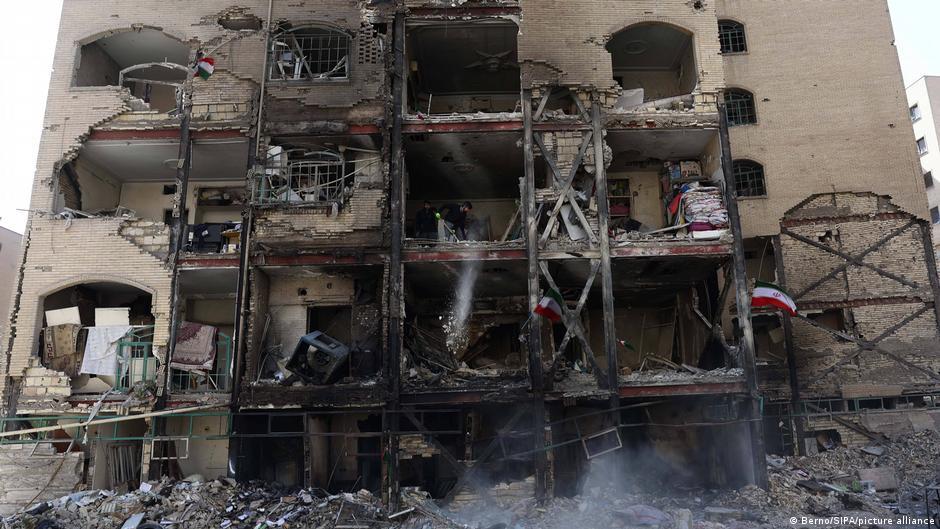
Pezeshkian’s remarks came amid a widening and bloody regional escalation that has produced large casualty counts and displacement.
“Tensions in the wider Israel–Iran conflict escalated: Saudi Arabia reported its first war fatalities after a projectile struck a residential area, killing two foreign workers (an Indian and a Bangladeshi) and wounding 12 Bangladeshis — most Gulf victims have been foreign residents. Arab League chief Ahmed Abouel Gheit condemned Iran’s ‘reckless policy,’ and U.S. President Donald Trump and Israeli Prime Minister Benjamin Netanyahu said they would continue coordinated action against Iran. Intensified Israeli strikes in Lebanon targeting Iran‑backed Hezbollah have raised the death toll, displaced hundreds of thousands, and produced Israel’s first soldier deaths since the war began. Officials put casualties at least 1,230 in Iran, 397 in Lebanon, 11 in Israel and six U.S. troops.”
WRAL reported that 'Tensions in the wider Israel–Iran conflict escalated... Officials put casualties at least 1,230 in Iran, 397 in Lebanon, 11 in Israel and six U.S. troops,' and Mathrubhumi English gave similar tallies—'Iran: at least 1,230 dead.'
DW added that the U.S. is also grappling with the toll of the campaign, noting 'The Pentagon is investigating a strike that caused civilian casualties; U.S. media report American military investigators believe U.S. forces were likely responsible — if confirmed, it would rank among the worst U.S. civilian‑casualty incidents in decades.'
Together these reports frame the apology and rhetoric against a backdrop of sustained strikes, civilian harm and regional displacement.
Strikes on desalination plants
Concerns over attacks on civilian infrastructure further complicated Pezeshkian’s messaging. Al Jazeera recorded Iran’s foreign minister saying the United States set "a dangerous precedent by striking a freshwater desalination plant on Qeshm Island, calling the attack a ‘blatant and desperate crime’ that cut water supplies to about 30 villages." The New York Times similarly reported that "Desalination facilities in Iran and on Bahrain’s Persian Gulf island were struck over the weekend, threatening a key water source in the region’s desert climate."
The New York Times added that "analysts warned that attacking nonmilitary infrastructure would be a serious escalation with greater risks to civilians." DW’s coverage that analysts are "evaluating both the effectiveness and the legal justification for the U.S.-Israeli campaign against Iran" underscores legal and humanitarian concerns raised by strikes on vital services.
Pezeshkian's mixed messaging
Taken together, reporting shows Pezeshkian’s statements combined a conciliatory regional appeal with pointed defiance toward Washington. vocal.media summarised that "The messaging therefore combined a conciliatory tone toward Gulf neighbors with a defiant stance toward Washington." Las Vegas Review-Journal recorded Pezeshkian’s dual warning and olive-branch approach, noting he "warned Tehran would respond more strongly if attacked... and said Iran does not want a wider regional war".
“The messaging therefore combined a conciliatory tone toward Gulf neighbors with a defiant stance toward Washington.”
The Independent noted related diplomatic remarks by Iran’s foreign minister in the same cycle of escalating tensions. The New York Times cautioned that "Reporting on the incidents remains partly incomplete," noting uncertainty even as leaders send mixed signals to domestic and international audiences.