Iran President Pezeshkian Orders Foreign Minister To Pursue Nuclear Talks With U.S. After Trump's Military Threats

Iran President Pezeshkian Orders Foreign Minister To Pursue Nuclear Talks With U.S. After Trump's Military Threats

03 February, 202627 sources compared
Iran-Israel

Key Points from 27 News Sources

  1. 1

    President Pezeshkian instructed Foreign Minister Abbas Araghchi to pursue talks with the United States

  2. 2

    Negotiations must occur without threats, undue pressure, or unrealistic demands, and protect Iran’s national interests

  3. 3

    Directive responds to U.S. outreach and regional mediation amid heightened tensions after Iran's protest crackdown

Full Analysis Summary

Iran-US negotiation terms

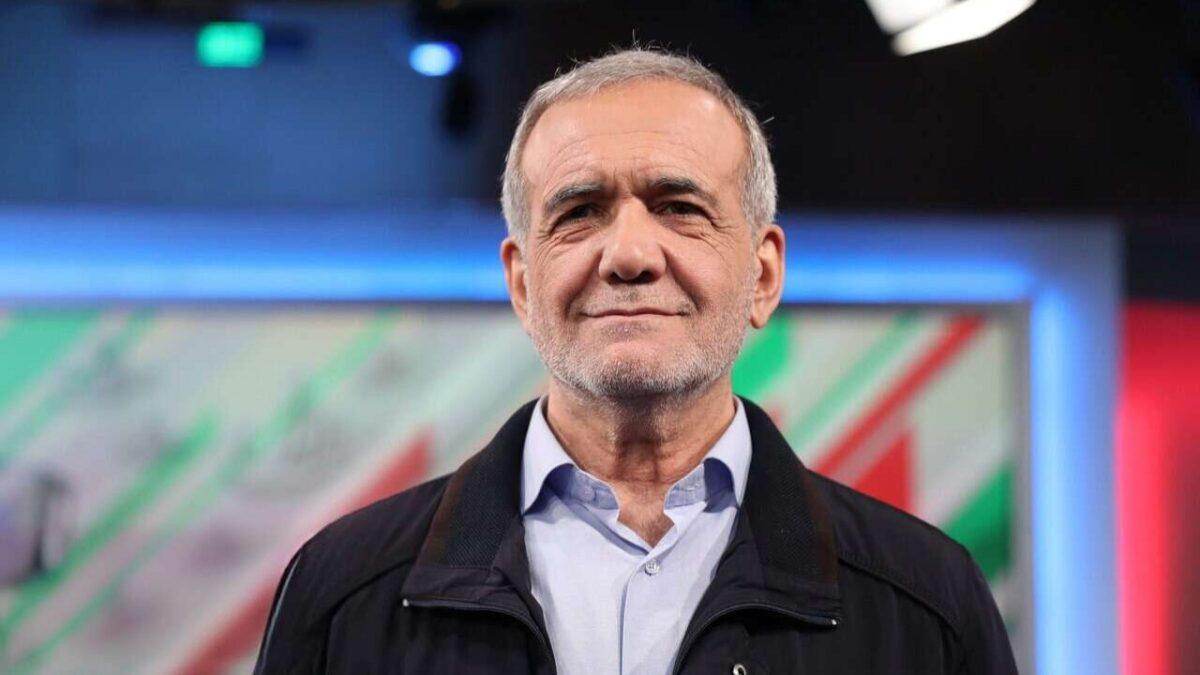
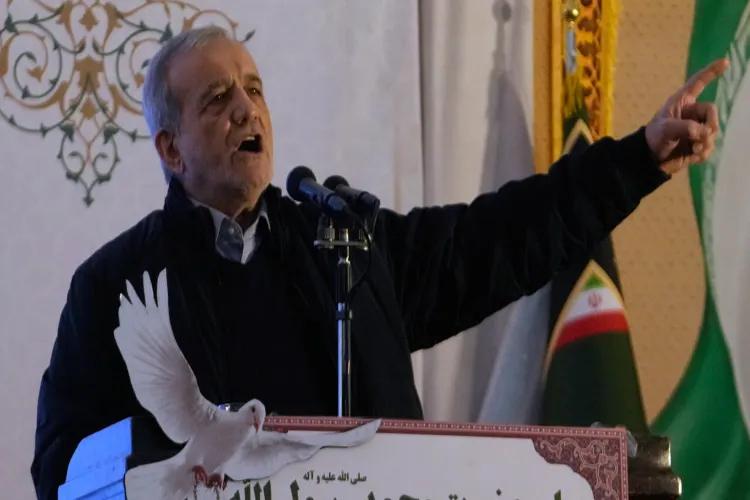
On Feb. 3, Iranian President Masoud Pezeshkian instructed Foreign Minister Abbas Araghchi to pursue fair and equitable negotiations with the United States, but only under strict conditions to safeguard Iran's national interests.

He set clear preconditions: talks must take place in a suitable environment, be free of threats and unreasonable expectations, and be guided by dignity, prudence, and expediency.

Several outlets reported that Pezeshkian framed the move as a response to appeals from friendly governments in the region following a U.S. proposal for negotiations.

He posted the statement on X, emphasizing that any negotiation should be narrowly focused, chiefly on the nuclear file, and should protect Iran's sovereignty and strategic interests.

Coverage Differences

Tone and emphasis

Some sources emphasize the conditionality and guarded phrasing of Pezeshkian’s directive (Anadolu Ajansı, WANA News Agency, PressTV), while others highlight the personal political significance of the move as a possible shift by the new president (Haaretz, The Hindu, Northeast Mississippi Daily Journal). The former stress "suitable environment" and protection of national interests; the latter underline that this is "the first clear sign" Tehran wants to talk after domestic upheaval and a prior tougher stance.

Scope of negotiations

Some outlets explicitly report Tehran’s insistence that talks be limited to the nuclear file and exclude missiles or wider defence issues (HUM News, Mint, Geo News), while other pieces focus on the general conditional openness without specifying exclusions.

Regional diplomacy and deployments

The announcement came amid visible signs of heightened regional tension and diplomatic shuttle-work: multiple outlets reported U.S. naval deployments to the region and active mediation by regional states such as Türkiye, Qatar, Egypt and Oman.

Reports say Türkiye has been working to host talks in Istanbul this week, with U.S. Middle East envoy Steve Witkoff traveling across the region; some sources note that Iranian and U.S. officials have exchanged messages via back channels.
Journalists and analysts framed the outreach as taking place under the simultaneous pressure of a U.S. military presence and concerted regional diplomacy to defuse the crisis.

Coverage Differences

Focus on military pressure vs. diplomacy

Some sources foreground the U.S. military buildup (Mint, Geo News, Al Jazeera) and frame the talks as taking place under that pressure, while others emphasize regional mediation and back‑channel exchanges (Al Jazeera, Anadolu Ajansı, Yeni Safak), presenting diplomacy as the dominant dynamic.

Reporting certainty about meetings

Coverage varies on whether meetings are confirmed: some outlets report possible or expected meetings in Istanbul (lokmattimes, The Independent, Israel Hayom), while others explicitly flag those reports as unconfirmed or deleted semiofficial notices (Anadolu Ajansı, The Independent, Al Jazeera).

Reactions to Pezeshkian's move

Domestic politics and the legacy of recent nationwide protests shape how outlets interpret the significance of Pezeshkian's move.

Several sources describe the instruction as the first clear sign Tehran might be willing to negotiate after a violent crackdown on protests.

Those accounts also note that Pezeshkian, a reformist, appears to have or to be seeking backing from Supreme Leader Khamenei for this course.

Other sources frame the move as a pragmatic, cautious opening that Pezeshkian presents as guided by dignity and prudence rather than an unconditional policy reversal.

Coverage Differences

Domestic framing vs. diplomatic framing

Israeli and Western outlets (Haaretz, The Hindu, Northeast Mississippi Daily Journal) stress the internal political angle—labeling the crackdown and the directive as a significant domestic pivot—while West Asian outlets (PressTV, Anadolu Ajansı, WANA) emphasize conditional diplomacy and national interest safeguards, portraying the step as cautious and strategic rather than purely conciliatory.

Attribution of leadership backing

Some sources explicitly say the directive "appears to have the backing" of Supreme Leader Khamenei (Haaretz, Northeast Mississippi Daily Journal, DT Next), while others omit mention of Khamenei’s stance or note uncertainty about whether Iran’s top leadership has formally embraced the shift.

Uncertainty over possible talks

Reporting varies on the mechanics and immediacy of any talks.

Several outlets say indirect or back-channel contacts are underway and that talks, if they begin, would likely start indirectly and only shift to direct negotiations if progress is visible.

Others reported state media or semiofficial agencies briefly published then deleted notices that Araghchi had been ordered to open talks, underscoring the uncertainty, and the U.S. has not publicly confirmed a new negotiation proposal.

Journalists also flagged that earlier rounds of contact occurred before the 12-day war in June, and that any resumption would be complicated by prior attacks on nuclear sites and elevated enrichment levels.
Coverage Differences

Certainty and sequencing

Some outlets (Al Jazeera, Mint, The Independent) highlight ongoing indirect contacts and caution that formal talks are unconfirmed, while others (Israel Hayom, lokmattimes) give more immediate timetables, reporting expected Friday meetings in Istanbul; some media also note deleted semiofficial posts as a sign of official uncertainty.

Complicating past events

Some reports emphasize the complicating legacy of recent hostilities — strikes on nuclear sites and enrichment to 60% purity — that make negotiations harder (Mint, DT Next, The Independent), while other pieces focus more narrowly on current diplomatic signals.

Prospects for Nuclear Talks

Prospects remain uncertain: officials quoted or paraphrased by multiple outlets stressed that any new agreement would depend on U.S. behavior and good-faith negotiation.

Iranian officials repeatedly ruled out negotiating away missiles or defense capabilities and insisted that talks be limited to the nuclear dossier; some advisers suggested talks might begin indirectly and only become direct if a promising framework emerges.

International reactions and next steps were depicted differently across outlets, with some stressing diplomatic de-escalation and others highlighting the continuing risk of confrontation.

Coverage Differences

Emphasis on limits vs. optimism

Several sources (HUM News, Geo News, Mint) explicitly state Iran will not negotiate on missiles or defence and that any deal must be fair; other outlets (Anadolu Ajansı, Al Jazeera, Global Banking & Finance Review) focus more on the conditional opening and regional mediation, offering a more procedural or neutral tone.

Narrative severity and language

Some Western outlets (The Hindu, Haaretz) use stronger language about the domestic crackdown and political stakes—"bloody" or "violent"—while some regional outlets (PressTV, WANA) present the development in restrained diplomatic terms, highlighting conditions and national interest.

All 27 Sources Compared

Al Jazeera

Iran’s president orders bid to open talks with US

Read Original

Amu TV

Pezeshkian says he has authorised foreign minister to join talks with US

Read Original

Anadolu Ajansı

Iran president orders foreign minister to pursue ‘fair, equitable’ negotiations with US amid regional mediation efforts

Read Original

Awaz The Voice

Iran open to US talks if free of threats: President Masoud Pezeshkian

Read Original

Bernama

IRAN PRESIDENT ORDERS PURSUIT OF ‘FAIR AND EQUITABLE’ TALKS WITH US

Read Original

Caspian Post

Pezeshkian Hints at Conditional Openness to US Negotiations

Read Original

CKPG Today

Iran’s president seeks ‘fair and equitable negotiations’ with the United States

Read Original

Daily Observer

Talks with US to proceed within 'national interests': Iran president

Read Original

Devdiscourse

Turning Point: Iran Signals Readiness for U.S. Negotiations Amid Nuclear Tensions

Read Original

DT Next

Iran's president seeks 'fair, equitable negotiations' with United States

Read Original

Geo News

Iran president says talks with US to proceed within 'national interests'

Read Original

Global Banking & Finance Review

Iran's President Supports Talks with the U.S. for National Goals

Read Original

Haaretz

Iran Willing to Begin Talks With U.S. if Trump Doesn't Threaten Tehran, President Says

Read Original

HUM News - English

Iran confirms nuclear talks with US will proceed within national interests

Read Original

lokmattimes

Iran open to US talks if free of threats, says President Masoud Pezeshkian

Read Original

Mint

Iran signals openness to US talks if negotiations are free of threats — What did President Pezeshkian say?

Read Original

News of Bahrain

Iran president orders nuclear talks with US

Read Original

Northeast Mississippi Daily Journal

Iran’s president seeks 'fair and equitable negotiations' with the United States

Read Original

PressTV

‘No threats, no pressure’: President Pezeshkian lays down terms for talks with US

Read Original

Tempo.co English

Fact Check: Iran's President Not Killed in Israeli Bombing

Read Original

The Daily Advertiser

Iran president gives go-ahead for talks with US

Read Original

The Hindu

Iran's President seeks ‘fair, equitable negotiations’ with U.S.

Read Original

The Independent

Iran’s president seeks 'fair and equitable negotiations' with the United States

Read Original

The New Region

Iranian president tells FM to start talks with US

Read Original

WANA News Agency

Iran’s President Orders Conditional Review of Nuclear Talks With the United States

Read Original

www.israelhayom

Iranian president announces direct talks with the US

Read Original

Yeni Safak English

Iran's president instructs foreign minister to pursue talks with US

Read Original