Full story
Coordinates for Hormuz Route
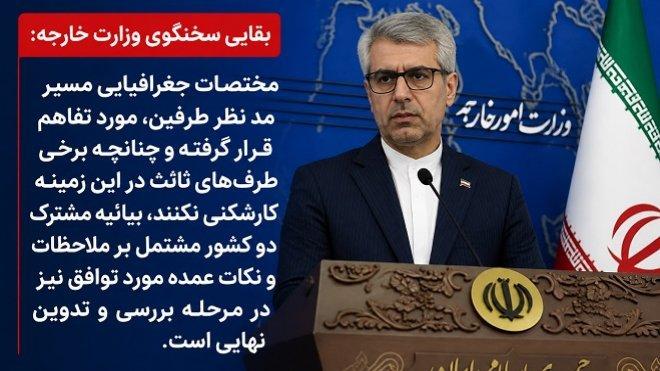
Iran and Oman said they have reached an understanding on the “geographical coordinates” for a proposed shipping route through the Strait of Hormuz, with Tehran’s foreign ministry spokesman Esmail Baghaei saying a joint announcement is being finalised provided certain third parties do not interfere.
““the two sides had reached a mutual understanding on the geographical parameters of the route under discussion””
Baghaei added that any such agreement between Iran and Oman would not, by itself, guarantee security in the strategic waterway, and Reuters reported the proposed deal would give Tehran control over ships entering the gulf through the strait of Hormuz.

The Telegraph said Iran claimed it had agreed the “geographical coordinates” of a navigable channel with Muscat, and it cited Esmaeil Baqaei saying the deal was “in the final stages”.
The proposed arrangement is described as a stepping stone toward a broader ceasefire agreement with the US that would reopen the strait of Hormuz for marine traffic and lift a US blockade on Iranian ports, Reuters reported.
Al Jazeera said the interim agreement is intended to restore the June 17 ceasefire between Washington and Tehran and resolve disputes over shipping through the strategic waterway, through which one-fifth of the world’s oil supplies had been shipped in peacetime.
Trump Optimism, US Pushback
US President Donald Trump told reporters negotiations with Iran were “moving along very nicely,” and he said “We’ll know in 48 hours” when asked whether a deal was imminent.
Al Jazeera also quoted Trump saying, “The strait is going to be open very soon, or they’re going to get hit very hard, and then the strait is going to be open.”
The Guardian reported that sources pushed back against Trump’s assertions that a deal reopening the strait was imminent, saying important details still had to be agreed.
The Telegraph said US officials have repeatedly insisted they would never agree to Iran controlling access to the shipping lane, describing that as a big concession to Tehran.
Euronews reported that Baghaei referred to the US as a “third party” and underlined that the Iran-Oman agreement in itself cannot guarantee the safety of navigation through Hormuz as long as “the US naval blockade and other actions against Iran and its interests remain in place.”
Fees, Security, and Timing
Multiple outlets said the proposed arrangement would be temporary, with The Telegraph citing Kazem Gharibabadi saying the route agreed through the Omani deal would be temporary and could be used for two to four months.
“could be used for two to four months”
India Today said the new route would initially remain in operation for two to four months, and it described Iran’s Deputy Foreign Minister Kazem Gharibabadi saying the talks had reached “fundamental understandings”.
The Guardian reported that Baghaei described negotiations between Tehran and Muscat as “professional” and “moving forward,” and it said the joint statement was in the final stages of review and drafting.
India Today said negotiators were debating whether payments linked to passage through the strait should be mandatory or voluntary, with Iran seeking transit fees ranging between 5 per cent and 7 per cent of the cargo’s value and Oman discussing charges of around 3 per cent.
South Florida Reporter said the temporary arrangement was “envisioned to last approximately 60 days” and that it included provisions for clearing naval mines from the central sections of the strait, while it also said Iran cautioned that a route agreement alone cannot ensure complete security for passing traffic.