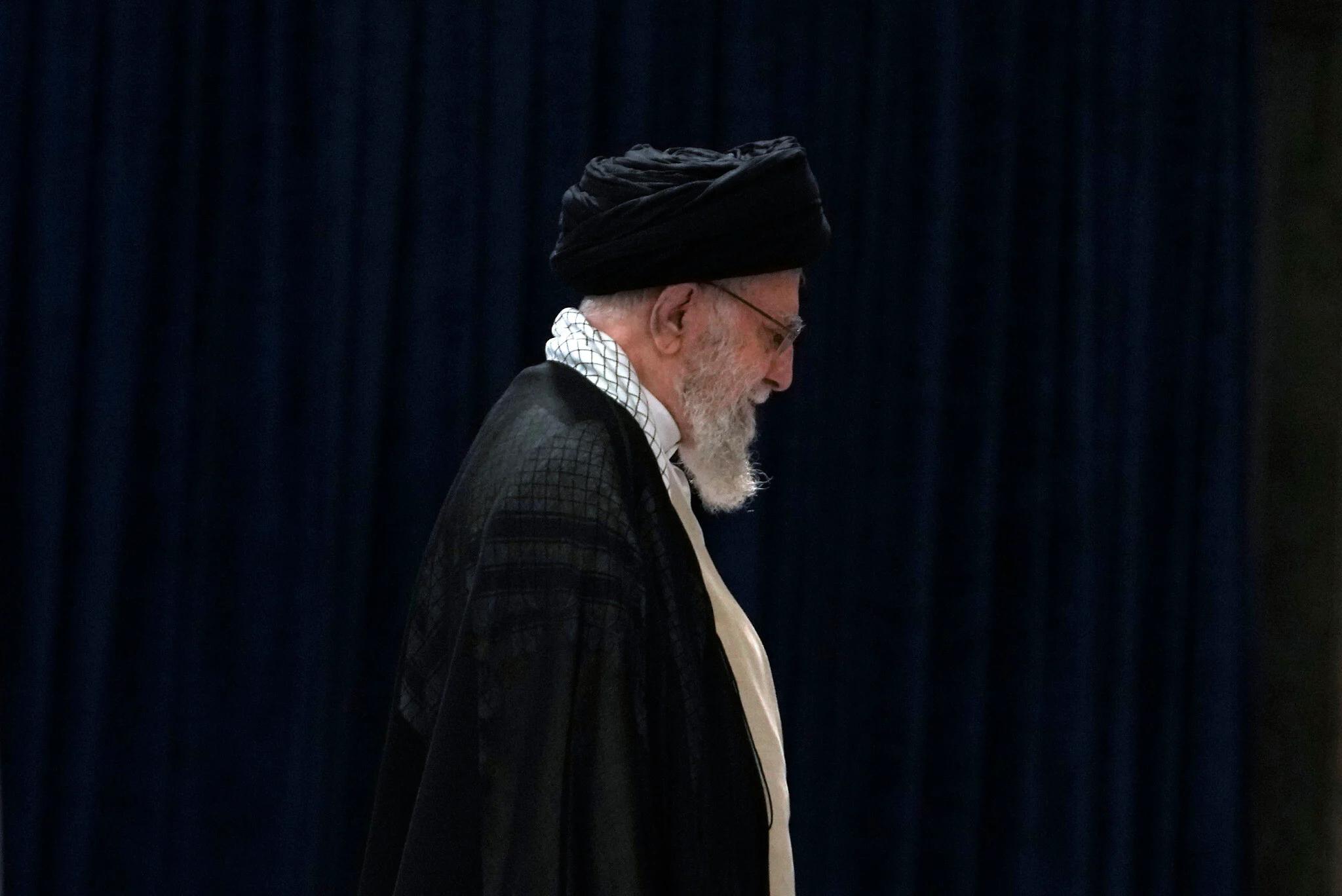
Iran Rejects Second Round of Talks With the United States Over Naval Blockade Demands
Key Takeaways
- Khamenei's death triggers a temporary leadership transition in Iran.
- A governing committee will include the president, judiciary head, and Guardian Council member.
- Interim president's name spellings vary across sources (Beshkian vs Bezhikian).
Talks, Hormuz, and Conditions
Iran rejected a second round of talks with the United States, linking its refusal to US pressure that includes a naval blockade and what Tehran described as “excessive demands,” according to information obtained by Tasnim news agency from relevant authorities.
“MENU Latest Headlines [ Gaza Forces Arrest Suspected Collaborators, Seize Israeli Spy Devices in Shelters [ April 19, 2026 ] ](https://www”
The Palestine Chronicle report says Tehran’s position was conveyed to Washington through Pakistani mediation and that avoiding such demands was presented as a fundamental condition for continuing talks.

In the same account, Iran’s stance is tied to control of the Strait of Hormuz, with the report describing Hormuz control as “tightened as leverage in negotiations.”
The report also says Iran reasserted control over the Strait of Hormuz as a response to continued US pressure, and it cites Al Mayadeen saying the Islamic Revolutionary Guard Corps “has regained full control of the waterway” after Washington’s decision to maintain a blockade on Iranian ports.
It adds that Tehran had allowed “limited maritime passage under ceasefire understandings” before reversing course amid escalating tensions.
The Palestine Chronicle piece frames Iran’s approach as adherence to defined conditions for any agreement, including “a comprehensive cessation of war across the region,” “the release of frozen Iranian assets,” “reconstruction commitments,” “compensation,” and “recognition of Iran’s right to enrich uranium for peaceful purposes.”
The report also includes a direct clash between US claims and an Iranian rebuttal, stating that Trump claimed Tehran had “agreed to everything,” while a senior Iranian official dismissed that as “alternative facts.”
Leadership Succession After Khamenei
Iran entered a new political phase after its official announcement of the death of Supreme Leader Ayatollah Ali Khamenei in Israeli-American airstrikes that targeted Iran, according to both Al Jazeera net and منصة مشيرب.
The two reports describe a temporary leadership arrangement tied to constitutional mechanisms for the vacancy of the Supreme Leader’s office, with a committee formed to govern the country until a successor is chosen within a few days.
Al Jazeera net says the country will be temporarily led by President Masoud Beshkian, the head of the judiciary, and one of the Guardian Council’s experts, and it attributes the expectation of a smooth selection process to political analyst Hossein Riyuran.
منصة مشيرب similarly describes a committee comprising President Masoud Bezhikian, “the head of the judiciary,” and “one member of the Guardian Council” as the temporary governing structure, and it also says the selection of the new leader is expected within a few days.
Both reports cite Riyuran’s argument that Iran is a “state of institutions” and that wartime conditions will not hinder procedures for selecting new leadership.
They also connect the predicted continuity to a prior power-transfer mechanism after the death of former President Ebrahim Raisi in a helicopter crash last year.
The reports further state that Iranian state television confirmed Khamenei’s death hours after US President Donald Trump announced his death, and they describe official mourning and government closures.
Military Readiness and Vows of Revenge
Iranian leadership and allied institutions used the period around Khamenei’s death to reinforce military posture and vows of retaliation, according to the reports.
“Esteemed fellow officer, Lieutenant General Abdulrahim Mousavi: The crimes of the Islamic Republic of Iran against humanity in Dey 1404 clearly show that Iran’s thousands-of-years-long history has turned a page once again and has been divided into two halves—“before” and “after”—by this criminal act”
منصة مشيرب says the Supreme National Security Council stated that “the martyrdom of Supreme Leader Ali Khamenei will be the starting point for a great uprising against the tyrants of the world,” and it adds that the IRGC pledged to avenge the killing of the Supreme Leader.
It also reports that Fars News Agency said Khamenei was killed in his office while carrying out his duties “yesterday morning,” and it places that account alongside an Israeli announcement of the death of seven senior Iranian military commanders in a surprise attack targeting two sites in Tehran.
The same report says CBS News, citing intelligence and military sources, reported that the Israeli and American strikes killed about 40 Iranian officials.
It further states that Israeli army spokesperson Evi Dferin said that among the dead were the commander of the IRGC and the defense minister, in addition to Ali Shamkhani, the Supreme Leader's security adviser.
In parallel, the Palestine Chronicle report describes Khamenei’s signaling of military readiness in the context of rejecting talks, stating that the headline frames the decision as Khamenei signaling military readiness.
Riyuran’s comments in the Al Jazeera net report also align with that framing, saying military institutions under the Supreme Leader’s leadership “will not be affected; rather, they will strike harsher blows in revenge for those who fell.”
Competing Narratives and Claims
The sources present competing narratives about what Iran is doing and why, and they also show differences in how actors describe the same political moment.
In the negotiation thread, Palestine Chronicle reports that Trump claimed Tehran had “agreed to everything,” while a senior Iranian official dismissed those claims as “alternative facts,” and it says the official warned that public statements risk undermining the negotiation process.
It also says Iran rejected a second round of talks under US pressure and linked refusal to “naval blockade pressure” and “excessive demands,” while the same report frames Hormuz control as leverage and says Iran reasserted control after Washington maintained a blockade on Iranian ports.
In the succession thread, Al Jazeera net and منصة مشيرب both describe the same core elements—temporary leadership by Masoud Beshkian/Bezhikian, the head of the judiciary, and a Guardian Council expert, plus a successor expected within a few days—but they differ in how they spell the president’s name and in the phrasing of the committee description.
Al Jazeera net says the Supreme Leader’s death was announced “in the Israeli-American airstrikes that targeted Iran yesterday, Saturday,” while منصة مشيرب describes the assassination as occurring in “the Israeli–American airstrikes that targeted him yesterday.”
The two reports also differ in how they describe the timing and details of the Israeli military claims: منصة مشيرب includes the Israeli announcement of “the death of seven senior Iranian military commanders” and adds CBS’s “about 40 Iranian officials,” while Al Jazeera net focuses more on the political process and the vows of revenge.
Finally, the political analyst Hossein Riyuran is quoted in both Al Jazeera net and منصة مشيرب as predicting the selection would proceed smoothly, but the two accounts emphasize different supporting points.
Internal Fractures and Calls for Action
Beyond official statements and international reporting, one of the provided sources presents a direct, internal political message that attacks the legitimacy of Iran’s leadership and calls for action by the armed forces.
“MENU Latest Headlines [ Gaza Forces Arrest Suspected Collaborators, Seize Israeli Spy Devices in Shelters [ April 19, 2026 ] ](https://www”
The text, titled “A Message to the Chief of the General Staff of the Iranian Armed Forces, Lieutenant General Abdulrahim Mousavi,” addresses Mousavi as “Esteemed fellow officer” and argues that the “crimes of the Islamic Republic of Iran against humanity in Dey 1404” show that Iran’s history has been divided into “before” and “after” by a “criminal act.”
It asserts that “there is no longer any possibility for the country’s situation and the Iranian people to return to what it was before 18 and 19 Dey (8 and 9 January 2026),” and it describes a “severe livelihood crisis—low incomes and exorbitant expenses” alongside “runaway inflation” and “the increase in gasoline prices implemented by the government.”
The message claims that “the peaceful and civil movement of the people” during the “Week of Commemoration of Khosrow Alikordi on the twenty-second of Azar 1404” was “misled” and culminated in “the crime against humanity on 18 and 19 Dey.”
It further states that the “crime” was “carried out under the orders of Ayatollah Ali Khamenei” and says the legitimacy of Khamenei’s leadership has been “entirely destroyed,” calling him “a lawless criminal who must answer to the law, to society, and to history.”
The document then argues that “we, the soldiers of Iran’s army, are now without legitimate commanders capable of exercising command,” and it says that to prevent “a complete collapse of the state and country,” it is “necessary to step onto the field and perform our national duty.”
It also frames the army as arising from the people, stating that “the national army of Iran arises from the people, belongs to the Iranian people, and serves the great Iranian nation,” and it ends by saying “The people expect the national army not only to safeguard the country’s unity, independence, and national sovereignty, but also to defend the lives and property of the people in times of danger.”
More on Iran

Donald Trump Threatens Iran Infrastructure Strike Over Strait Of Hormuz Ceasefire Violations
23 sources compared

Trump Threatens Strikes as Iran Fires on Ships in Strait of Hormuz
11 sources compared
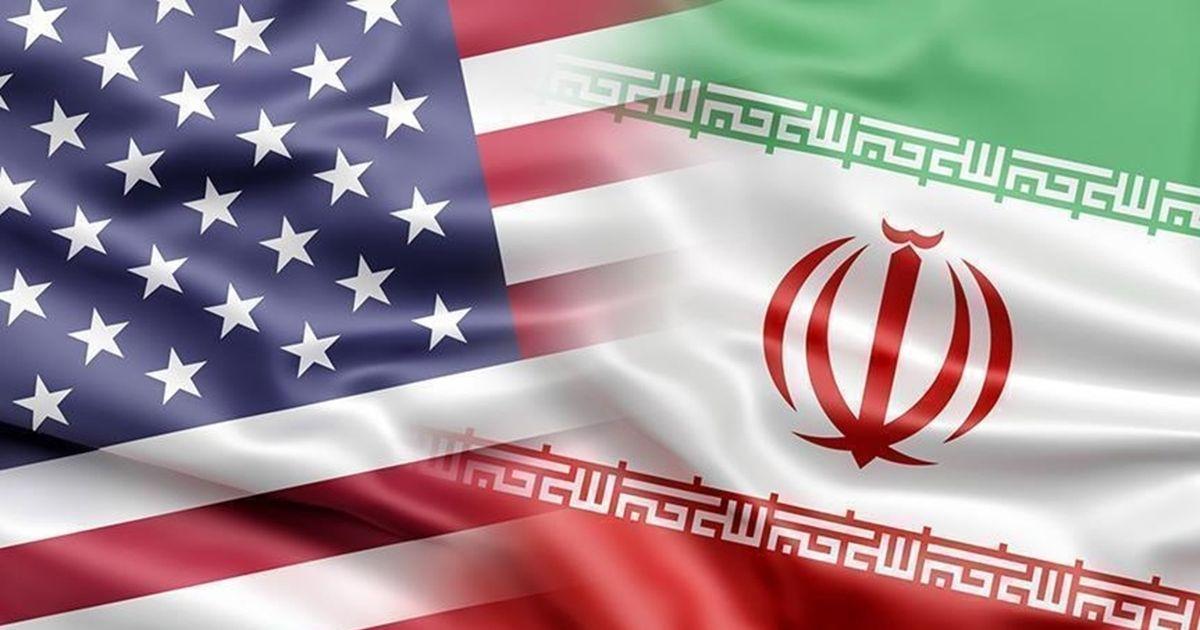
Donald Trump Sends U.S. Delegation to Pakistan for Iran Talks, Threatens Power Plants and Bridges
47 sources compared

Iran Rejects Trump Claims It Will Transfer Enriched Uranium to the United States
21 sources compared