Iran Rules Out Direct Talks With U.S. as Trump Envoys Travel to Islamabad
Key Takeaways
- Iran rules out direct talks with the United States in Islamabad.
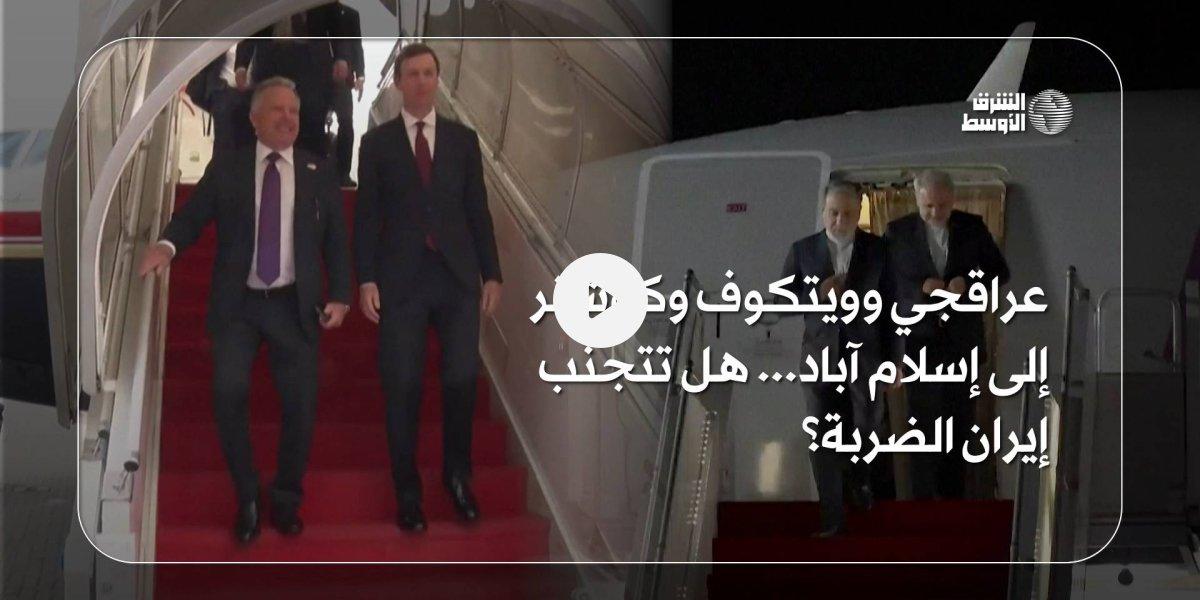
- U.S. envoys Witkoff and Kushner travel to Pakistan to restart talks with Iran.
- Abbas Araghchi arrived in Islamabad to participate in discussions.
No Direct Talks in Islamabad
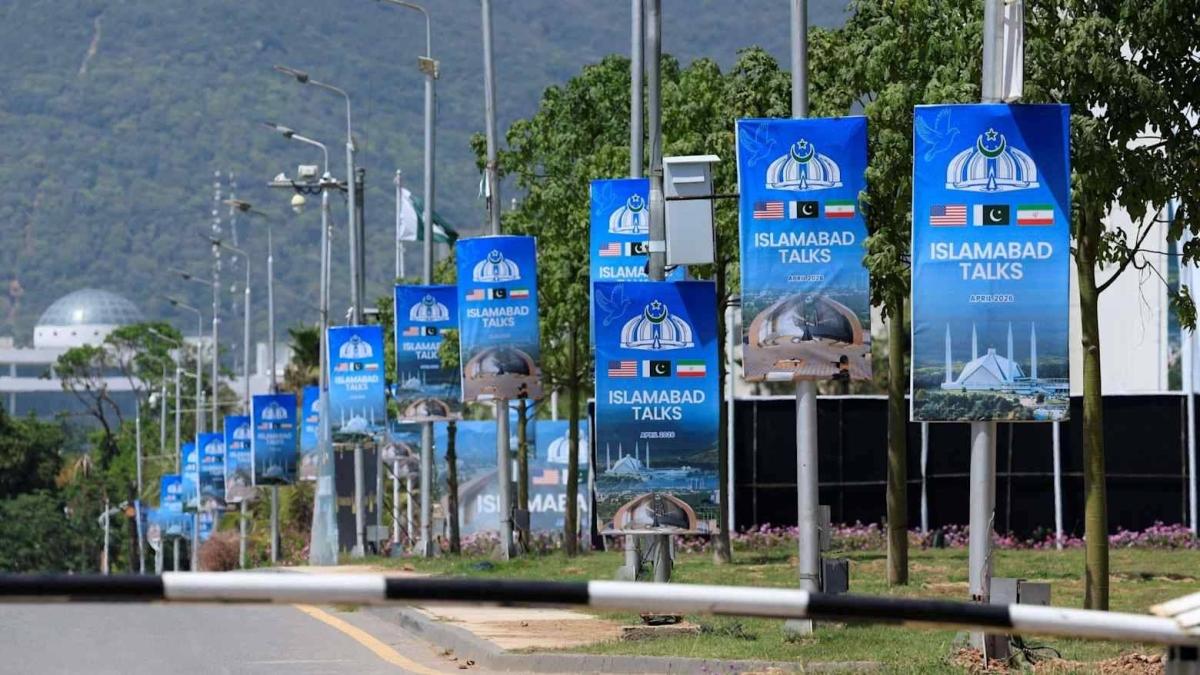
Iran ruled out direct talks with the United States as U.S. envoys traveled to Pakistan for a new round of diplomacy aimed at ending the war, according to multiple reports.
“Trump sends envoys to Islamabad as Iran rules out direct talks U”
Haaretz said Iran “Rules Out Direct Talks With U.S.” as “Trump Envoys to Travel to Pakistan,” adding that “U.S. negotiators are scheduled to leave for Pakistan on Saturday, but Iran said its officials did not plan to meet the American delegation to discuss ending the war.”

The Washington Post similarly reported that Iran “has played down expectations of direct talks with the United States” as U.S. envoys were expected to travel to Islamabad, Pakistan, “but this time without Vice President JD Vance, the lead negotiator.”
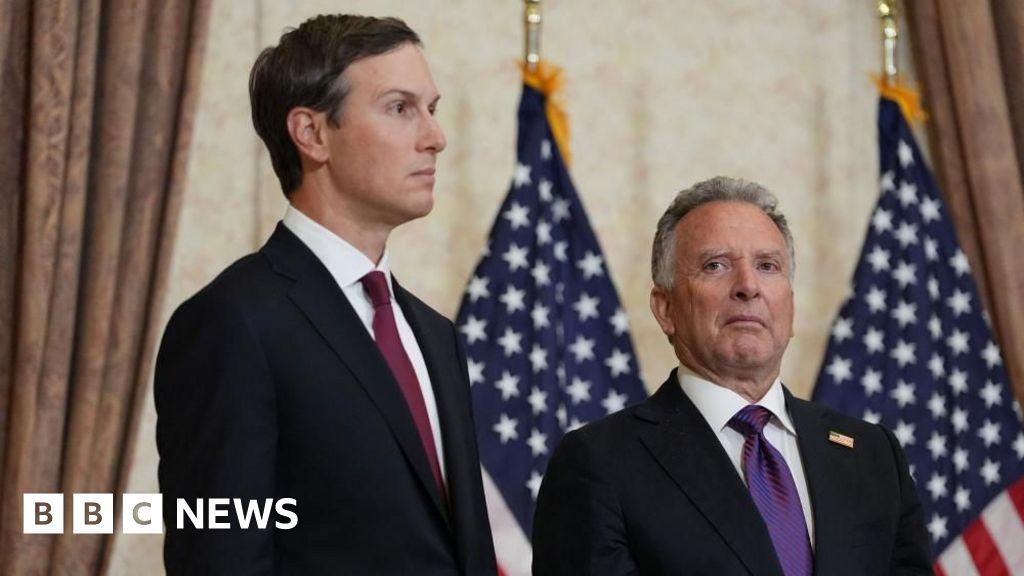
NBC News framed the same trip with “uncertainty over Iran talks,” saying Iran “has said no direct talks are planned with an expected American delegation in Pakistan, led by Steve Witkoff and Jared Kushner.”
The Hill described the diplomatic choreography as “another round of Pakistani-brokered talks to end the nearly two-month conflict,” while noting that Tehran “has ruled out a face-to-face meeting.”
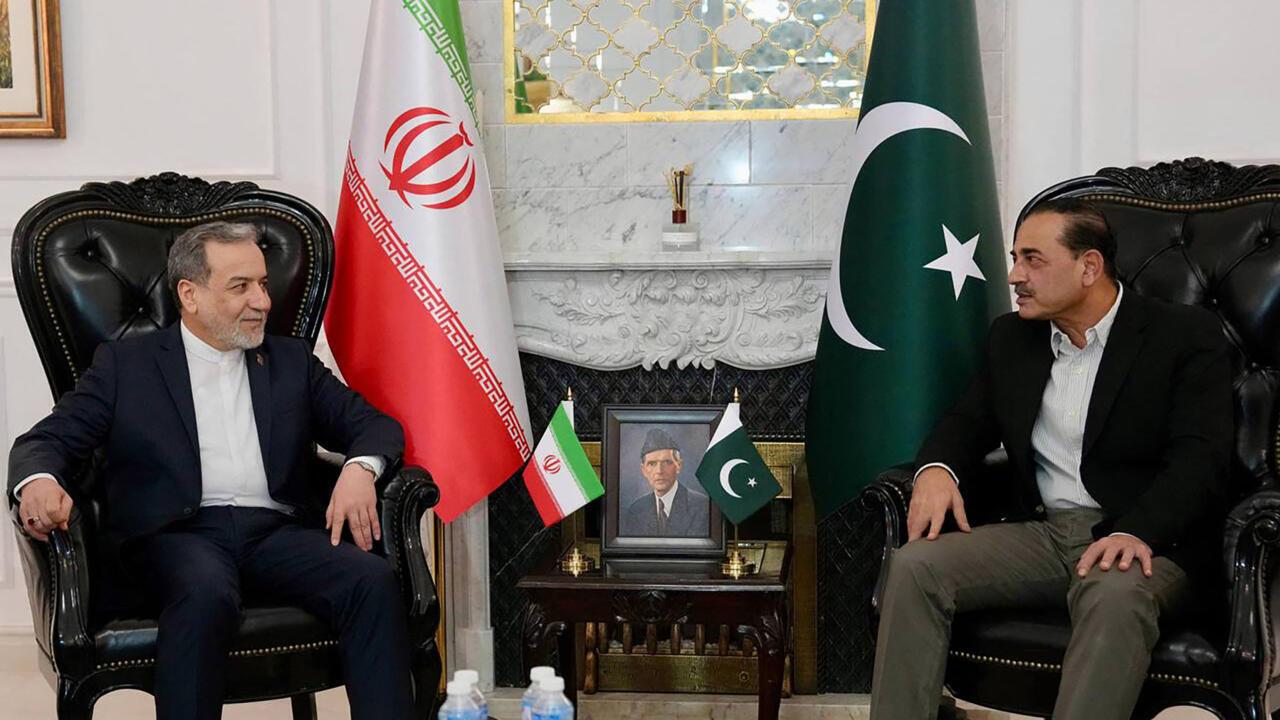
In Islamabad, Iran’s foreign minister Abbas Araghchi arrived for talks with Pakistani officials, and multiple outlets tied the mediation role to Pakistan’s government and military leadership.
NBC News added that “Iran’s Foreign Minister Abbas Araghchi is also in Islamabad,” while The Hill said Araghchi “arrived in the Pakistani capital on Friday.”
Across the coverage, the key point remained that any U.S.-Iran engagement would be indirect, with Pakistan conveying messages rather than principals meeting face-to-face.
What Iran Says It Wants
Iran’s position on the talks was presented as a refusal of direct engagement while still engaging through Pakistan, and the reports tied that stance to Iran’s broader negotiating posture.
The Hill said a spokesperson told reporters that Araghchi “would not meet personally with the U.S. envoys and that Tehran’s position would be conveyed through Pakistan,” quoting the spokesperson’s message on X: “FM Araghchi will be meeting with Pakistani high-level officials in concern with their ongoing mediation & good offices for ending American imposed war of aggression and the restitution of peace in our region.”
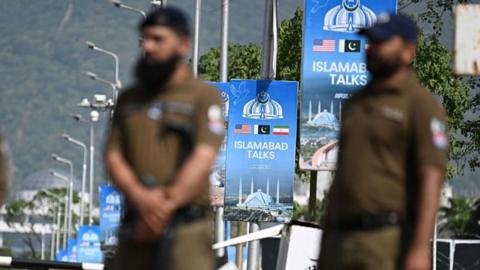
The Jerusalem Post likewise quoted Iran’s Foreign Ministry spokesperson Esmaeil Bagahei saying, “No meeting is planned to take place between Iran and the US,” and added that “Iran's observations would be conveyed to Pakistan.”
Daily Sabah described the same bridging mechanism, saying “Islamabad would serve as a bridge to ‘convey’ Iranian proposals to end the conflict.”
NBC News added that Iran’s foreign minister thanked Pakistan for its efforts, reporting that Araghchi “thanked Pakistan for its efforts in establishing a ceasefire” and that he met “Pakistan Field Marashall Asim Munir.”
DW said “No direct talks in Islamabad expected,” and it described the diplomatic focus as indirect messaging rather than a table set for bilateral meetings.
The Kurdistan24 report also emphasized that “Tehran rules out face-to-face meetings, opting instead for indirect messaging,” and it cited White House Press Secretary Karoline Leavitt’s statement that the U.S. delegation was sent “to engage in conversations with representatives of the Iranian government.”
Even where outlets differed on the tone of expectations, they converged on the mechanism: Pakistan would carry messages, while Araghchi would meet Pakistani officials.
Ceasefire, Deaths, and the Strait
The diplomatic push in Islamabad was occurring alongside ongoing conflict dynamics that multiple outlets described with specific casualty figures and repeated references to the Strait of Hormuz.
“United States envoys Steve Witkoff and Jared Kushner will travel to Pakistan on Saturday for talks with Iran, the White House has said, while Iranian Foreign Minister Abbas Araghchi has arrived in Islamabad”
NBC News reported that “Iran’s forensics chief said nearly 3,400 people had been killed in the country since U.S.-Israeli strikes began Feb. 28,” and it added that “Almost 2,500 people have been killed in Lebanon, 32 have been killed in Gulf states, and 23 have died in Israel.”
NBC News also stated that “Thirteen U.S. service members have been killed, and two more died of noncombat causes,” and it placed the figures in the context of the war’s start date of Feb. 28.
ABC News provided a similar accounting, saying “Since the war began, at least 3,375 people have been killed in Iran, and more than 2,490 people in Lebanon,” and it added that “23 people have died in Israel and more than a dozen in Gulf Arab states.”
ABC News also reported that “Fifteen Israeli soldiers in Lebanon and 13 U.S. service members throughout the region have been killed,” and it noted UNIFIL casualties, saying “UNIFIL said Friday that an Indonesian peacekeeper died of wounds sustained in an attack on his base on March 29, raising to six — four Indonesians and two French — the number of force members killed since the war erupted.”
Several outlets tied the negotiations to the Strait of Hormuz, describing it as a chokepoint for global energy shipments and a focus of military pressure.
The Hill said “the U.S. and Iran are continuing to struggle for controlof the key waterway,” and it described “a de facto blockade of shipping traffic,” with “Iran has fired upon several vessels attempting to transit the strait.”
The Hill also said “The U.S. military is also working to clearIranian mines from the channel — a critical chokepoint that carries about 20 percent of the world’s oil supply.”
How the Talks Are Framed
While the core fact of indirect talks was consistent, outlets diverged in how they framed expectations, the role of U.S. leadership, and the meaning of Iran’s messaging.
The Washington Post emphasized that the U.S. envoys were expected to travel to Islamabad “but this time without Vice President JD Vance, the lead negotiator,” while NBC News described “uncertainty over Iran talks” and said the delegation was “led by Steve Witkoff and Jared Kushner.”
The Hill reported that White House press secretary Karoline Leavitt said, “We’re hopeful that it will be a productive conversation and hopefully move the ball forward towards a deal,” and it added that “Hopes for a direct meeting between the parties were dashed by the Iranian regime.”
Kurdistan24, meanwhile, highlighted internal political dynamics and leadership divisions, noting that “deep leadership divisions within Tehran” were “complicated” by the absence of U.S. Secretary of State Marco Rubio, and it quoted a rhetorical statement attributed to Iranian leaders: “In Iran, there are no ‘hardliners’ or ‘moderates.’ We are all Iranians and revolutionaries.”
DW focused on operational and diplomatic details, stating “Flights resume at Tehran's international airport” and describing that “For the first time since the war with the US and Israel began approximately two months ago, Iran has resumed commercial flights” to “Istanbul, Turkey; Muscat, Oman; and Medina, Saudi Arabia.”
Haaretz and The Jerusalem Post both centered on Iran’s refusal of direct meetings, but The Jerusalem Post also included a White House framing that Trump was sending envoys to “engage in direct talks,” quoting Leavitt’s confirmation: “I can confirm @SEPeaceMissions and @jaredkushner will be off to Pakistan again tomorrow morning to engage in talks.”
ABC News presented the trip as a bid to “salvage ceasefire talks,” and it described the indirect nature of engagement by saying that “his ministry said any talks would be indirect, with messages conveyed between the two sides by Pakistani officials.”
Even within the same event, the outlets’ emphasis differed: some foregrounded the absence of JD Vance, others foregrounded the indirect mechanism, and others foregrounded the broader war context and economic disruption.
What Comes Next
The next phase of the diplomacy was framed as uncertain, with multiple reports describing both the immediate schedule and the conditions that could determine whether talks produce a deal.
The Hill said the U.S. delegation led by special envoy Steve Witkoff and Jared Kushner would travel to Islamabad on Saturday, while Iran’s foreign minister Abbas Araghchi had arrived in Islamabad and planned to travel next to Oman and Russia, according to Araghchi’s post on X.
It quoted Araghchi’s stated purpose: “to closely coordinate with our partners on bilateral matters and consult on regional developments,” and it said he “planned to travel to Oman and Russia next.”
NBC News reported that Araghchi thanked Pakistan for its ceasefire efforts and said the meeting discussed “related to the ceasefire and the end of the war,” while also noting that Iran’s internet blackout had lasted “for more than 1,300 hours” and “past 1,340 hours.”
The Hill also described the U.S. position on the deal as involving enriched uranium and the Strait of Hormuz, quoting that Trump “has been adamant that he is not under pressure to make a deal with Iran to end the conflict,” and that the regime “cannot be allowed to enrich uranium and must reopen theStrait of Hormuz.”
Daily Sabah added that the talks were “a thorny proposition” as urgency mounted to reopen the Strait of Hormuz, and it quoted European Council President Antonio Costa saying the strait “must immediately reopen without restrictions and without tolling.”
The Hill and ABC News both described the economic and military pressure around the strait, including the U.S. ordering ships back to port and intercepting at least one Iranian vessel, and the U.S. working to clear mines.
In the background of the negotiations, NBC News also reported Iran’s execution of a man accused of being an Israeli agent, identifying him as Erfan Kiani and quoting that he was accused of carrying out “acts of destruction and setting fires to public and private property under orders from Mossad.”
More on Iran
Trump Sends Steve Witkoff and Jared Kushner to Pakistan for Direct Iran Talks
31 sources compared

Iran’s Abbas Araghchi Travels to Pakistan as Trump Sends Witkoff and Kushner for Ceasefire Talks
36 sources compared
Trump Orders U.S. Forces To Board Iranian Ships Amid Hormuz Blockade
17 sources compared

Ahmad Vahidi and the IRGC Control Iran, Jerusalem Post Says Mojtaba Khamenei Not Leading
22 sources compared