
Iran Says Strait of Hormuz Won’t Reopen Until Lebanon Ceasefire Holds, Oil Waivers Issued
Key Takeaways
- Hormuz will not reopen until Lebanon ceasefire holds and oil waivers issued.
- Iran closed Hormuz citing Lebanon ceasefire violations and Israeli strikes.
- US and Iran hold talks in Switzerland amid Hormuz dispute.
Hormuz closure tied to Lebanon
Iran said the Strait of Hormuz would not reopen unless a ceasefire in Lebanon was respected and until waivers allowing the sale of Iranian oil were issued, according to a source close to Tehran’s negotiating team cited by Tasnim.
The Middle East Eye live blog reported that Iran had once again closed the strait a day earlier over Israeli attacks on southern Lebanon, after it had effectively closed the waterway for nearly four months.
The Economic Times reported that, despite Iran’s claim, three laden oil supertankers emitted signals as they were sailing through the channel on Saturday via a route that hugs Oman’s coast, with one resuming automated signals early on Sunday after reaching the Gulf of Oman.
The Economic Times also said the supertankers carried between them about 6 million barrels of Iraqi and Kuwaiti oil, while ship-tracking data compiled by Bloomberg and information from Kpler were used to base the cargoes.
In the same reporting, the Economic Times noted that the naval notice from the Joint Military Information Center advised mariners that they may transit the southern route day or night with their AIS on, radars radiating, running lights on, and normal use of VHF.
Talks in Switzerland amid disputes
As Iran declared the strait closed again, the CNBC report said U.S. Vice President JD Vance arrived in Switzerland on Sunday for the next phase in negotiations with Iran.
CNBC quoted Switzerland’s Federal Department of Foreign Affairs saying, "Talks between the parties are set to begin during the course of the morning," and it described the U.S. and Iranian negotiators as working on technical details after an interim agreement.

CNBC also reported that Iran warned vessels to stay away from the critical shipping route, but the U.S. denied those claims, with U.S. Central Command spokesperson Navy Captain Tim Hawkins telling Reuters, "Iran does not control the Strait of Hormuz."
The National Post said Iran’s joint military command described the closure as its first step in response to Israel’s continued attacks in southern Lebanon, even as it dispatched a negotiating team to Switzerland for prospective peace talks with the U.S.
The National Post added that Vice President JD Vance, speaking on Fox News, said he expected to travel to Switzerland in "the next couple of days" and said, "I am very confident we can maintain the ceasefire."
Conditions, assets, and shipping
Iran’s Tasnim news agency, as quoted by Iran International and also reflected in the Tasnim-linked reporting, said the Strait of Hormuz should not be reopened until conditions under the Iran-U.S. MoU were met, including the release of at least $12 billion in Iranian assets.
Iran International reported that the outlet said reopening the Strait only in return for lifting the U.S. naval blockade would be a “strategic mistake” and a violation of the Iran-U.S. memorandum of understanding.
The same Iran International report said Iranian media were instructed to avoid portraying the renewed closure of the Strait of Hormuz and Iran’s participation in U.S. talks as a divide between the armed forces and negotiators, citing a Supreme National Security Council directive.
CNBC reported that the signed memorandum of understanding called for the immediate end to military actions by Israel in Lebanon and the full reopening of the strait without tolls imposed by Iran for at least 60 days, while it also described the U.S. as monitoring to ensure the waterway remained open.
In that context, CNBC said President Donald Trump indicated the administration considered the strait as open for traffic and suggested the U.S. could begin charging ships to transit the Strait if the parties failed to convert the interim agreement into a final deal within 60 days.
More on Iran

Trump Threatens Tehran as JD Vance Meets Mohammad Bagher Qalibaf in Switzerland Talks
18 sources compared

JD Vance Holds US-Iran Talks in Switzerland as Trump Threatens Strikes Over Hormuz
12 sources compared

Iran’s Qalibaf Urges US To Be Cautious After Trump Threats
10 sources compared
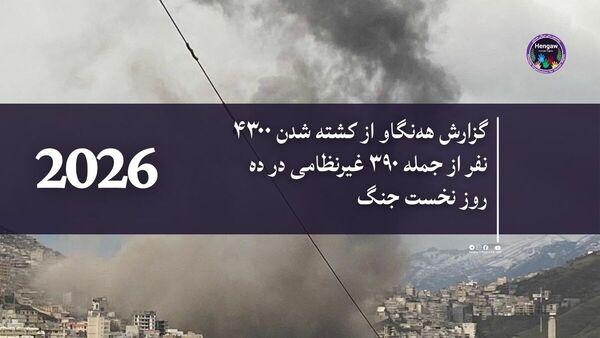
U.S. and Israel Attack Iran, Killing 1,394 Civilians, Human Rights Groups Say
15 sources compared