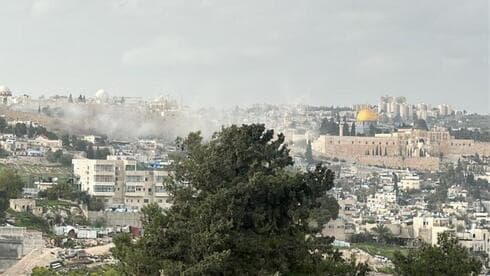
Iran Strikes Dimona Near Israel's Main Nuclear Facility, Wounding Dozens
Key Takeaways
- Iran launched missiles at Dimona and Arad near Israel's main nuclear facility, injuring dozens.
- Israel retaliated with strikes on targets in Tehran following Iran's missile attacks.
- More than 100 injured in Dimona and Arad strikes near nuclear facility.
Strike Overview
Iran launched missile strikes on two southern Israeli towns, Dimona and Arad, injuring over 100 people in what marked a dramatic escalation of the ongoing Iran-Israel conflict.
“‘‘They’re showing a lot of resilience that we didn’t perhaps expect, that the US didn’t expect, when it took this on,’’ Neil Quilliam of Chatham House told the London-based thinktank’s podcast, adding that Iran had deep roots”
Iranian state television framed Saturday's attacks as a 'response' to earlier strikes on Iran's Natanz nuclear enrichment complex, creating a stark new phase of tit-for-tat targeting in the conflict now in its fourth week.
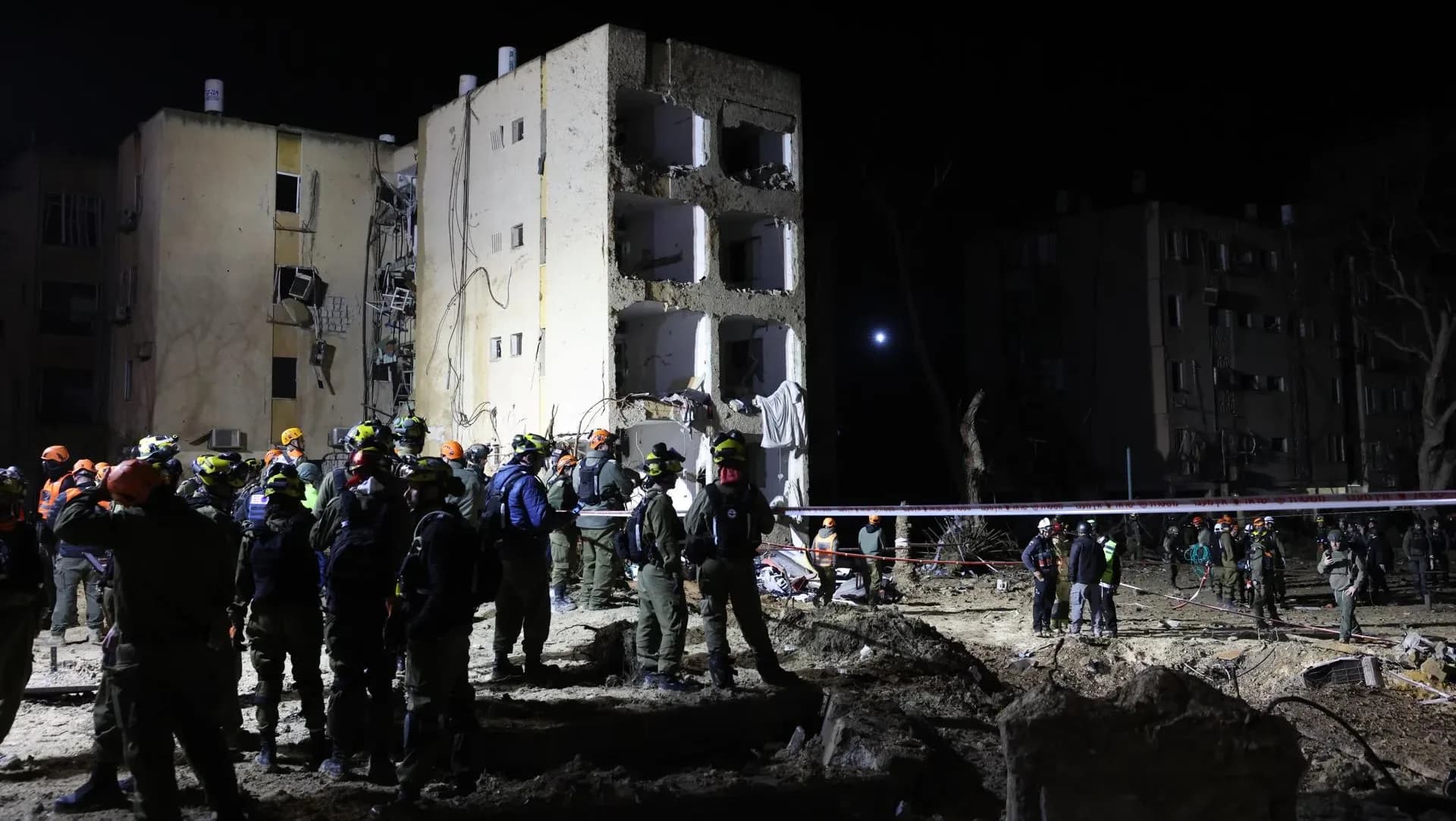
The Israeli Ministry of Health reported that at least 180 people were wounded across both locations, with extensive damage reported in city centers and residential buildings destroyed or severely damaged.
In Arad alone, 84 people were injured including 10 in serious condition, while Dimona saw 33 wounded residents including a 10-year-old boy in serious condition with shrapnel wounds.
Emergency responders described scenes of 'extensive damage and chaos' as rescue workers combed through rubble searching for casualties.
Nuclear Context
The targeted cities of Dimona and Arad hold significant strategic importance due to their proximity to Israel's main nuclear research facility, the Shimon Peres Negev Nuclear Research Center in the Negev desert.
Dimona lies approximately 20 kilometers from this facility, which is widely believed to possess the Middle East's sole nuclear arsenal, though Israel has never publicly acknowledged its nuclear weapons program.

Arad, located about 25 kilometers northeast of Dimona, serves as a residential and logistical hub for Israel's military and technological infrastructure.
Iran's atomic energy organization earlier accused the US and Israel of hitting the Natanz enrichment complex, noting there was 'no leakage of radioactive materials reported' from their nuclear facility.
The International Atomic Energy Agency (IAEA) acknowledged the incident in Dimona but confirmed no damage to the nuclear research center and no abnormal radiation levels detected in the region.
Military Significance
The Iranian strikes represented a significant military breakthrough as Israeli air defense systems failed to intercept the ballistic missiles, marking the first time Iranian missiles penetrated Israel's defenses in the area around the nuclear site.
“Home News Business Energy Opinion Lifestyle Sports Video Podcast Home News Business Energy Opinion Lifestyle Sports Video Podcast Close the sidebar Home News Middle East A man walks near a destroyed building following a night of Iranian missile strikes which injured dozens of Israelis, amid the U”
Firefighters reported that 'interceptors were launched that failed to hit the threats, resulting in two direct hits by ballistic missiles with warheads weighing hundreds of kilograms.'
The Israeli military acknowledged having conducted 'interception attempts' but confirmed the missiles were not stopped.
Iran's Parliament Speaker Mohammad Bagher Ghalibaf declared that 'if the Israeli regime is unable to intercept missiles in the heavily protected Dimona area, it is, operationally, a sign of entering a new phase of the battle.'
Military analysts noted that the successful penetration of Israel's multibillion-dollar air defense network carries strategic importance regardless of the scale of actual damage, demonstrating that no defense system is completely impenetrable when confronted by a determined adversary.
Regional Escalation
The attacks triggered immediate regional escalation, with Israel launching retaliatory strikes on Iranian infrastructure shortly after the missile attacks.
Israeli Prime Minister Benjamin Netanyahu described the evening as 'very difficult' and vowed to 'continue to strike our enemies on all fronts.'

The conflict's effects extend far beyond the immediate combatants, raising global concerns about food and fuel prices as the war impacts international shipping routes.
Iran also demonstrated its expanding missile capabilities by launching unsuccessful strikes on the US-UK base at Diego Garcia, some 4,000 kilometers away, suggesting Tehran's missiles may have greater range than previously thought.
The United Nations nuclear watchdog Director General Rafael Grossi reiterated calls for 'maximum military restraint to avoid any risk of a nuclear accident' following the exchange of strikes between nuclear-armed adversaries.
Strategic Implications
The exchange of nuclear facility strikes between Iran and Israel represents a dangerous escalation that has heightened global tensions and increased the risk of catastrophic conflict.
With the conflict now in its fourth week, regional analysts note that Iran has demonstrated significant resilience, with military experts suggesting the Islamic Republic 'deep roots' and unexpected capabilities that challenge Western assumptions.

The targeting of nuclear installations by both sides has raised particular concern about potential nuclear accidents, despite officials reporting no radiation leaks from either facility.
As the conflict continues to expand, with both sides increasingly targeting strategic infrastructure and demonstrating advanced weaponry, the international community faces growing pressure to mediate and prevent further escalation.
The situation remains fluid, with both sides indicating preparations for continued military operations while simultaneously engaging in diplomatic maneuvers that could either de-escalate or further intensify the already volatile regional conflict.
More on Iran

Iran says Hormuz is open to all except enemy ships amid U.S. threat
19 sources compared

Trump Threatens to Obliterate Iran's Power Plants Over Strait of Hormuz
44 sources compared
US and Israel Strike Iran's Natanz Enrichment Site; No Radioactive Leaks Reported.
81 sources compared

Iran's Attempted Diego Garcia Strike Reveals Missile Range
147 sources compared