Full Analysis Summary
Iran accuses foreign actors
Iran has announced it has filed legal and criminal complaints in international forums accusing the United States, Israel and several armed or terrorist groups of supporting, financing and directing recent violent unrest inside the country.
Tehran’s formal accusation, carried by PressTV, alleges that foreign agencies aided the unrest as part of a hostile campaign and that complaints have been lodged to hold those states and groups legally accountable.
The claim frames the actions as an international legal challenge aimed at attributing external responsibility for domestic disturbances.
Coverage Differences
Missed information / Lack of other source perspectives
Only PressTV (West Asian) coverage is provided. There are no Western mainstream or Western alternative sources included in the supplied material to offer alternate descriptions, rebuttals, or legal perspectives, so cross-source comparison of narratives or legal assessments is not possible from the provided documents. The summary therefore reflects PressTV’s reporting and Tehran’s statements, not corroborated by other source types.
Iran unrest and response
According to the reporting, Iranian authorities say the unrest began as peaceful bazaars and market protests over the rial’s devaluation on January 8 and then escalated into violent riots that caused widespread property damage and multiple deaths.
PressTV quotes Tehran describing a transition from economic protest to days of violence, with officials emphasizing the scale of destruction and fatalities as part of their rationale for pursuing international legal action.
Coverage Differences
Narrative focus / Emphasis
PressTV (West Asian) emphasizes a progression from peaceful market protests to violent riots, citing Tehran’s narrative that external actors exploited the economic demonstrations. Because no other source types were provided, we cannot compare whether other outlets would emphasize different roots (for example, internal political grievances, security force responses, or independent verification of casualties), which represents a gap in cross-source analysis.
Judiciary accusations and response
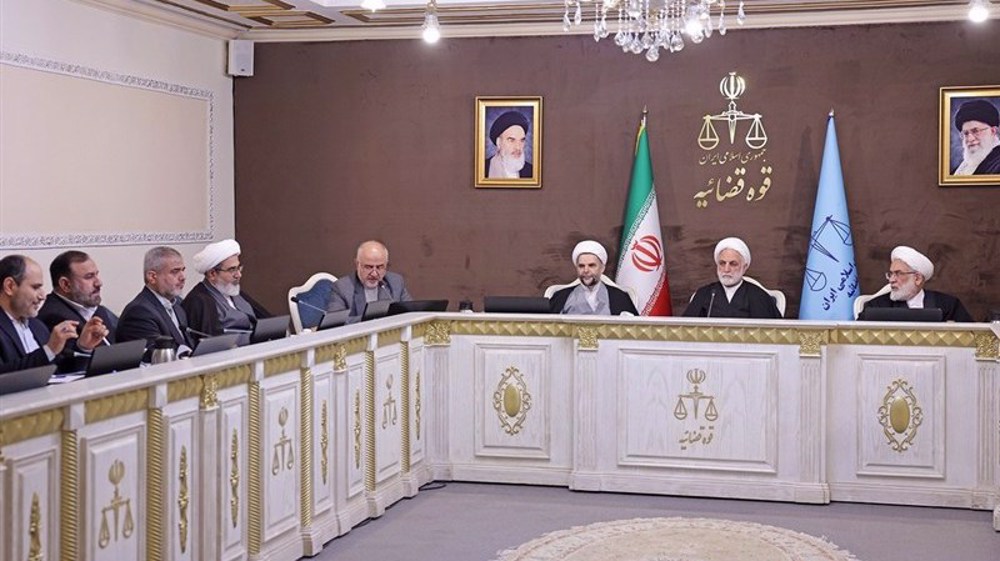
PressTV reports Judiciary chief Gholam-Hossein Mohseni-Eje'i alleging that U.S. and Israeli agencies openly provided funding, training and media support to rioters and armed groups, with one account calling the unrest another phase of a '12-day war' or a broader hostile campaign.
Mohseni-Eje'i is reported as pledging criminal prosecutions for planners and perpetrators, accountability for killings, and compensation for public and private losses, positioning Iran's judiciary as seeking legal and financial redress.
Coverage Differences
Tone / Framing
PressTV (West Asian) reproduces strong accusatory language from Iranian officials (e.g., 'openly provided funding,' '12‑day war,' 'must pay legal penalties'), reflecting a confrontational legal and political framing. Without other source types, it is not possible to show contrasting framings (e.g., denial by accused states, independent investigations, or more neutral legal analyses). The supplied sources all reflect Tehran’s assertive judicial stance.
Iran's legal response
PressTV emphasizes legal remedies and punitive measures, quoting Iran that perpetrators and planners "must pay legal penalties and compensate for public and private losses" and that those who killed civilians or security forces will face prosecution.
The articles present Tehran’s move as a judicial and diplomatic effort to hold external actors and armed groups responsible, but the coverage lacks independent verification, responses from the accused states (the U.S. or Israel), and commentary from international legal experts.
Coverage Differences
Missed information / Omission
The provided material lacks responses from the accused parties (U.S., Israel) and independent legal or investigative perspectives. PressTV presents Tehran’s legal filings and vows of prosecution, but without contrasting statements or outside verification the reader cannot evaluate evidentiary strength or alternative explanations.