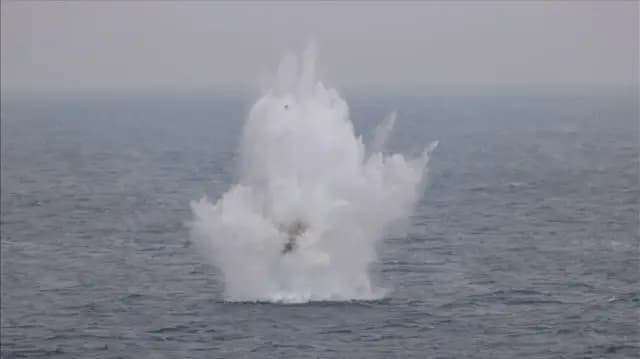
Iran Threatens to Deploy Mines in Persian Gulf If Attacks Hit Its Coasts or Islands
Key Takeaways
- Iran threatens to mine the Persian Gulf if its coasts or islands are attacked.
- The mining threat could effectively close the Strait of Hormuz, restricting international shipping.
- Hormuz remains open to all but 'enemy-linked' ships, with passage requiring coordination with Tehran.
Iran Mining Threat
Iran has escalated its military posture in the Persian Gulf, issuing a stark warning that it would deploy naval mines throughout the strategic waterway if its coasts or islands come under attack.
According to Iran's National Defense Council, any attempt by 'the enemy' to target Iranian territory would naturally lead to the mining of access routes and communication lines throughout the Gulf.

The council specified that these measures would include various types of naval mines, including floating mines that could be launched from shore, creating conditions that would effectively close maritime routes for an extended period.
Iranian officials emphasized that such actions would be within the framework of their legitimate right and in accordance with accepted military statutes, with responsibility for any disruption falling squarely on the party initiating the attack.
Gulf Disruption Impact
The potential deployment of naval mines would dramatically worsen an already critical situation in the Persian Gulf, where maritime shipping has been severely disrupted since early March.
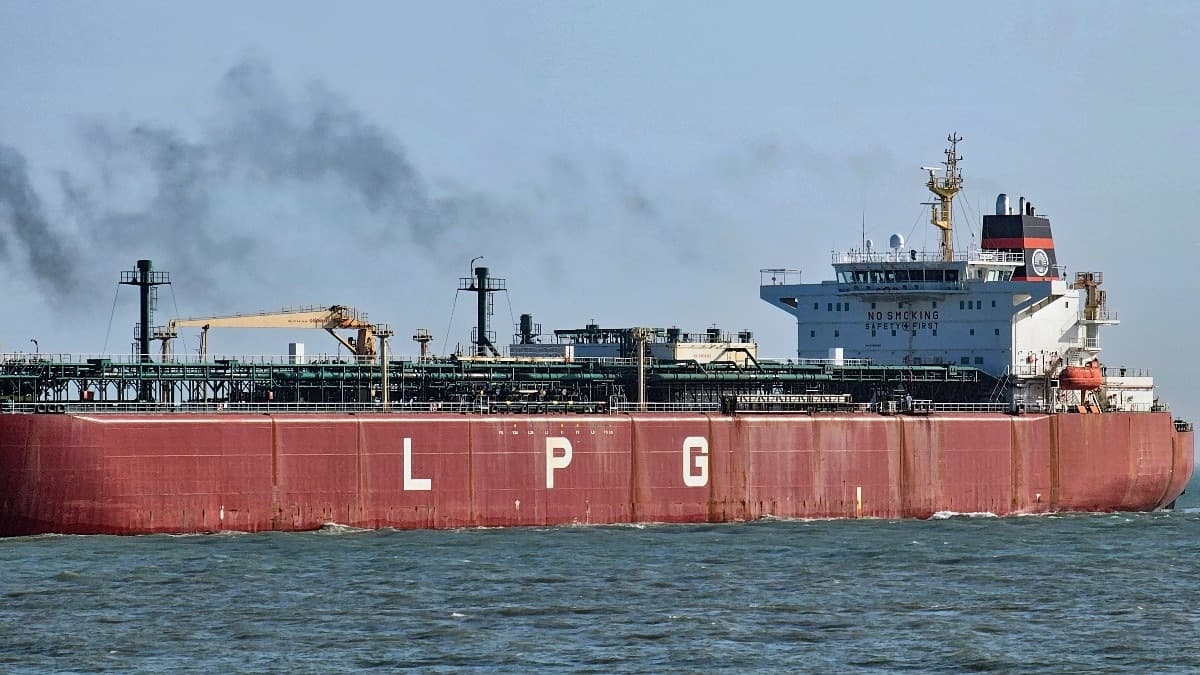
The Strait of Hormuz, which connects the Persian Gulf to the Arabian Sea, has effectively been closed to normal traffic, with approximately 20 million barrels of oil normally passing through the narrow waterway daily.
Iranian officials clarified that while the strait remains open to all ships except those linked to 'enemy' nations like the United States and Israel, safe passage for 'non-belligerent countries' would only be possible through coordination with Iranian authorities.
The threat of mining has already caused significant disruption, with no crude oil tankers reportedly transiting the strait in the past 24 hours and hundreds of vessels anchored as shipping operators reassess transit plans amid escalating tensions.
Conflict Context
Iran's mining threat comes amid intensifying military confrontation with the United States and Israel, which began when the two nations launched a joint offensive against Iran on February 28.
“Live updates: Trump extends deadline for Iran to reopen Strait of Hormuz The Strait of Hormuz is a small strip of water connecting the Persian Gulf to the world’s oceans”
The initial attack killed over 1,300 people, including then-Supreme Leader Ali Khamenei, prompting Iran to retaliate with drone and missile strikes targeting Israel, Jordan, Iraq, and Gulf countries hosting US military assets.
Iranian officials have framed their response as legitimate defense of national sovereignty, pointing to previous attacks on Iranian infrastructure including the Dimona nuclear complex and energy facilities in Asalouyeh.
The conflict has now entered its fourth week, with both sides exchanging increasingly threatening rhetoric while maintaining channels for diplomatic communication to potentially de-escalate tensions.
Trump Response
In response to Iran's mining threat and the ongoing closure of the Strait of Hormuz, U.S. President Donald Trump initially issued a 48-hour ultimatum demanding Iran fully reopen the crucial waterway, warning that failure to comply would result in direct strikes on Iranian power plants.
Trump threatened to 'obliterate' Iranian energy infrastructure, stating 'If Iran doesn't FULLY OPEN, WITHOUT THREAT, the Strait of Hormuz, within 48 HOURS from this exact point in time, the United States of America will hit and obliterate their various POWER PLANTS.'
However, in a dramatic shift, Trump announced on Monday that he had postponed the strikes for five days after claiming the U.S. and Iran had held 'VERY GOOD AND PRODUCTIVE' talks that could result in 'A COMPLETE AND TOTAL RESOLUTION' to the war.
The announcement came just hours before the deadline was set to expire, with Trump stating the suspension was 'subject to the success of the ongoing meetings and discussions.'
Global Economic Impact
The escalating tensions in the Persian Gulf have triggered significant global economic consequences, with energy markets reacting sharply to the developments.
Global oil prices have already surged to $119 a barrel, and UK natural gas prices have jumped by more than 20 percent in a single trading session, reflecting widespread market anxiety over potential supply disruptions.

The crisis has particularly affected major energy importers like India, where Prime Minister Narendra Modi compared the challenges to those faced during the COVID-19 pandemic and emphasized the need for preparation.
International organizations and foreign powers have expressed growing concern, with China's Middle East envoy blaming the U.S. and Israel for 'starting this war' and calling for an immediate cessation of hostilities.
The United Nations has warned that the conflict threatens to increase the number of hungry people by tens of millions over the course of the year, while also displacing 3.2 million people in Iran and 1 million in Lebanon.
More on Iran

President Trump delays strikes on Iran power plants for five days amid conflicting reports.
41 sources compared

Trump Extends Deadline to Reopen Strait of Hormuz, Delays Strikes on Iranian Power Plants.
27 sources compared
Trump Says Talks With Iran Ongoing; Iran Denies Negotiations.
15 sources compared

Iran Threatens to Close Strait of Hormuz, Hit Power Plants After Trump's Ultimatum
41 sources compared