Iran Threatens to Strike Gulf Energy Facilities After South Pars Gas Field Hit
Key Takeaways
- Iran warned it would strike Gulf oil and gas facilities in Saudi Arabia, UAE, Qatar.
- Warnings followed an Israeli strike on Iran's South Pars gas field.
- Oil and gas prices spiked amid fears of regional energy disruption.
South Pars Attack
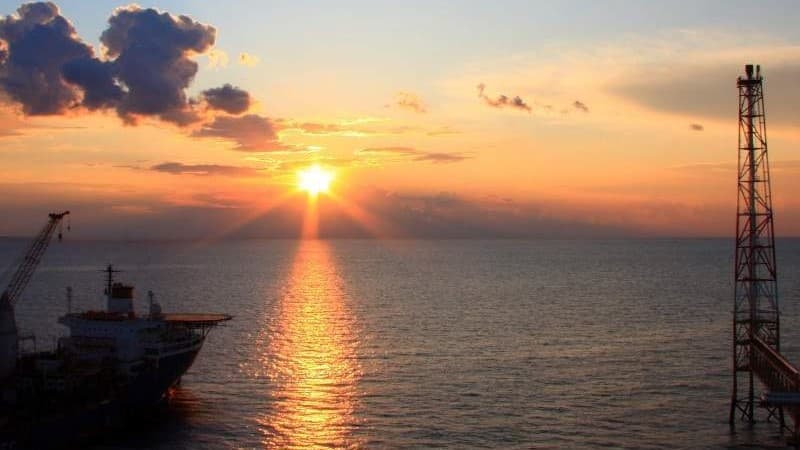
An Israeli airstrike struck Iran's South Pars gas field, the world's largest offshore gasfield located in Bushehr province, marking a significant escalation in the ongoing US-Israeli conflict with Iran.
“Iran has threatened to attack oil and gas facilities in the Gulf region in retaliation for an Israeli strike on its South Pars gasfield as the fallout from the United States-Israeli war on the country continues to escalate”
The attack, reportedly carried out by Israel's air force according to Israeli media sources, damaged several facilities at the gasfield and its associated Asaluyeh refinery operations, halting production at two refineries that normally produce about 100 million cubic meters of gas daily.

This represented the first direct attack on Iran's upstream production infrastructure since the war began on February 28, with Iranian state media reporting that while facilities were damaged, no casualties were immediately reported and fires were under control.
Israeli officials reportedly stated the strike was intended to communicate to Tehran that the longer it blocked the Strait of Hormuz, the worse it would be for Iran's energy infrastructure, while also aiming to increase domestic pressure on the Iranian regime by potentially causing power and gas outages.
Iranian Retaliation Threats
In immediate response to the South Pars attack, Iran's Islamic Revolutionary Guard Corps (IRGC) issued urgent evacuation warnings for multiple oil installations across Saudi Arabia, the United Arab Emirates, and Qatar, citing heightened security risks.
Iranian authorities specifically named five facilities that would be targeted 'in the coming hours': Saudi Arabia's SAMREF refinery and Jubail petrochemical complex, the UAE's Al Hosn gasfield, and Qatar's Ras Laffan refinery and Mesaieed petrochemical complex and holding company.
IRGC Navy commander Alireza Tangsiri further escalated tensions by warning that American-linked facilities in the Gulf could be targeted next, declaring: 'Our list of targets is updated. Oil facilities associated with America are now on par with American bases and will come under fire with full force.'
The Iranian central military command directly warned that a severe response to the strike was imminent, instructing civilians to evacuate energy facilities as the pendulum of war swung to what Iranian officials described as a 'full-scale economic war.'
Gulf Infrastructure Strikes
Iran followed through on its threats with immediate retaliatory strikes across the Gulf region, causing significant damage to energy infrastructure in Saudi Arabia, Qatar, and the United Arab Emirates.
“Smoke rises following Israeli bombardments in southern Lebanon Iran targeted energy facilities across the Gulf and threatened further destructive attacks after a key gas field was hit, raising fears Thursday of a wider assault on fuel supplies that could jolt already rattled global markets”
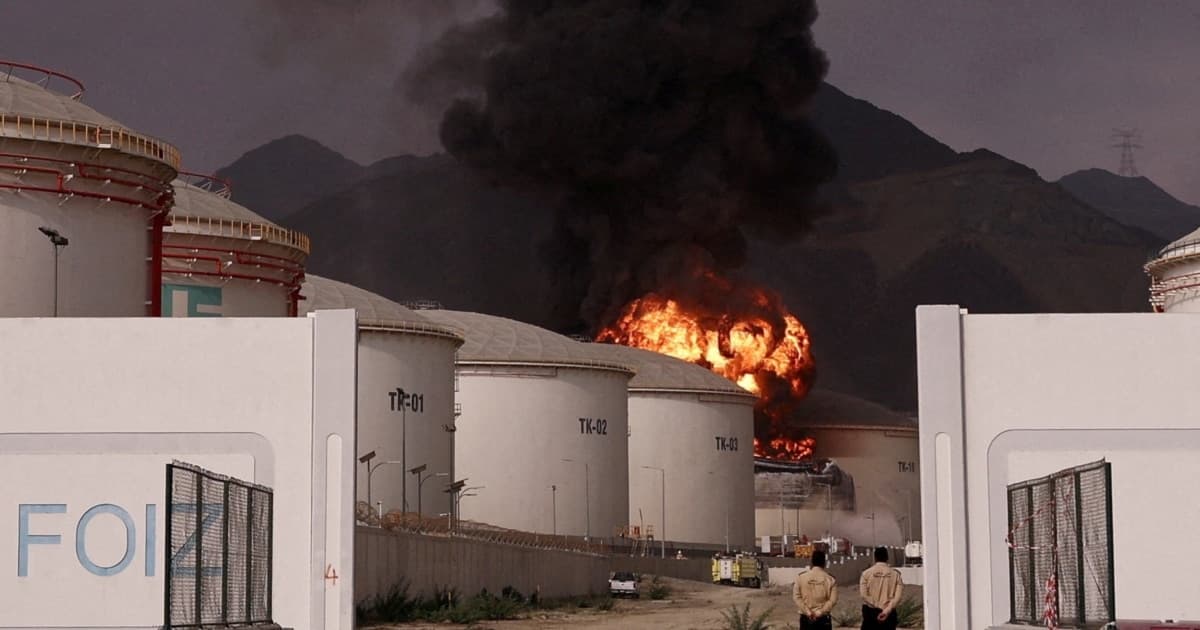
Qatar reported that its main gas hub, Ras Laffan Industrial City that processes about a fifth of global gas supply, suffered 'extensive damage' after Iranian missile attacks, with emergency crews deployed to contain resulting fires.
Hours later, Iran attacked the facility again, causing additional fires and damage that Qatari officials later confirmed had been contained.
In Saudi Arabia, authorities reported intercepting drones targeting facilities in the eastern region, while missile debris fell near a refinery outside Riyadh.
The UAE suspended operations at two Abu Dhabi natural gas sites – the Habshan gas facilities and the Bab field – following Iranian strikes, as authorities responded to incidents caused by falling debris from intercepted missiles.
These coordinated attacks represented a direct escalation of the conflict beyond Iranian-Israeli hostilities into broader regional warfare targeting critical energy infrastructure.
Global Economic Impact
The escalating conflict triggered significant global economic repercussions, with energy prices soaring amid fears of major disruptions to global oil and gas supplies.
Brent crude oil futures surged by over 5% to reach nearly $111-113 per barrel, while Europe's gas benchmark jumped by more than 7.5% to over €55.50 per megawatt hour.
The Strait of Hormuz, through which about one-fifth of the world's oil and liquefied natural gas transits, has seen its shipping largely stalled, with Kpler estimating that only 90 ships have passed the narrow waterway since the outbreak of the war.
Daily oil exports from the region have fallen by at least 60% from prewar levels due to the impact of drone and missile strikes and Iran's effective chokehold on exports.
This forced Gulf neighbors to curtail oil and gas production as pipelines and storage facilities reached capacity.
The disruption has had ripple effects worldwide, with Pacific nations like Samoa and Tonga raising fears over possible fuel shortages and escalating costs caused by the Middle East war, while countries such as Turkey, which relies on Iran for more than 10% of its gas supply, may be forced to seek additional spot LNG cargoes, intensifying global competition.
Strategic Escalation
The attacks on energy infrastructure have dramatically escalated the conflict to what experts describe as a potentially dangerous new level with significant strategic implications.
“An Israeli airstrike hit Iran’s South Pars gas field – the world’s largest – on Wednesday, triggering a spike in energy prices as Tehran unleashed a wave of attacks on oil infrastructure across the region”
Yoel Guzansky, a Gulf expert at Tel Aviv's Institute for National Security Studies, warned that the South Pars attack could mark 'a turning point in the war' because it represents the first time gas facilities in Iran have been meaningfully struck.

He predicted that Iran would likely target gas and oil facilities in the Gulf states, which could 'trigger a further response from the United States and Israel, potentially including strikes on even more significant Iranian oil infrastructure – chief among them Kharg Island.'
US President Donald Trump has already threatened to carry out additional strikes on Kharg Island 'just for fun,' after the US struck military targets on the oil export hub on Saturday.
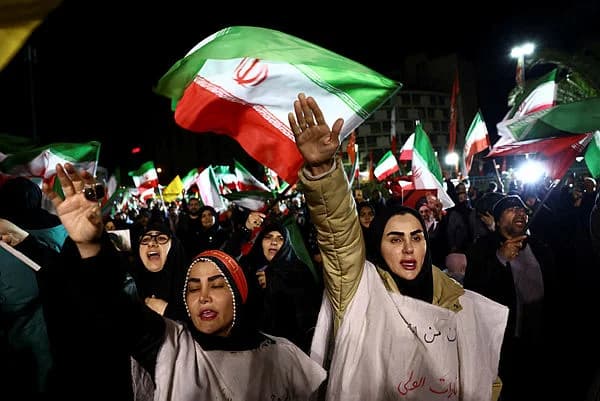
Iranian parliament speaker Mohammad-Bagher Qhalibaf warned that Tehran would be seeking 'an eye for an eye,' stating 'A new level of confrontation has begun.'
The IRGC further threatened that if such attacks were 'repeated again,' then strikes on regional energy infrastructure 'will not stop until it is completely destroyed,' signaling a potential cycle of escalation that could severely impact international markets and the ability of Gulf states to export oil and gas.
International Reactions
The escalation prompted strong international reactions and diplomatic responses from Gulf states and global energy markets.
Qatar's government spokesperson, Majid al-Ansari, condemned the Israeli targeting of facilities linked to Iran's South Pars field as 'a dangerous & irresponsible step amid the current military escalation in the region,' noting that the Iranian gasfield is an extension of Qatar's North Field.
The Qatari Foreign Ministry further stated that targeting energy infrastructure 'constitutes a threat to global energy security, as well as to the peoples of the region and its environment.'
In response to the Iranian attacks, Qatar expelled two Iranian diplomats.
Meanwhile, Trump denied US involvement in the attack on South Pars, saying Israel had 'violently lashed out' but ruling out further such attacks by Israel unless Iran retaliated.
However, he warned Tehran that US forces would 'massively blow up' the entire facility if Iran attacked Qatar again.
The international community expressed growing concern about the conflict's expansion into direct attacks on critical energy infrastructure, with experts noting that the biggest concern would be the potential for attacks against Saudi Arabia's East-West pipeline or export facilities on the Red Sea, which alongside Fujairah offer the only significant alternative to the Strait of Hormuz.
More on Iran

Israel Strikes Iranian South Pars Gas Field in Coordination With U.S.
13 sources compared

Iran Attacks Gulf Energy Facilities, Sends Oil Prices Higher
54 sources compared

Israel strikes Iran's Pars gas field as Tehran vows revenge
14 sources compared
Trump weighs deploying thousands of US troops to the Middle East as Iran war escalates
12 sources compared