
Iran Threatens to Strike US Energy and Desalination Infrastructure Over Hormuz Ultimatum
Key Takeaways
- Iran threatens to strike US energy and desalination infrastructure.
- Trump’s 48-hour Hormuz ultimatum spurred threats against US and Israeli infrastructure.
- Iran vows retaliation targeting energy and water infrastructure.
Hormuz Crisis Escalates
The situation in the Strait of Hormuz has escalated dramatically, with the UK Maritime Trade Operations raising the shipping threat level to 'critical' across the Arabian Gulf, Strait of Hormuz and Gulf of Oman due to a surge in attacks on vessels since the Iran war began in late February.
“What you need to know - Iran threatens to strike US energy and desalination infrastructure in the Gulf - Donald Trump says US will hit Iran's power plants if it doesn't open the Strait of Hormuz - Israel says it is again striking 'regime targets' in Tehran This blog is now closed, please follow Monday's coverage here, by clicking here”
More than 20 incidents involving commercial ships and offshore infrastructure have been reported, with no clear link to Western ownership, suggesting broad maritime disruption rather than targeted strikes.
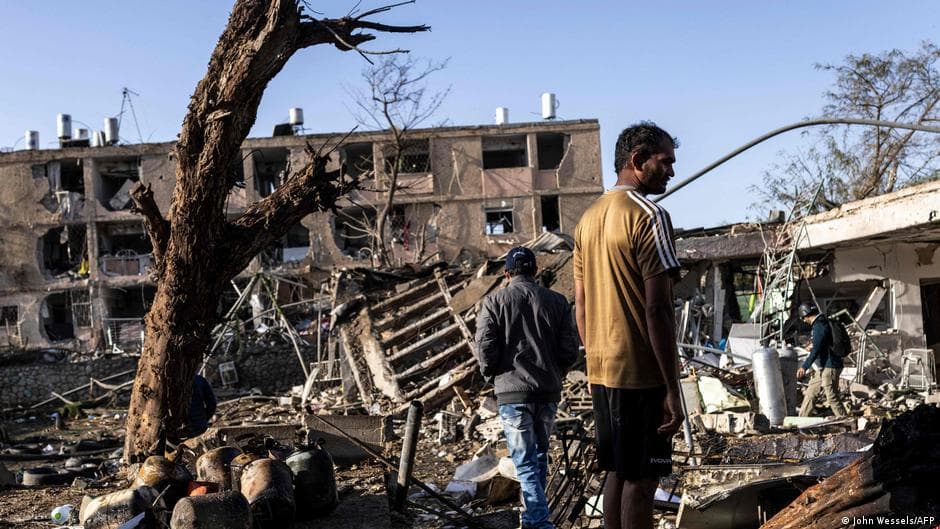
Explosions were recently reported near vessels off the UAE coast, including near Sharjah, though all crew were reported safe.
Iranian President Masoud Pezeshkian has stated that the Strait of Hormuz remains open to ships of all countries except those belonging to aggressors to Iranian soil, framing the current tensions as a response to US-Israeli aggression and assassination drives.
The geopolitical standoff has further escalated with claims from a senior Iranian lawmaker that a 'new regime' is being implemented in the strategic waterway, with vessels now being charged a $2 million fee to pass through the Strait.
The World Health Organization has warned that the war is at a 'perilous stage' and called for restraint, particularly as attacks targeting nuclear sites create escalating threats to public health and environmental safety.
Trump's Ultimatum
US President Donald Trump issued a stark 48-hour ultimatum demanding that Iran fully reopen the Strait of Hormuz without threat, warning that if Iran fails to comply, 'the United States of America will hit and obliterate their various POWER PLANTS, STARTING WITH THE BIGGEST ONE FIRST!'
The ultimatum came amid Trump's claims that the US military campaign is 'weeks ahead of schedule' and has already 'fundamentally degraded Iran's naval and aerial capabilities,' with the President stating 'Yes I have, and weeks ahead of schedule! Their leadership is gone, their navy and air force are dead, they have absolutely no defense, and they want to make a deal.'
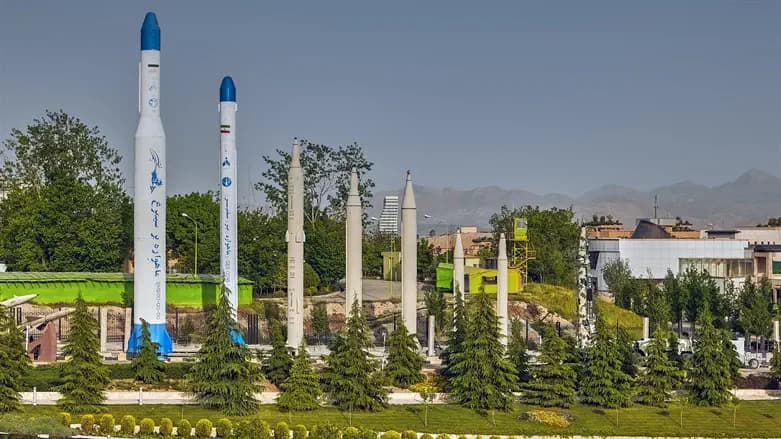
Iranian officials responded swiftly and forcefully, with President Masoud Pezeshkian harshly reacting to what he called Trump's 'repeated anti-Iran rhetoric and outrageous statements,' describing the US president's delusion of eliminating Iran from the map as 'a sign of his desperation and helplessness in the face of the will of the Iranian nation.'
Pezeshkian warned that 'threat and terror will further unify the Iranian people,' while Iranian Foreign Minister Abbas Araghchi stated that Iran would show 'zero restraint' if its infrastructure was attacked.
The Khatam al-Anbiya Central Headquarters, the body overseeing Iranian military operations, issued a direct statement in response to Trump's threats, setting the stage for potential further escalation.
Infrastructure Warfare Threat
Iran has explicitly warned that it will target US and Israeli energy, water, and IT infrastructure if its own power plants are attacked, with a spokesperson for the Khatam al-Anbiya command center stating that 'any hit on Iran's fuel or desalination facilities would trigger a symmetrical response against regional assets.'
“Iran early Sunday morning responded to US President Donald Trump’s ultimatum demanding that it reopen the Strait of Hormuz within 48 hours, threatening to strike all US and Israeli infrastructure across the region if its facilities came under attack”
The threat specifically mentions targeting 'all energy, information technology, and desalination infrastructure belonging to the United States and the (Israeli) regime in the region,' suggesting a potential infrastructure war that could extend beyond military targets to civilian and industrial facilities.
The potential for such 'tit-for-tat' infrastructure warfare represents a severe escalation in the Persian Gulf crisis, as targeting water desalination and information technology hubs could disrupt not only energy supplies but also the region's basic industrial stability.
Trump's warning marks a pivot in targeting strategy, moving beyond military assets toward Iran's domestic power grid to exert maximum pressure on leadership, with the President dismissing suggestions that the U.S. has not met its initial objectives.
This shift toward targeting Iranian utilities could further solidify the closure of the world's most critical oil chokepoint, as any escalation against Iranian infrastructure would likely extend beyond domestic energy shortages to total disruption of regional industrial capacity.
The functional impact of a potential strike on Iranian power plants would create ripple effects across multiple sectors, complicating any path toward diplomatic resolution.
Global Reactions
The escalating tensions have prompted varied international reactions, with British cabinet minister Steve Reed stating that one missile fired by Iran toward the US-British Indian Ocean military base at Diego Garcia had fallen short while the other had been intercepted, though he dismissed claims that Iran was planning to strike Europe.
Reed clarified that Trump had been 'speaking for himself' when he threatened to obliterate Iran's power plants, suggesting some distancing from the administration's more hawkish positions.

NATO chief Mark Rutte stated that 'We cannot confirm that [Israel's claims] at the moment. We are looking into that,' while noting 'What we know for sure is that they are very close to having that capability' regarding Iran's missile technology.
The Israeli military chief, Eyal Zamir, reported that Tehran had fired long-range missiles for the first time on Saturday, with two ballistic missiles with a range of 2,500 miles being fired at Diego Garcia.
Saudi Arabia reported that three missiles had been detected over Riyadh, while Iraqi officials confirmed at least six overnight attacks targeting a US diplomatic and logistics center at Baghdad airport.
The World Health Organization has expressed growing concern about the humanitarian implications, with Director-General Tedros Adhanom Ghebreyesus warning that 'attacks targeting nuclear sites create an escalating threat to public health and environmental safety.'
The diverse international responses reflect the complex geopolitical landscape and the differing approaches to managing the crisis.
Humanitarian Crisis
The conflict has raised serious humanitarian concerns, with the Iranian health ministry spokesperson, Hossein Kermanpour, confirming that patients had been evacuated from the Imam Ali hospital in the south-west city of Andimeshk on Sunday after an airstrike a day earlier.
The recent Iranian missile strikes on Israel wounded about 200 people, including a 12-year-old boy and a five-year-old girl, both reported to be in a serious condition, with the Israeli broadcaster Channel 13 reporting early indications of possible deaths.
These attacks marked the first time that Iranian missiles had penetrated Israel's air defense systems in the area, signaling a significant development in the conflict dynamics.
Israel's military has acknowledged that the attacks are adding to mounting pressure on Israel's air defense systems as Iranian strikes increasingly test their limits.
The WHO has emphasized that the war is at a 'perilous stage' and has called for restraint from all parties, particularly warning about the dangers of attacks targeting nuclear facilities.
The situation has been further complicated by reports that Iran has begun charging a $2 million fee for vessels passing through the Strait of Hormuz, with senior Iranian lawmaker Alaeddin Boroujerdi telling state television that a 'new regime' is being implemented in the strategic waterway.
The combination of military escalation, humanitarian concerns, and economic disruption has created a complex crisis that requires careful international attention and diplomatic intervention to prevent further escalation.
Market Impact
The geopolitical standoff has created significant economic uncertainty, with analysts describing Trump's threat as having placed 'a 48-hour ticking timebomb of elevated uncertainty' over energy and financial markets.
The potential for a 'black Monday' of plunging stock markets and surging energy prices remains a primary concern for global trade, particularly as the deadline for Iran's response approaches.
Insurance premiums for shipping through the Strait of Hormuz have already begun to rise, with major shipping companies reassessing their routes through the critical chokepoint.
The Strait of Hormuz is particularly crucial as it handles about 20% of global oil shipments, and any prolonged closure could lead to significant price spikes.
Investing.com has noted that the functional impact of potential infrastructure warfare extends beyond immediate energy shortages to broader market stability, with the potential disruption of regional industrial capacity affecting multiple sectors.
The economic implications are compounded by the fact that more than 20 incidents involving commercial ships and offshore infrastructure have already been reported, with no clear link to Western ownership, suggesting that maritime disruption is becoming increasingly widespread.
Market analysts are closely monitoring developments, with some suggesting that the situation could lead to a reevaluation of energy security strategies in the region and beyond.
More on Iran

President Trump Says Iran Deal Within Reach Amid Talks With Senior Iranian Official
10 sources compared

Trump Approves Iran Operation After Netanyahu Presses for Joint Strike on Khamenei
12 sources compared

President Donald Trump orders ICE officers deployed to airports amid DHS shutdown.
227 sources compared
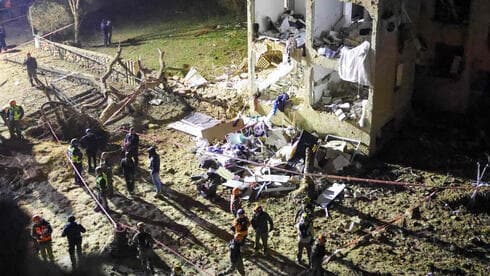
Iranian Missiles Strike Israel; Officials Report 180 Injured Amid Conflicting Casualty Figures.
12 sources compared