Iran war: U.S. denies tweet about tanker escort — Trump warns Iran against mining the Strait of Hormuz — Live ticker
Key Takeaways
- White House denies U.S. energy minister's tweet claiming U.S. Navy escorted oil tanker
- Trump warns Iran against mining the Strait of Hormuz
- Israel and the United States have been attacking Iran for more than a week
Conflict overview
Israel and the United States have been attacking Iran for more than a week.
“Foreign Minister Wadephul does not expect a swift end to the war”
After the killing of the spiritual head Ayatollah Ali Khamenei, his son, Mojtaba Khamenei, was chosen as successor.
Since the start of the war, Iran has been firing drones and missiles at Israel and the Gulf states.
A second front has opened up between Israel and the terrorist militia Hezbollah, which operates in Lebanon.
Some information cannot be independently verified.
Strait of Hormuz dispute
U.S. Energy Minister Chris Wright posted on X claiming the U.S. Navy had escorted an oil tanker through the Strait of Hormuz, called the escort "successful," and said more ships would follow, then deleted the post.
The U.S. Department of Energy blamed an employee for the erroneous post, Department spokesman Ben Dietderich said.
Ship-tracking service MarineTraffic reported an oil tanker passed through the Strait of Hormuz on Monday without incident but without escort, and the White House — via spokeswoman Karoline Leavitt — denied the U.S. Navy has "so far not escorted any tanker or any other vessel."
Wright's post briefly sent oil prices tumbling, with Brent falling 15.03 percent to $84.09 and U.S. crude WTI losing 15.46 percent.
U.S. intelligence agencies note signs that Iran is preparing to lay mines in the Strait of Hormuz, CBS News reported, and President Trump warned Iran against mining the strait while saying the U.S. military had disabled ten inactive Iranian minelaying boats that were "completely destroyed."
Operations and casualties
U.S. Defense Secretary Pete Hegseth announced an intensification of U.S. strikes, calling a day "the most intense day of our strikes in Iran" with "the largest number of combat aircraft, bombers, and airstrikes."
“Foreign Minister Wadephul does not expect a swift end to the war”
The Pentagon said about 140 U.S. soldiers have been wounded since the start of the war, 108 of them have returned to duty, eight were seriously injured, and seven U.S. soldiers were killed in Kuwait and Saudi Arabia, Pentagon spokesman Sean Parnell said.
Israeli forces again struck Hezbollah positions, saying the attacks targeted the infrastructure of pro-Iranian militias in the southern suburbs of Beirut known as Dahiyah.
The World Health Organization documented dozens of attacks on hospitals, ambulances, and other medical facilities in Iran and Lebanon, reporting at least 22 healthcare workers have died and noting 18 documented attacks in Iran and 23 in Lebanon, with 12 confirmed healthcare-worker deaths and 26 injuries in Lebanon alone after early March fighting between Israel and Hezbollah.
Political reactions
Political leaders and officials expressed sharp positions and warned of wider consequences.
Israeli head of state Isaac Herzog called the Israeli-American military operation "a lesson for the world," said the campaign "began on October 7 (2023)," and suggested the conflict may be reaching a final chapter; Prime Minister Benjamin Netanyahu said Israel is "not yet finished" with leadership in Tehran and that "our aim is to free the Iranian people from the yoke of tyranny."
Federal Foreign Minister Johann Wadephul (CDU) said he does not expect a quick end to the war, emphasized preserving Iran's territorial integrity, and warned against expansion of the conflict after talks with Gideon Saar and a call with U.S. Secretary of State Marco Rubio.
Axios reported the U.S. asked Israel to stop attacks on Iran's energy infrastructure, citing concerns about harming the Iranian population and triggering massive retaliatory strikes; the IEA will assess G7 options after ministers hesitated on releasing strategic oil reserves.
Iran's parliament speaker Mohammad Bagher Ghalibaf threatened a "proportionate and immediate response" to attacks on infrastructure, the Revolutionary Guard threatened to stop Iranian oil exports, and Ali Larijani warned President Trump to "be careful not to be annihilated yourselves."
Britain is sending the warship HMS Dragon to the eastern Mediterranean and said it is working with allies on options to protect commercial shipping through the Strait of Hormuz.
U.S. Senator Mark Kelly criticized the U.S. for having "no plan" and "no exit strategy," and CDU/CSU deputy chairman Günter Krings warned of another refugee wave and urged EU border registration and support for Turkey.
More on Iran
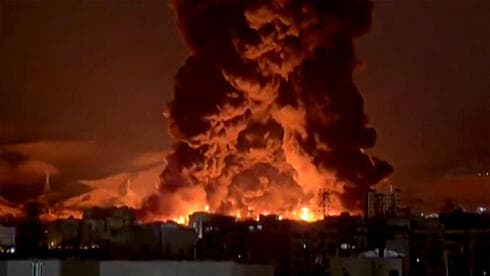
US obliterates military targets on Iran’s Kharg Island, Trump warns
13 sources compared
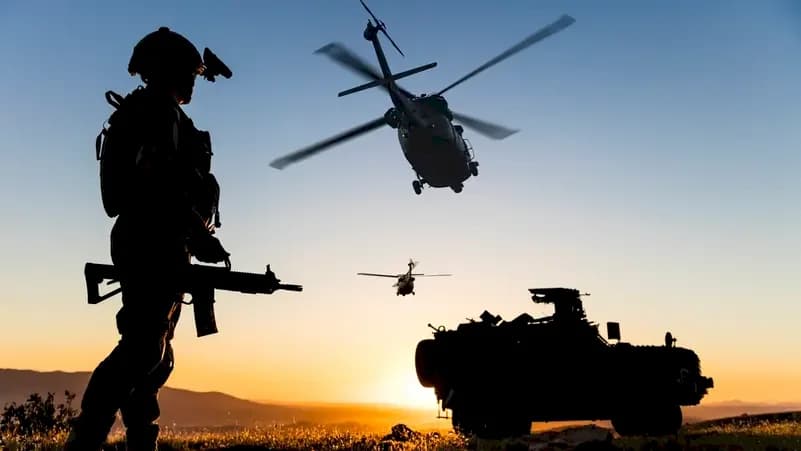
US Deploys About 2,500 Marines to Middle East After Iran Attacks Gulf Shipping
33 sources compared
FBI Warns of Iranian Drone Plot Based on Unverified Tip; California Says No Credible Threat
10 sources compared

White House Demands ABC Retract Report Claiming Iran Sought To Launch Drone Attacks On California
11 sources compared