Iran Warns It Will Declare Full-Scale War If Trump Orders Attack On Supreme Leader Khamenei

Iran Warns It Will Declare Full-Scale War If Trump Orders Attack On Supreme Leader Khamenei

18 January, 202621 sources compared
Iran-Israel

Key Points from 21 News Sources

  1. 1

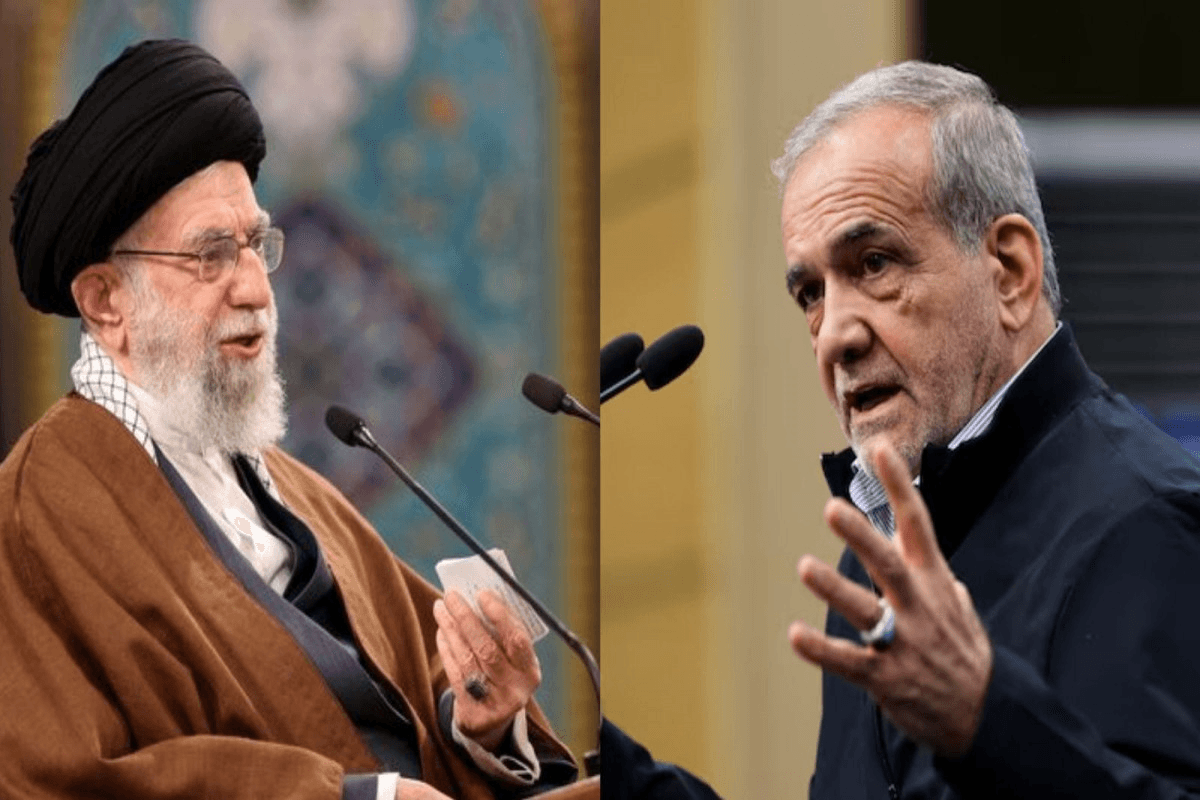
    Iran’s president warned any attack on Supreme Leader Ali Khamenei equals an all-out war

  2. 2

    Warning followed US President Donald Trump’s remarks calling for new leadership in Iran
  3. 3

    Pezeshkian blamed long-standing US sanctions and hostility for Iran’s economic hardships

Full Analysis Summary

Warning over Khamenei attack

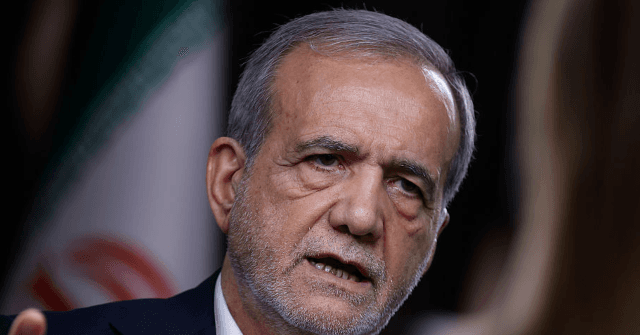
Iranian President Masoud Pezeshkian issued a stark warning on X that any attack on Supreme Leader Ayatollah Ali Khamenei would be tantamount to a full-scale war, responding directly to former U.S. President Donald Trump’s recent comments calling for new leadership in Tehran.

Multiple regional and international outlets reported Pezeshkian’s remark as a clear line from Tehran, with Mathrubhumi English quoting the wording 'tantamount to a full-scale war.'

The Indian Express described the statement as being 'treated as a declaration of war,' and Yeni Safak English said the comment escalated rhetoric with the United States.

WION framed the post as a direct response to Trump’s Politico interview calling for new leadership in Iran, reflecting broad agreement on the core message across sources with differing regional perspectives.

Coverage Differences

Tone/Narrative emphasis

Some sources frame Pezeshkian’s statement as a formal, state-level warning that elevates tensions between Iran and the U.S. (Mathrubhumi English, The Indian Express), while others emphasize political escalation and rhetorical posturing in the context of ongoing unrest (Yeni Safak English, WION). Each outlet reports the same quote but chooses different framing: formal threat versus political escalation.

Source perspective

Regional outlets (e.g., West Asian and Asian sources) situate Pezeshkian’s warning within domestic political and economic narratives—blaming sanctions and external pressure—whereas Western-leaning outlets highlight the bilateral diplomatic risk. This reflects how 'source_type' shapes which contextual factors are stressed.

Trump remarks on Iran

The immediate trigger for the warning was Donald Trump's series of comments about Iran's leadership, especially a Politico interview in which he called Khamenei a 'sick man,' urged 'new leadership in Iran,' and described the country as 'the worst place to live,' language widely reported by outlets including Haaretz, Middle East Monitor and The Jerusalem Post.

Several sources note that Trump's remarks came amid fierce domestic unrest in Iran, with Tehran publicly blaming the United States and Israel for fomenting the protests—an allegation Khamenei and state-aligned outlets have repeated while other outlets report it as Tehran's claim rather than an independent fact.
Coverage Differences

Reporting vs. quoting

Western and regional outlets consistently quote Trump’s Politico remarks (Haaretz, Middle East Monitor, The Jerusalem Post) but differ on attribution: some present his comments as direct quotes from the interview, while Iranian and pro‑Tehran outlets report them as provocations used by Tehran to justify blame on the U.S. (PressTV). This distinction matters for readers assessing whether the outlet is directly quoting Trump or reporting Tehran's reaction.

Framing of responsibility

Iranian and West Asian outlets emphasize Tehran’s narrative that external actors are the 'main culprit' behind unrest (Khamenei and PressTV), while Western outlets tend to present that claim as Tehran’s position rather than independently verified fact (Haaretz, The Jerusalem Post).

Conflicting casualty reports

Coverage of the domestic unrest and casualty figures varies markedly across sources.

Human-rights groups and some Western outlets report thousands killed and call attention to alleged massacres and rights violations.

France 24 cited Amnesty and Norway-based Iran Human Rights (IHR) noting confirmed deaths in the thousands and that the "true toll is likely much higher," while Mint and Mathrubhumi referenced rights groups' counts of around 3,000.

Geo News and PressTV relayed Tehran’s claims about rioters, arrests and the authorities' invocation of moharebeh (waging war against God).

Estimates range from rights-group confirmed figures in the low thousands to exile and other channels reporting much higher numbers, underscoring both data uncertainty from the blackout and starkly different narratives.

Coverage Differences

Contradiction (casualty figures)

France 24 reports IHR's confirmation of 3,428 deaths and cites other estimates ranging up to 20,000, while Mathrubhumi and Mint reference verified or reported counts around 3,000; exile channels cited by France 24 give substantially higher tallies—this is a clear numeric contradiction across sources and estimates.

Narrative focus

Western mainstream sources emphasize verified rights‑group findings and difficulties verifying numbers because of an internet blackout, whereas PressTV and Geo News emphasize state claims about rioters, arrests and legal measures—showing a split between human‑rights framing and security/sovereignty framing.

Media framing comparison

Outlets differ sharply in how they frame responsibility and causes.

Several West Asian and Iranian state‑aligned sources — including Yeni Safak English, PressTV and Türkiye Today — and regional reporting emphasize U.S. sanctions and external pressure as central drivers of public anger, noting Pezeshkian's attribution of blame to those factors.

Many Western outlets, such as France 24 and Haaretz, foreground human‑rights allegations and the difficulty of independent verification amid a sustained internet blackout, and sometimes include broader strategic analysis about U.S. deliberations over strikes.

Coverage Differences

Narrative / Cause attribution

West Asian and state‑aligned sources foreground sanctions and foreign meddling as causes (e.g., Yeni Safak English, PressTV), while Western mainstream outlets emphasize rights abuses and independent verification problems (e.g., France 24), illustrating how 'source_type' shapes whether coverage highlights external causation or domestic repression.

Tone severity

Some outlets use explicit, severe language about possible massacres and mass arrests (France 24, Mathrubhumi English), while state outlets emphasize legal and security responses and frame actions as restoring order (PressTV, Geo News).

Risk of regional escalation

Analysts and several outlets flag the international escalation risk, reporting that U.S. officials at times considered strikes on Iran but ultimately weighed the potential for a wider conflict.

Haaretz noted U.S. concerns about insufficient regional forces to repel a counterattack.

Mathrubhumi and Mint report that Trump has repeatedly threatened military action.

Türkiye Today highlights regional anxieties, especially in neighboring countries, about how the rhetoric could spill over.

Together the coverage shows consistent reporting that Pezeshkian’s warning raises the stakes, though sources diverge on motivations, plausibility, and likely outcomes.

Coverage Differences

Assessment of escalation likelihood

Israeli outlets (Haaretz, The Jerusalem Post) emphasize U.S. internal deliberations over strikes and the military calculus, whereas regional outlets (Mathrubhumi English, Türkiye Today) foreground strong rhetoric and domestic drivers like sanctions; this produces divergent assessments of whether the warning signals imminent military conflict or is primarily political signaling.

Regional concern emphasis

Some outlets highlight immediate regional political consequences (Türkiye Today mentioning "regional concerns (notably in Türkiye)"), while others focus on human‑rights implications; both trends appear across different 'source_type' categories.

All 21 Sources Compared

Apa.az

Iranian president says any aggression directed at supreme leader constitutes an "all-out war"

Read Original

breitbart

Iran’s President Blames U.S. for Nation’s Crises, Threatens ‘All-Out War’ over Any Move Against Khamenei

Read Original

France 24

Iran's president says any attack on Supreme Leader Khamenei would be declaration of war

Read Original

Geo News

Iran president says any attack on supreme leader would be declaration of war

Read Original

Haaretz

Iran's president warns any U.S. attack on Khamenei would mean 'all-out war'

Read Original

India Today

Iran warns attack on Khamenei would be all-out war, blames US for economic hardship

Read Original

Mathrubhumi English

‘Attack on our great leader means full-scale war,’ Iran’s president warns US

Read Original

Middle East Monitor

Attack on supreme leader would be declaration of war against Iranian nation: President

Read Original

Mint

Attack on Ayatollah Khamenei equals ‘all out war,’ warns Iranian President

Read Original

NBC News

Why Iran's regime, facing internal and external threats, has no clear leader in waiting

Read Original

Press TV

President Pezeshkian vows historical Iran-Iraq relations will remain stable

Read Original

PressTV

Any attack against Ayatollah Khamenei ‘full-fledged’ war with Iranian nation: President

Read Original

Sky News Australia

‘Tantamount to all-out war’: Iran’s President issues chilling warning

Read Original

South China Morning Post

Iran warns against any US strike as judiciary hints at unrest-linked executions

Read Original

The Australian

Attack on Ayatollah means declaration of war warns Tehran

Read Original

The Indian Express

‘Attack on our leader Khamenei means full-scale war,’ Iran’s president warns US after Donald Trump remarks

Read Original

The Jerusalem Post

US strike on Khamenei would be tantamount to all-out war against Iran, President Pezeshkian warns

Read Original

Times of India

'Any attack on Khamenei would mean ‘all-out war’,': Iran issues big warning; message for Trump?

Read Original

Türkiye Today

Iranian president warns any attack on Khamenei would mean war with Iran

Read Original

WION

Attack on Ayatollah Khamenei would mean declaration of war, warns Iranian President

Read Original

Yeni Safak English

Iranian president warns attack on supreme leader would be declaration of war

Read Original