Full Analysis Summary
Iran's UN complaint on threats
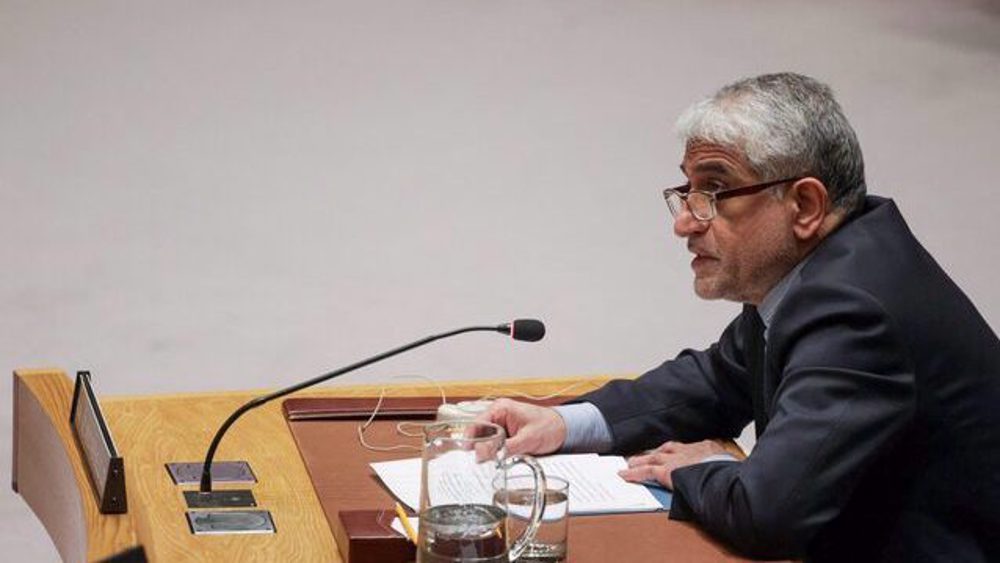
Iran told the UN Security Council it had received repeated, explicit threats from the United States and urged the body to condemn what Tehran called a pattern of unlawful U.S. actions.
Iran’s UN ambassador, Amir Saeid Iravani, said Washington’s rhetoric and actions, including public warnings of military action by President Donald Trump, violate the UN Charter, threaten sovereign states and international peace, and risk foreseeable civilian harm.
The remarks followed Tehran’s claims that elements behind early-January protests were foreign-backed and came after U.S. announcements of a military buildup in the West Asia region.
Coverage Differences
Limited sourcing / missing perspectives
Only a single source type (West Asian: PressTV) is provided in the material. Because of that, there is no coverage from Western Mainstream or Western Alternative outlets in the supplied sources to compare narratives, claims, tone, or omissions. Therefore, cross-source contradictions or corroborations cannot be established from the supplied material. The paragraphs below therefore rely exclusively on PressTV reporting and quotes attributed within it.
Iran's complaint to Security Council
Tehran tied its diplomatic complaint to domestic unrest and said intelligence pointed to foreign-backed elements behind the January protests.
It said authorities had arrested ringleaders and seized weapons allegedly destined for Tehran.
PressTV reported these claims were presented as part of the evidence framing Iran's appeal to the Security Council.
Iranian officials argued that U.S. actions and rhetoric amounted to efforts to incite unrest and therefore carried legal and moral responsibility for any civilian harm from foreseeable escalation.
Coverage Differences
Narrative focus / corroboration missing
PressTV reports Iranian claims that protest violence involved foreign backing and seized weapons; however, because supplied material contains no independent or alternative-source investigations, there is no corroborating or contradicting reporting from other source types to validate or challenge Iran’s assertions. This is a gap in the record arising from the limited set of sources provided.
Iran's Security Council appeal
Iran's delegation pointed to a wider pattern of actions it labels unlawful, asking the Security Council to consider examples such as defying International Court of Justice rulings, blockading Venezuela, and threatening uses of force as part of a 'sustained pattern' that erodes international law.
The delegation framed U.S. rhetoric as not only hostile language but as conduct that could foreseeably lead to civilian casualties, raising both legal and moral arguments for Security Council attention.
Coverage Differences
Tone and framing (source-limited)
PressTV frames the Iranian presentation as legalistic and accusatory, emphasizing language about UN Charter violations and potential civilian harm. With no contrasting sources supplied, it is not possible to show alternative diplomatic or legal framings from Western or other outlets; the supplied material lacks those viewpoints, which affects assessment of how unique or contested Iran’s legal claims are internationally.
Iranian leaders' assertive rhetoric
Senior Iranian figures also spoke in assertive terms.
Ali Akbar Velayati, a senior adviser to Iran's Supreme Leader, called President Trump "greedy" but "cautious and cowardly," according to PressTV.
He argued the U.S. retreats when faced with likely defeat, citing actions in Yemen.
He praised Supreme Leader Ayatollah Khamenei's leadership of the regional "Resistance Front."
That rhetoric underscores Tehran's political framing: Iran positions itself as resilient under pressure and seeks to delegitimize U.S. threats as bluster that can be resisted.
Coverage Differences
Tone / rhetorical positioning
PressTV includes strongly worded quotes from Iranian officials (for example Velayati’s characterization of Trump as 'greedy' and 'cowardly') that amplify Iran’s confrontational tone. Because only PressTV is in the supplied set, there is no opportunity to show how other outlets might characterise Velayati’s remarks (e.g., as propaganda, as measured commentary, or as an escalation). This limits cross-source comparison of rhetoric and political framing.